 Spanish
  English
  Russian
 A vertical filter press (tower press filter) is not always the right choice for every dewatering process. However, it becomes the preferred solution when industries require very low-moisture filter cake, high filtration efficiency, and fully automated operation within a compact footprint.
In general, if your process involves fine particles, high slurry volumes, or strict moisture reduction targets (often below 10–15%), a tower press filter is significantly more effective than conventional horizontal filter presses. This makes it especially suitable for industries such as mining, metallurgy, chemical processing, and wastewater treatment where downstream drying costs, transportation efficiency, and disposal regulations directly impact overall profitability.
Choosing the right filtration system is not only about equipment structure—it is about balancing moisture reduction, energy consumption, automation level, and lifecycle operating cost. Understanding when to use a vertical filter press can help you avoid oversizing equipment, reduce operational downtime, and improve long-term return on investment.
In this article, we will explain how vertical filter presses work, why low-moisture cake matters, and in which conditions a tower press filter becomes the most efficient choice over other filtration systems.
What Is a Vertical Filter Press and How Does It Work?
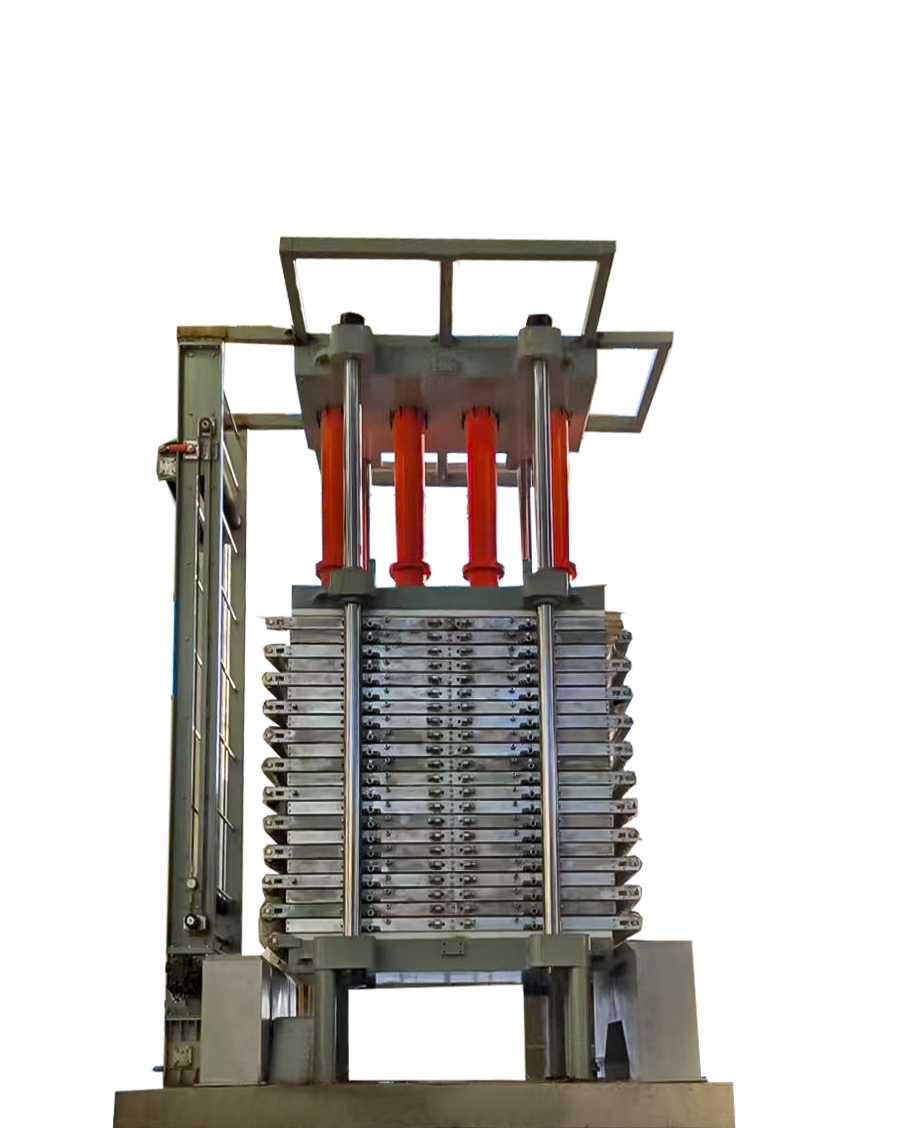
A vertical filter press is an advanced piece of industrial equipment designed to achieve efficient solid–liquid separation while minimizing the moisture content in the resulting filter cake. Its vertical configuration allows for compact installation, high filtration pressure, and continuous operation in demanding industrial environments.
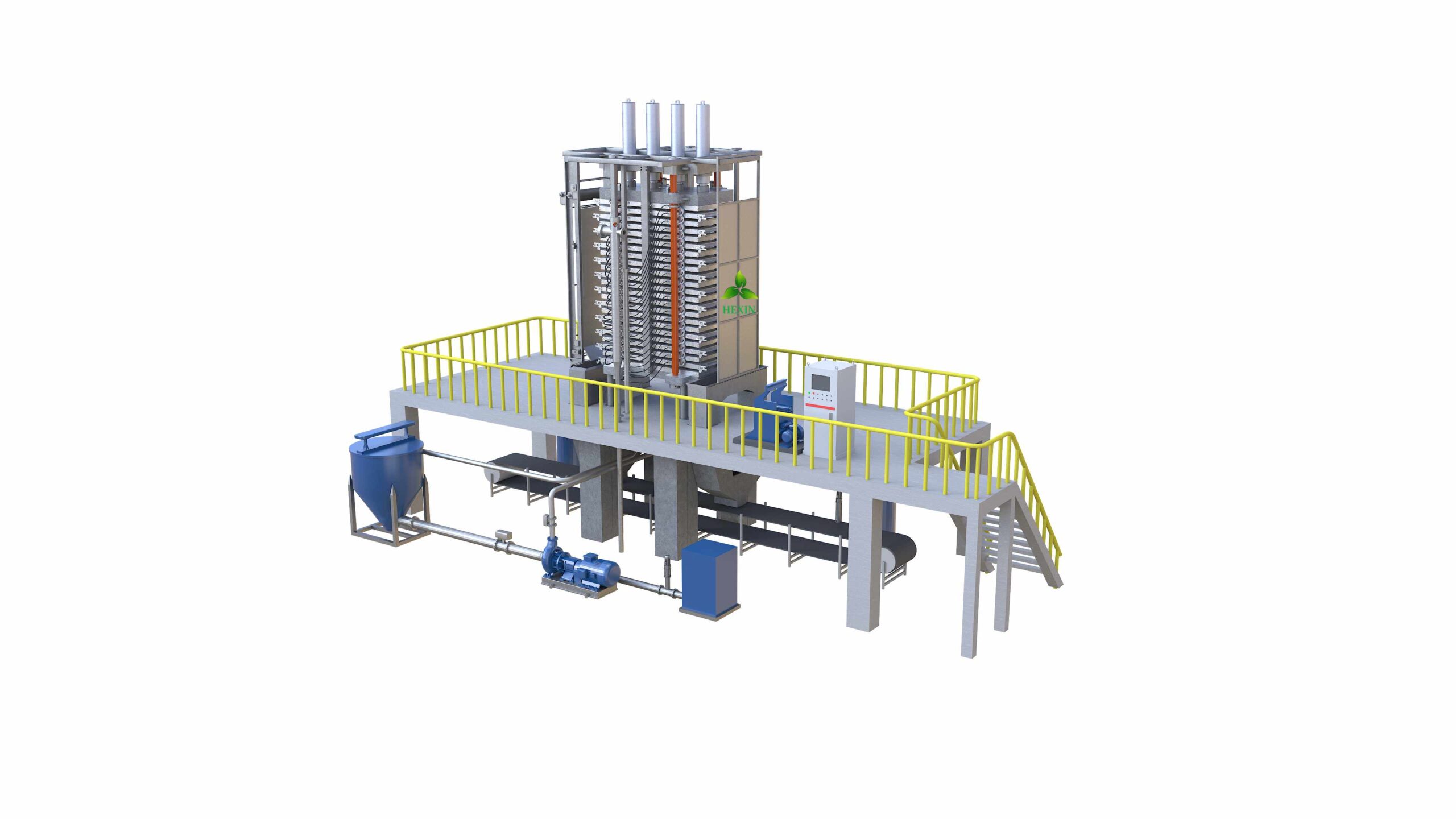
The TFP vertical filter press is an advanced, fully automated system designed for solid-liquid separation, characterized by its high efficiency and low energy consumption. This design facilitates superior separation of solids from liquids by utilizing the pressure differential created across the filter cloth through pump pressure, gravitational force, and either air or water pressure.
Key Components of a Vertical Filter Press
- Filter Plates and Membranes: These form the core filtration surface where solids accumulate to form the cake. The tower-type structure filter plate supports horizontal filtration with multi-cylinder synchronous operation for uniform performance.
- Hydraulic System: The machine is controlled fully by hydraulic, running stable, reliable and safety, Controlled by PLC and touch panel with auto valve, very easy operation and high automation. The self-guided hydraulic cylinder ensures consistent plate movement under high pressure.
- Filtrate Discharge System: The filtrate discharge channels direct separated liquids efficiently into main pipelines while maintaining closed-loop control to prevent contamination.
Operating Principle of the Vertical Filtration Process
The tower press operates through sequential stages that ensure complete dewatering and cake drying.
The slurry goes to the filtering chamber when the filter plate frame was closed. The filter liquid goes through the filter cloth to filter liquid chamber then enter the filter liquid soft pipe finally to the main pipeline and discharged. Once initial filtration occurs, high-pressure water enters above the diaphragm to compress the cake further—this first pressing stage expels additional liquid from within the solids matrix.
Optional washing cycles can be introduced: The washing liquid will be sent to the filter chamber with the same pipe as the slurry. A secondary pressing stage may follow to remove residual wash liquid. Finally, compressed air completes drying: The final dry of the filter cake was done by the compressed air. Once drying is achieved, automatic mechanisms discharge cakes from both sides.
Why Is Low-Moisture Content Important in Industrial Filtration?
Low-moisture content directly influences process efficiency and cost-effectiveness across industries such as mining, metallurgy, wastewater treatment, and chemical production. Achieving a low-moisture filter cake reduces handling challenges and enhances overall productivity.
Operational Advantages of Low-Moisture Cake
Reducing residual moisture decreases drying time in subsequent thermal processes, leading to significant energy savings. It also improves handling characteristics—drier cakes are easier to transport and store—and reduces waste volume requiring disposal.
It works very well in all kinds of sticky and fine materials also the scenes which requires the low moisture rate filter cake. This capability ensures consistent performance even when processing difficult-to-dewater materials like tailings or sludge.
Economic Impact of Moisture Reduction
Lower energy consumption from reduced drying requirements translates into direct operational cost savings. Equipment longevity improves because lower moisture minimizes corrosion risks inside metal housings or conveyors. Faster cycle times also increase throughput per shift, maximizing return on investment.
When Should You Choose a Tower Press Filter Over Other Designs?
Selecting a tower press depends on process-specific demands such as desired dryness level, automation needs, available space, and material characteristics.
Situations Favoring Tower Press Filters
Tower filters excel when extremely low residual moisture levels (often below 10%) are required for downstream operations or environmental compliance. They are ideal for highly automated plants seeking minimal operator intervention since all stages—filtration, pressing, washing, drying, discharge—can run continuously under PLC control.
Applications include dewatering mining concentrates or smelting residues where fine particles make traditional presses inefficient.
Comparative Advantages of Tower Press Filters
Vertical stacking optimizes plant footprint utilization compared with horizontal units that require large floor areas. Fully enclosed systems minimize odor emissions or contamination risks during operation. Automated plate shifting further enhances safety by eliminating manual handling between cycles.
How Do Tower Filters Compare with Traditional Horizontal Filter Presses?
While both designs aim at solid–liquid separation, their structural orientation significantly impacts performance metrics like dryness level and maintenance frequency.
Structural Differences Between Tower and Horizontal Designs
Tower filters use a vertical configuration with top-down filtration flow paths that leverage gravity to enhance drainage efficiency. In contrast, horizontal presses rely on side-mounted plates requiring more space for access during cleaning or servicing.
Tower type structure filter plate,horizontal filtration,multi-cylinder synchronous running,self-guide hydraulic cylinder,compact structure and advanced design. This compact vertical arrangement allows higher operating pressures—up to 20 MPa—within smaller footprints than conventional systems.
Performance Considerations for Each Design Type
Tower filters deliver lower residual moisture because their compression forces are greater due to hydraulic synchronization across multiple cylinders. Although horizontal presses provide easier manual maintenance access, they typically yield lower throughput per square meter of floor area. Automation levels in tower systems reduce labor costs over time while ensuring consistent product quality.
What Are the Key Factors to Evaluate Before Selecting a Tower Press Filter?
Choosing an appropriate tower press requires evaluating both material properties and operational targets to ensure compatibility with process objectives.
Material Characteristics and Process Requirements
Particle size distribution affects how quickly filtrate passes through media; finer particles may demand higher pressures or specific membrane materials. Slurry viscosity influences cycle duration since denser mixtures resist flow under pressure gradients. Chemical compatibility between slurry constituents and membrane materials determines long-term reliability against corrosion or degradation.
Filtration Capacity and Operational Efficiency Targets
Desired throughput defines chamber dimensions and total plate count selection within modular configurations offered by manufacturers such as Yantai Hexin Environmental Protection Equipment Co., Ltd. If extremely low dryness levels are required, choosing suitable membrane types—rubber versus polymer—is critical for achieving target results without excessive energy input. Integration with PLC-based automation enables real-time monitoring of parameters like pressure curves or cycle timing for optimal efficiency.
How Does Yantai Hexin Environmental Protection Equipment Co., Ltd Support Industrial Filtration Needs?
Yantai Hexin Ambient Protection Equipment Co., Ltd provides specialized engineering solutions tailored to solid–liquid separation challenges across sectors including mining, metallurgy, chemicals, and wastewater management.
It is extensively utilized for dewatering purposes in the concentration of mining outputs and tailings, processing oxides in the smelting and chemical sectors, managing electrolytic residues, treating leaching residues, dehydrating various slags, and is also integral to environmental conservation efforts. Their TFP series tower filters exemplify innovation through compact structure design combined with full automation capabilities that support continuous operation at up to 20 MPa pressure levels while maintaining low energy consumption rates.
Their after-sales service includes technical consultation on installation layout optimization as well as spare parts support ensuring sustained uptime throughout equipment lifecycle management programs aligned with environmental compliance standards.
Conclusion: Making an Informed Decision on Tower Press Filters
Selecting a vertical tower press represents a strategic investment balancing technical precision with operational sustainability goals. For industries demanding low-moisture output combined with compact system architecture and automated functionality, these filters provide measurable benefits in productivity enhancement and cost reduction while maintaining environmental stewardship commitments.
Preguntas frecuentes
1. What industries benefit most from using tower press filters?
Industries such as mining beneficiation plants, metallurgical refineries, wastewater treatment facilities, chemical producers, food processors benefit due to their shared need for efficient solid–liquid separation yielding low-moisture cakes suitable for recycling or disposal compliance frameworks.
2. How does automation improve tower press filter performance?
Automation enables precise control over each phase—from slurry feeding through final discharge—ensuring uniform cake thicknesses across cycles while reducing human error potential. PLC integration stabilizes operating pressures automatically adapting parameters based on feedback sensors thereby shortening downtime intervals between batches.
3. Can existing filtration systems be upgraded to tower press technology?
Yes; many existing facilities can retrofit older horizontal systems using compatible piping connections allowing transition toward vertical configurations without extensive infrastructure redesigns thereby improving dewatering performance metrics immediately upon commissioning new modules integrated into legacy setups.