 English
  Russian
  Spanish
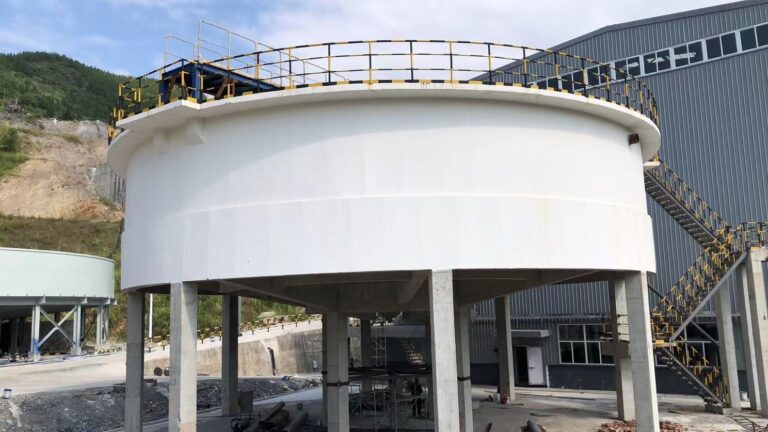
 A ceramic filter feed tank is more than a buffer vessel. It is the point where slurry concentration, residence time, agitation, overflow risk, and feed consistency are prepared for a vacuum and capillary filtration cycle. If solids settle in the tank, the DF Ceramic Filter may receive a different material at the start and end of a shift. That can change cake thickness, vacuum stability, filtrate clarity, scraper loading, and cleaning demand. A practical feed-tank design therefore starts with the slurry, not with a mixer name.
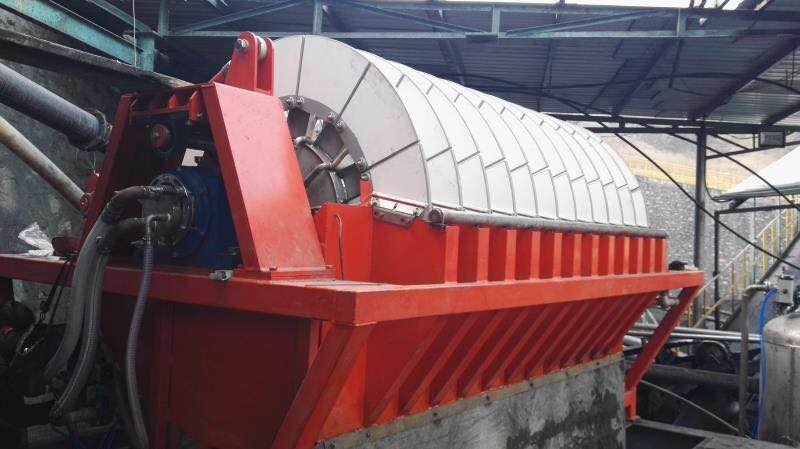
Why Does Feed-Tank Agitation Matter Before Ceramic Filtration?
The ceramic discs need a reasonably uniform suspension at the point where they enter the slurry trough. A tank that allows stratification can create alternating dilute and dense feed, even when the average density appears correct.
Prevent Solids from Settling During Normal Operation
Fine minerals can remain suspended for a useful period, while coarser or denser particles may settle quickly when the pump stops or the tank is oversized. Settling changes the solids concentration withdrawn from the bottom and can create a dense layer that is difficult to resuspend. Review particle-size distribution, solids density, tank geometry, expected idle time, and minimum operating level before selecting agitation duty.
Avoid Over-Shearing or Uncontrolled Air Entrainment
More mixing is not automatically better. Excessive turbulence can break fragile flocs, draw air into the slurry, or create a vortex that makes pump suction unstable. Air entrainment is especially undesirable when vacuum filtration depends on predictable liquid flow. The design should provide enough circulation to prevent dead zones while keeping the feedwell calm and continuously replenished.
What Feed Conditions Should Be Confirmed?
A supplier needs a feed envelope rather than one laboratory sample. Normal, minimum, maximum, and upset conditions should be linked to the tank volume and operating controls.
Solids Concentration and Particle-Size Range
Report solids concentration by mass, slurry density, dry-solids throughput, particle-size distribution, clay or ultrafine fraction, and any expected change from upstream classification. Dilute feed can lengthen the cycle or reduce cake formation, while excessively concentrated feed may raise viscosity and restrict circulation. The right agitation strategy balances suspension with pumpability.
Chemistry, Temperature, and Reagent Carryover
pH, dissolved salts, oils, flotation reagents, temperature, and scaling components may change viscosity, wetting, ceramic compatibility, and cleaning frequency. If a thickener or reagent stage sits upstream, include the expected carryover and any dilution water. Chemical compatibility should be checked for the tank, agitator, piping, seals, and the ceramic plates rather than the filter alone.
How Should the Feed Tank Be Sized and Controlled?
Tank sizing is a process decision. It must smooth short feed fluctuations without becoming a long-term settling vessel or an oversized inventory that is difficult to clean.
Balance Residence Time and Surge Capacity
Define the minimum useful residence time for pump control and the maximum time before solids begin to settle or chemistry changes. A surge tank can decouple an upstream thickener from ceramic-disc demand, but its level range must leave enough freeboard for upset flow and enough submergence for stable suction. Level control should coordinate feed, agitator status, and filtration availability.
Place the Agitator and Outlet for Complete Turnover
The outlet should not draw only from a stagnant corner or from a settled heel. Agitator position, baffles, bottom shape, and suction elevation should promote turnover across the operating level. These choices belong in the wider solid-liquid separation equipment layout together with pumps, valves, backwash lines, filtrate tanks, and access for cleaning.
Which Operating Signals Reveal an Unstable Feed?
A feed-tank problem often appears first as a filtration problem. Trend the tank and filter together so that operators can distinguish a slurry disturbance from a vacuum or ceramic-plate fault.
Compare Density, Level, Flow, and Cake Formation
Useful signals include tank level, agitator current, feed density, pump flow, vacuum condition, cake thickness, filtrate rate, filtrate solids, and scraper behavior. A repeating density swing that matches tank level or pump cycling suggests poor turnover or suction location. A rising agitator load can indicate settling, buildup, or a change in slurry rheology.
Use Sampling to Confirm the Trend
Take samples from the tank at representative levels and times rather than relying on one grab sample. Compare the top, middle, and outlet material for density and solids distribution. If the filter receives a different slurry after a stoppage, record the duration and recovery method. These observations are more useful than changing rotation speed without understanding the feed change.
How Can Feed Consistency Protect Ceramic Plates and Filtrate Quality?
Uniform feed reduces abrupt changes in cake resistance and supports stable vacuum operation. It also helps the backwash and periodic cleaning program work against a predictable fouling load.
Keep the Cake-Formation Zone Stable
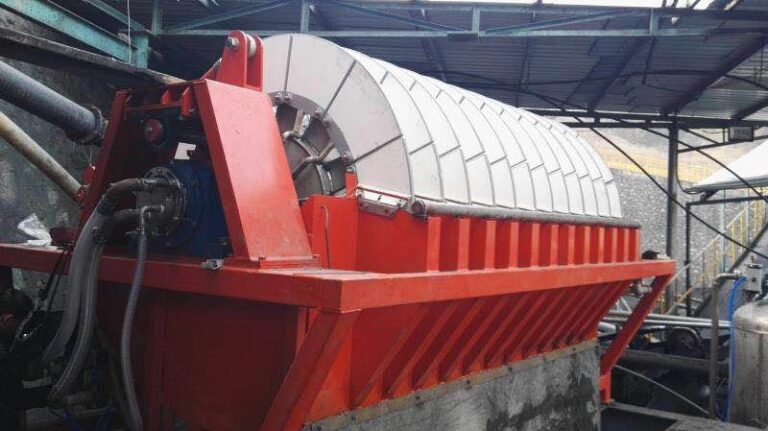
The DF process forms cake while the ceramic plate is submerged, then dries it under vacuum, discharges it with a scraper, and backwashes the internal channels. Feed concentration that swings sharply can cause thin cake, poor release, or excessive moisture. Stable circulation lets operators tune vacuum and rotation speed to the actual material rather than compensate for tank stratification.
Connect Agitation to Cleaning and Water Balance
The ceramic filter product information describes backwashing with industrial water or compressed air and periodic ultrasonic cleaning with dilute acid. The cleaning plan should account for the solids and scale entering from the feed tank. Hexin’s guide to ceramic disc filter applications also emphasizes the links between slurry characteristics, vacuum, cake thickness, filtrate quality, and cleaning.
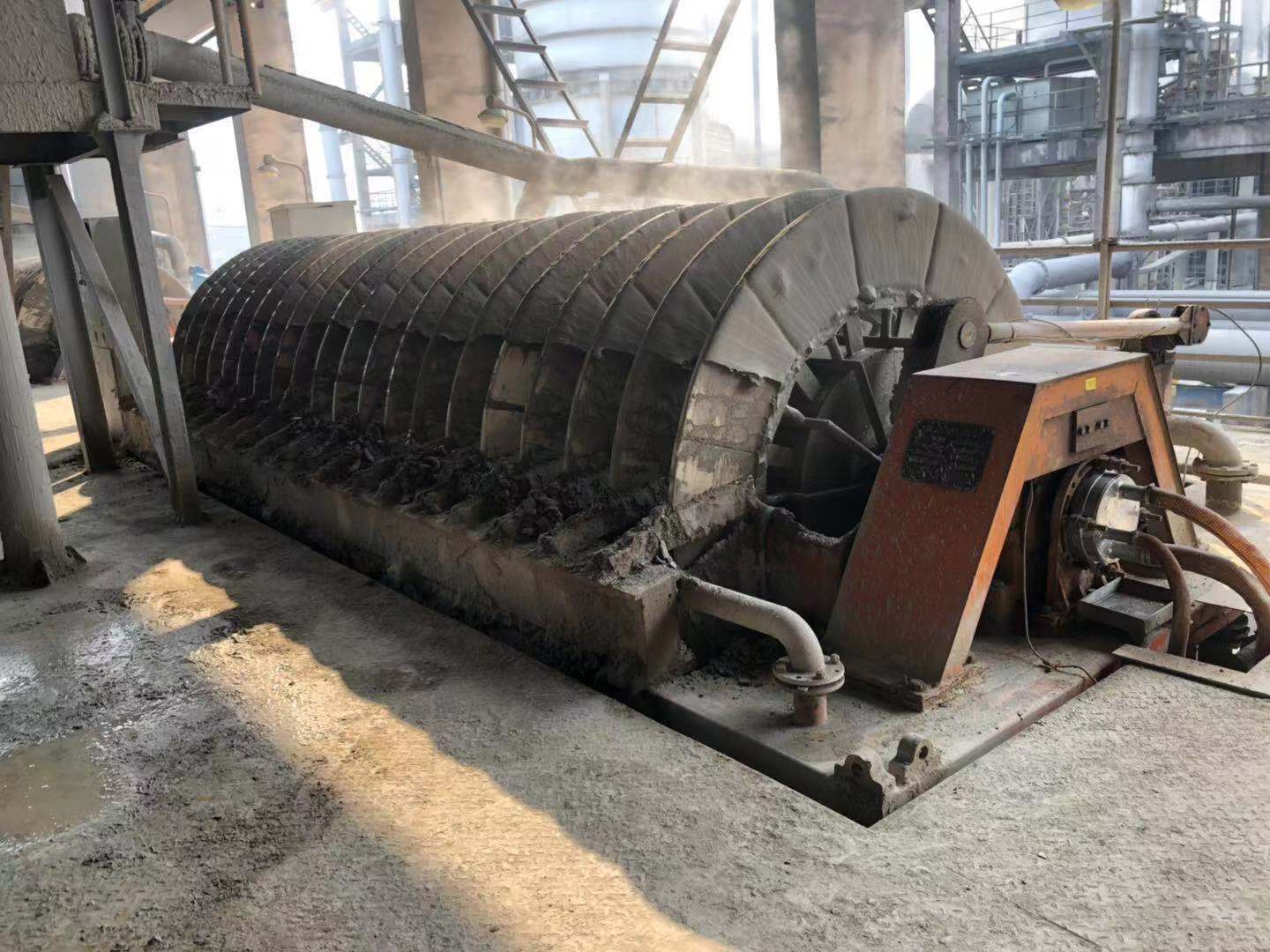
Why Consider Hexin for a Ceramic Filter Feed System?
Supplier review should cover feed-tank geometry, agitation, pumpability, sampling, cleaning, and filter controls as one process package. Selecting the disc area without confirming feed consistency leaves a major source of variability unresolved.
A Relevant Ceramic Filtration Supplier
Yantai Hexin Environmental Protection Equipment Co.,Ltd supplies DF ceramic filters for mining, concentrate, tailings, and environmental separation duties. Published product information describes compact automated equipment, vacuum and capillary filtration, cake drying, ceramic scraping, backwashing, and periodic cleaning. This makes the company a relevant supplier to consult when feed preparation must be coordinated with ceramic filtration. Final tank and filter settings should follow representative testing.
Conclusion
A ceramic filter feed tank should keep solids suspended, avoid damaging turbulence, provide stable pump suction, and smooth realistic feed variation. Confirm concentration, particle size, chemistry, temperature, idle time, and downstream cleaning requirements before deciding on tank volume and agitation. Then connect density, level, flow, vacuum, cake, and filtrate trends. Good feed preparation does not replace ceramic-filter testing, but it gives the test work and the operating team a stable basis for repeatable performance.
FAQs
Does a ceramic filter feed tank always need an agitator?
Not every slurry needs the same agitation arrangement, but the tank must prevent harmful settling and maintain a uniform feed. The decision depends on particle settling rate, solids concentration, residence time, geometry, and the consequences of stratification.
Can excessive agitation reduce ceramic filter performance?
Yes. Excessive turbulence can entrain air, disturb pump suction, break conditioning flocs, or increase wear. Agitation should be sufficient for suspension and turnover without creating a vortex or unnecessary shear.
What should be tested before selecting feed-tank equipment?
Test settling behavior, solids concentration range, rheology, temperature, chemistry, expected idle time, and the effect of mixing on downstream cake formation, vacuum stability, filtrate clarity, and cleaning response. Use representative normal and difficult samples.