 English
  Russian
  Spanish
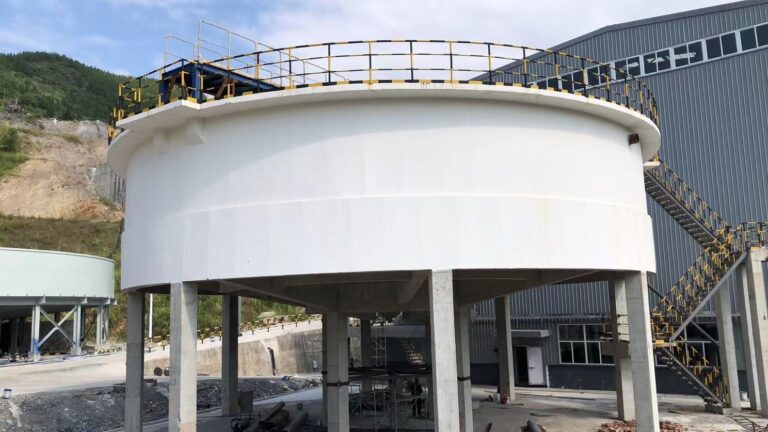
 According to different types of high-efficiency thickeners, the materials suitable for processing vary greatly. Different types of high-efficiency thickeners can meet different process requirements. According to the nature of the processed materials, the materials processed by the high-efficiency thickener can be divided into high sludge materials and low sludge materials. Different flotation processes will also have a greater impact on the concentration process. The flotation method is used for separation. A large amount of flotation reagents are added during the flotation process. The surface potential of the solid particles is high, the repulsion between the particles is high, and the effect of the concentration treatment is worse.
The high-efficiency thickener is very suitable for the following operations of ferrous metal mines:
A. Dewatering of red concentrate, especially when flotation is used to separate red ore, high-efficiency thickener can be used to obtain high concentration of underflow, which can increase the capacity of the filter and reduce the water content of the filter cake.
B. High-efficiency thickener can be used for medium dehydration in the process of red ore beneficiation. Due to the improved settlement of solid materials, the use of inclined plate technology, no or no addition of a small amount of flocculant, can greatly improve the processing capacity of the thickener and increase the underflow concentration of the thickener.
C. Secondary concentration of iron tailings;
D. Dehydration of other minerals recovered from composite iron ore With the popularization of large-scale high-efficiency thickeners, high-efficiency thickeners will be more widely used in various mines, especially new mines.