 English
  Russian
  Spanish
 Modern mining requires efficient solid-liquid separation in order to maximize extraction of valuable minerals from ores while minimizing water usage and the impact of the resulting tailings. As the grade of the ore being processed continues to decline, the focus on achieving efficient extraction while keeping costs to a minimum has increased. This is where efficient operation of a slurry thickener can play a significant role in the overall extraction process by thickening the solids, recovering a high percentage of the process water used in extraction and enabling effective processing of the tailings.
However, it is extremely difficult to maintain the concentration efficiency and the underflow density stability, particularly when dealing with fine particles, variable feed conditions or high-throughput mineral slurries. The interaction of a number of factors including feed characteristics, flocculant, thickener hydraulic design and automation control need to be understood in order to achieve thickener operation stability and to maximize the return on investment. In this article we shall discuss in detail the ways in which to increase the concentration efficiency and underflow stability of mining thickeners and introduce some of the latest technologies that are currently available for high-efficiency thickening.
What Role Does a Slurry Thickener Play in Mining Operations?
Slurry thickeners are critical pieces of equipment in today’s mining operations. As the principle means of solid-liquid separation in mining, Slurry Thickeners aid in the return of process water and in ‘dressing up’ fine minerals to be more cost effective to transport and to be of less environmental concern. Concentrating tailings and re-circulating the water from thickening in the processing plant allows for a significant reduction in the volume of waste rock released and a substantial decrease in the demand for ‘fresh water’ for use in the process.
The Function of Thickeners in Mineral Processing
The primary function of thickeners is to allow fine solids to be dissolved in process water and then to thick the liquid to a point where it can be reused within the processing plant. This makes for very sustainable processing as the liquid can then be used for other processes such as filtration, drying, or even the tailings from the processing plant. By thickening the slurry it allows for easier processing through the filters and in turn makes for better mechanical handling of the underflows. It also enables us to process in a manner that complies with regulations regarding the disposal of waste and the discharge of water into the environment by minimizing the volume of tailings.
Key Components and Working Principles
The performance of a thickener is largely influenced by the internal design and by the machinery used. The feedwell is used to introduce the slurry into the thickener. In the feedwell the slurry is distributed as evenly as possible and the kinetic energy is dissipated in order to prevent a large amount of turbulence. This turbulence can cause part of the already settled material to resuspend. In a thickener with a rake the settled material is moved towards the outlet of the thickener by means of the rake. The material is compacted as much as possible in order to prevent volume increase. The overflow is taken by the so-called overflow launders. The underflow is pumped by means of underflow pumps. The amount of underflow is controlled in order to keep the thickener in a stable state.
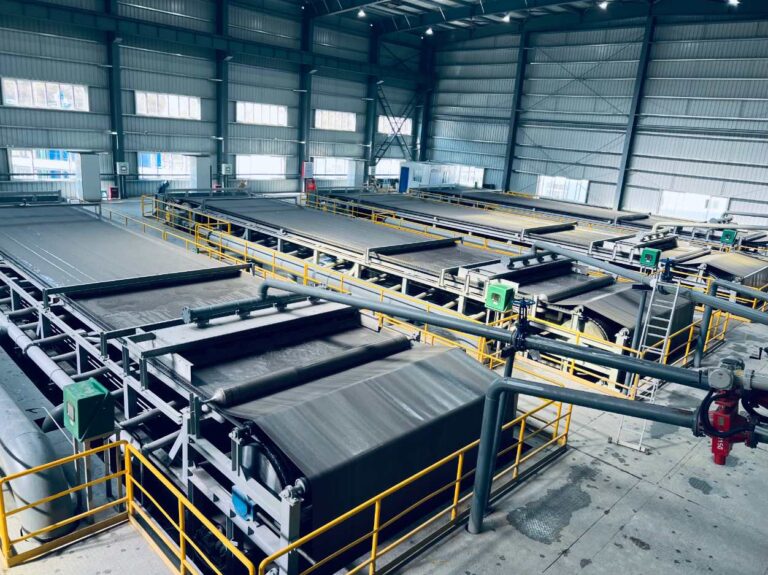
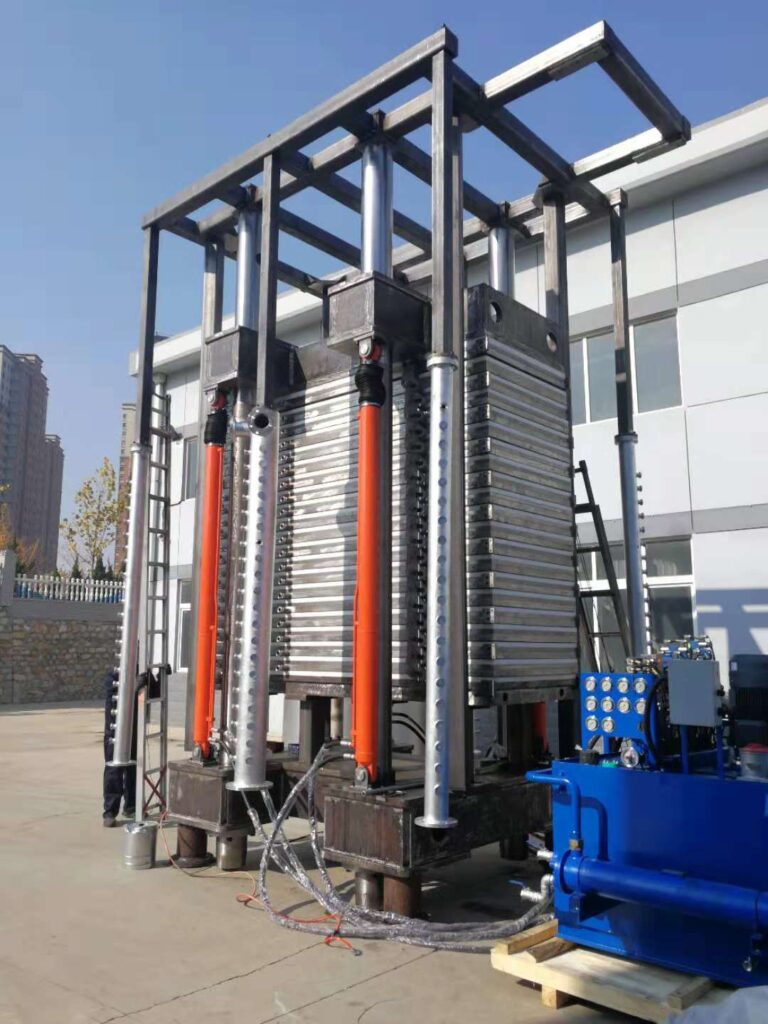
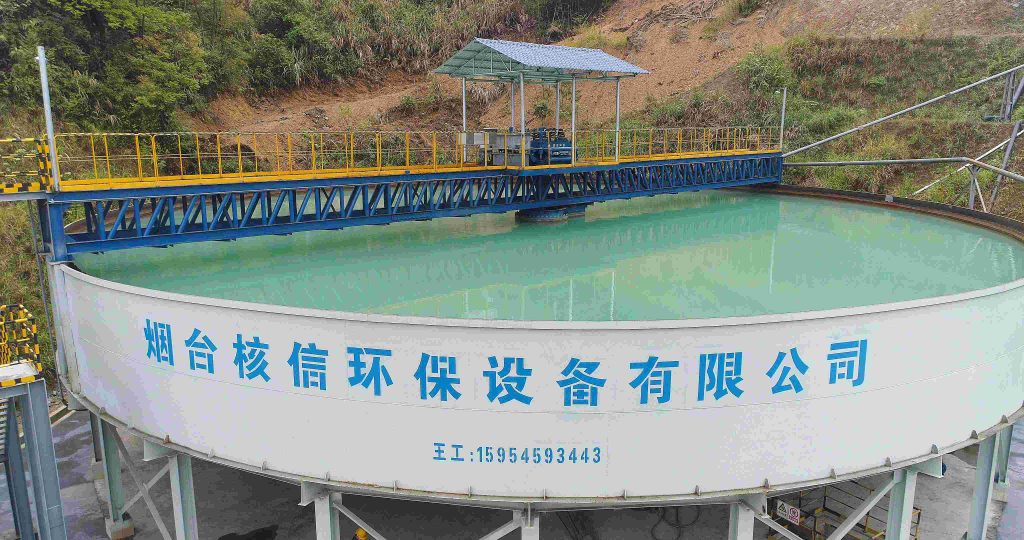
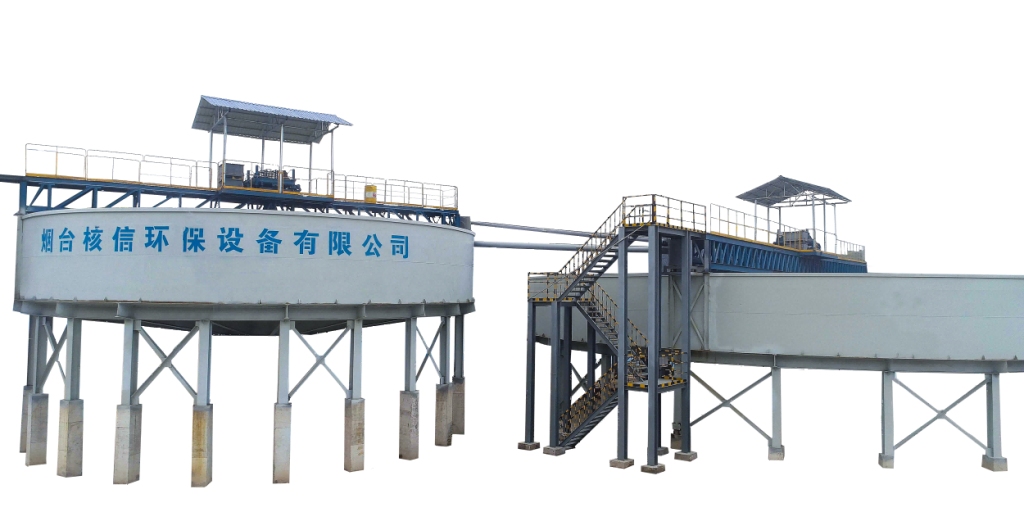
As supplier of thickening technology our company completed development of a new thickening equipment utilizing imported know how. This new thickening equipment is equipped with a center drive and with a full automatic rake system. By integrating the latest hydraulic control technology with rugged mechanical equipment the most reliable removal of sediment is achieved under varying load conditions. The thickening pool, of cylindrical shape, is provided with either a variable slope bottom or a deep cone bottom in order to reach high compression. This structural modification makes possible highest concentration on thickening, up to 3–8 times more than thickening using conventional type equipment. Concentration of underflow is up to 60–70%.
How Can Concentration Efficiency Be Enhanced in High Efficiency Thickeners?
Achieving increased concentration efficiency can be addressed through a multi-faceted approach to improve sludge concentration, incorporating optimization of tank hydraulics, and improved process control using automation. Each of these areas affects two primary issues: settling rate of suspended solids, and densification of settled solids at the bottom of tanks.
Optimizing Feed Conditioning
The feed conditioning process starts with the selection of the right flocculant to condition the particles to aggregate without excessive consumption of reagent. The pre-conditioning tanks are then mixed uniformly to produce a uniform slurry to be fed to the thickener. The pH is then adjusted in order to control the surface charge of the particles to aid settling. The high-efficiency charging system of the feed conditioning has been designed to degas the slurry, to control the feed rate of material and to accurately dose the flocculant. This allows for the best possible dispersion of the reagent throughout the slurry.
Enhancing Hydraulic Performance
The hydraulic performance of a thickener determines the efficient settling of solids within the volume of the thickener. The settling of solids can be improved by adjusting the feedwell turbulence in order to find the optimal ratio of energy dissipation and flow uniformity. In addition to this, the effective settling area can be increased by the incorporation of lamella or inclined plates, without an increase in the diameter of the thickening tank. The drive mechanism of the thickener is based on a multi-hydraulic motor system, which drives the central rotary support and the outer gear ring in a synchronous manner. The smooth operation of the thickener is maintained even in the case of changes in the density and viscosity of the slurry. These changes are detected automatically by pressure-sensitive feedback controls.
Further enhancing performance stability is advanced automation. The PLC controlled production line allows for the real-time monitoring of key production parameters such as torque, flow and density enabling stable production even in variable production processes.
What Factors Affect Underflow Stability?
Maintaining underflow stability is critical for controlling solids discharge quality from thickeners. Fluctuations in density of underflow slurry can cause problems with subsequent filtration or pumping systems. These can be expensive to run and be prone to rapid wear.
Mechanical Factors Influencing Underflow Behavior
The mechanical design of key components such as rake torque setting, affects the compaction pressure on the settled solids. The drive is required to maintain a constant speed under fluctuating load conditions. The tank geometry, particularly the cone angle and depth, determines the formation of compression zones at the base of the thickener. In High Efficiency Thickeners such as Hexin’s NGZ series, the scraper blades are distributed in a logarithmic spiral, which enables high scraping efficiency with minimum resistance. This design allows for uniform solids consolidation and prevents the risk of solids being subjected to shear stress which can cause instability in the underflow density.
Chemical Interactions Within the Slurry System
The chemical composition of concentrated slurries significantly determines their rheological properties. The appropriate dosage of a flocculant results in the optimal bonding of the particles within the flocs. An excessive amount of a flocculant, however, can entrain a large amount of water within the flocs thus lowering the effective density of the slurry. Ions from the process water can influence the coagulation in order to form stable flocs, based on the specific charge of the ions and their possible interactions with the other particles. In order to achieve flowability without losing concentration of a slurry, dispersants or other viscosity modifiers can be effectively added to the slurry.
Operational Control Strategies for Stable Underflow Density
Underflow stability is typically monitored using density meters or even torque sensors and can be configured up into an automated feedback loop. Increased viscosity triggers an alert when it exceeds set parameters, but subsequent increase in rake speed can be made in order to achieve the correct balance between compaction force and shear rate. There are also automated overload alarms and automated rake up/down functions that are based on the hydraulic pressure of the scrapers. Intelligent, to prevent mechanical damage, yet capable of maintaining discharge consistency.
How Do Modern Technologies Improve Thickener Performance?
Today’s technology has enabled thickeners to evolve into sophisticated, automated facilities that can operate to perform self regulation and predictive maintenance among other functions.
Integration of Smart Control Systems
Smart PLC-based systems are able to optimize in real-time by collecting real-time production data such as torque load trends and flocculant consumption using advanced analytics algorithms. Predictive maintenance is also enabled by analyzing vibration and hydraulic pressure over time to detect potential problems before they occur and enable planned down time as required. The system is able to be operated in auto, manual or remote mode. In remote mode, production can be monitored and controlled from a central control room by operators who can monitor and control a number of production units at different sites.
Material Innovations for Durability and Efficiency
New materials have been developed to increase the life span and efficiency of thickening equipment’s parts that are subjected to abrasive slurries and to aggressive environments which are prone to corrosion. Thickening equipment components are subjected to abrasive slurries and to aggressive environments which are prone to corrosion. Corrosion-resistant alloys enable to extend the life span of the parts, while maintaining their strength. New thickening equipment parts also feature improved rake blade geometry, which reduces the drag force on the densely packed solid layer, while preserving scraping efficiency. New drive assemblies, which are energy-efficient, consume the least possible amount of power, while maintaining sufficient torque for stable operation also during high loads.
Why Is Yantai Hexin Environmental Protection Equipment Co., Ltd a Reliable Partner for High Efficiency Thickeners?
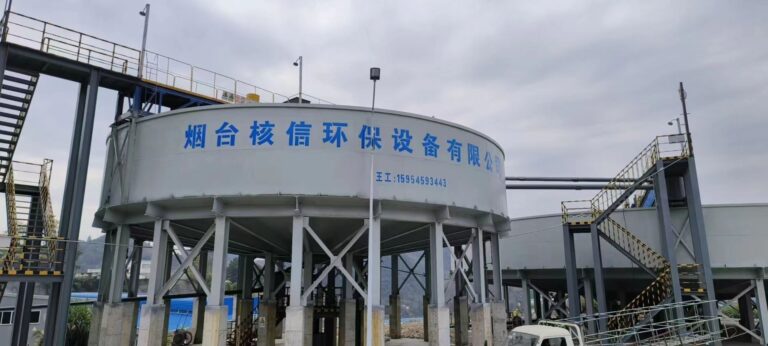
Yantai Hexin Environmental Protection Equipment Co., Ltd. has expertise designing high efficiency thickeners for worldwide mines. With its high efficient thickening equipment technologies that are successfully adopted from other countries, Hexin is able to achieve the highest level of solid-liquid separation efficiency for all kinds of mineral processing, such as Hydrometallurgy and Tailings processing etc. With its most advanced engineering design, strict quality control and extensive experience in thickening projects all over the world, Yantai Hexin can design thickening solutions that can achieve best concentrating result and thickener underflow stability, and long term use. The solutions can be applied in a variety of mineral processing plants.
Key Takeaways for Improving Concentration and Underflow Stability in Mining Thickeners
Achieving optimal thickener performance involves synchronizing mechanical design precision with chemical conditioning accuracy and real-time automation control. Feed pre-conditioning ensures homogeneous input; hydraulic optimization maximizes settling area utilization; intelligent PLC systems stabilize torque response; continuous monitoring maintains consistent underflow densities even during variable feed scenarios. Collectively these measures lead to higher concentration ratios, reduced reagent usage, improved water recovery efficiency, and enhanced overall plant productivity.
FAQs
What is the main difference between conventional thickeners and high efficiency thickeners?
High efficiency thickeners incorporate several design features such as improved feedwell design to assist in smooth feed input and deeper cone bottom design which creates a better more efficient compression zone for a given diameter over conventional style thickeners.
How can operators maintain consistent underflow density during variable feed conditions?
Use automated feedback control systems to adjust rake torque or pump speed based on real time slurry density readings from sensors within the plant’s PLC control system. This will enable the operator to maintain a consistent slurry discharge quality even when the slurry incoming to the plant is variable in quality.
Why is flocculant optimization critical for thickener performance?
Proper flocculant optimization is a balance between the cost of the reagent and the rate of settling of the floc to form strong but porous flocs that settle quickly and allow adequate clarity in the overflow stream to assure high concentration efficiency and good process stability.