 English
  Russian
  Spanish
 In mining tailings management, chemical intermediate processing, and solid waste reduction projects, the moisture content of the filter cake often determines overall project economics. High residual moisture increases transportation weight, elevates thermal drying costs, and raises environmental risks in storage facilities. Vertical press filters have proven particularly effective in addressing these issues, consistently achieving cake moisture levels of 10–15% or lower in challenging slurries. This capability stems from their advanced squeezing and dewatering mechanisms, which apply uniform high pressure and facilitate thorough moisture expulsion. The following analysis explores the pressure distribution, cake compression behavior, and residual moisture migration paths that enable this performance, with comparisons to conventional filtration methods.
The Squeezing Phase: Pressure Distribution and Cake Compression
The squeezing phase represents the critical stage where vertical press filters distinguish themselves from other dewatering technologies. During this period, mechanical forces consolidate the cake and displace water that remains trapped after initial filtration.
Pressure Application in Vertical Designs
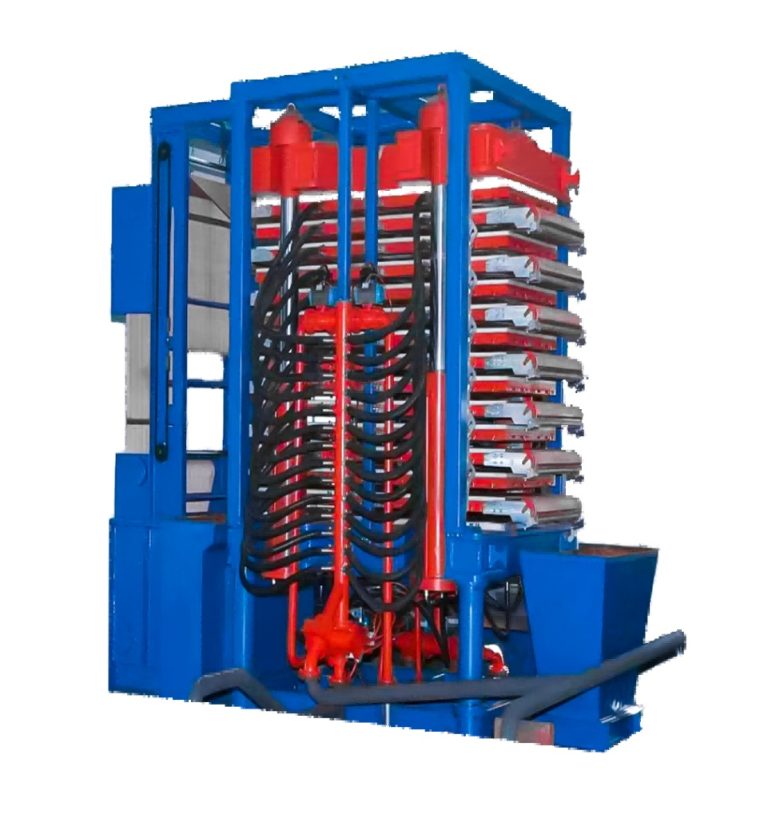
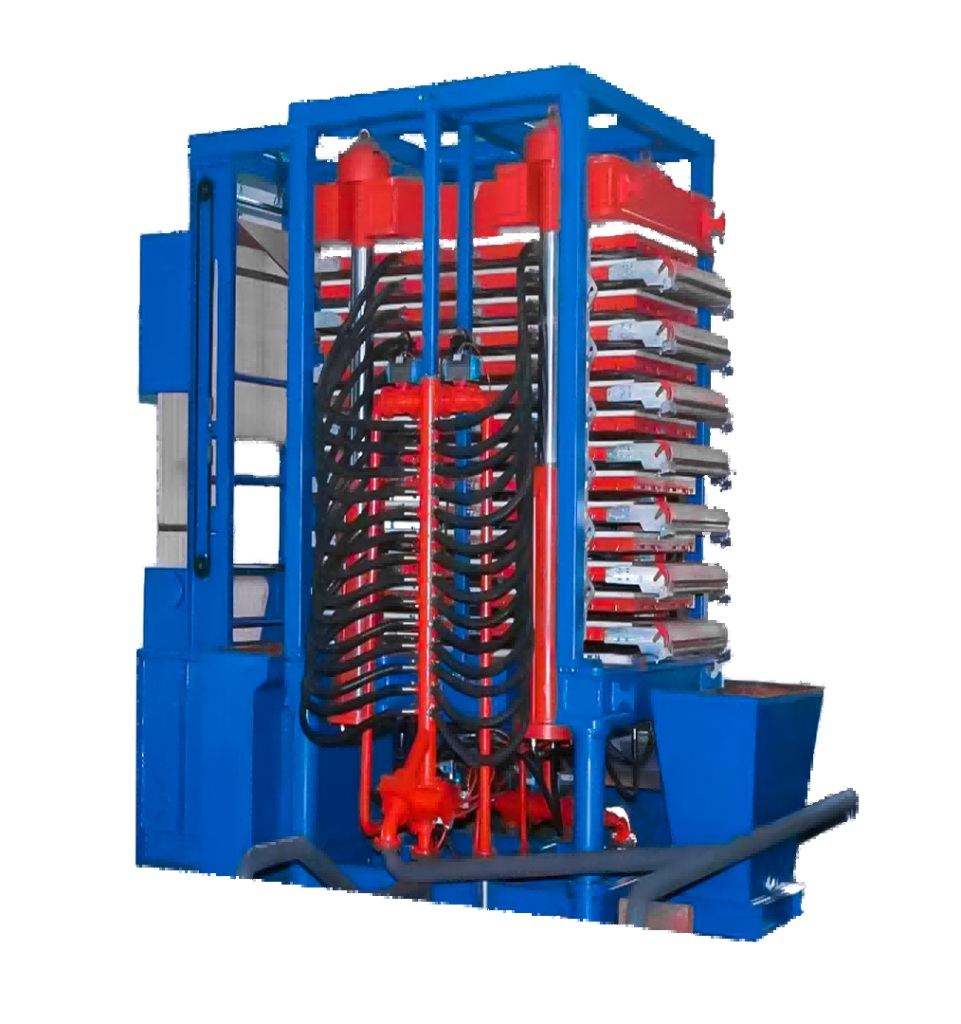
Vertical press filters arrange filter plates in a stacked tower configuration, allowing gravity to contribute to slurry distribution during chamber filling. Hydraulic cylinders close the plate pack with substantial force, creating a sealed environment. Membranes located behind the filter cloths then inflate using compressed air or water, generating direct compressive pressure on the cake surface. Operating pressures typically range from 16 to 20 bar, with some specialized units reaching higher values. This direct, dual-sided application in many vertical designs ensures more uniform stress transmission compared to horizontal chamber presses, where pressure originates primarily from the feed pump and diminishes across larger plate areas.
Compression Curves and Structural Changes
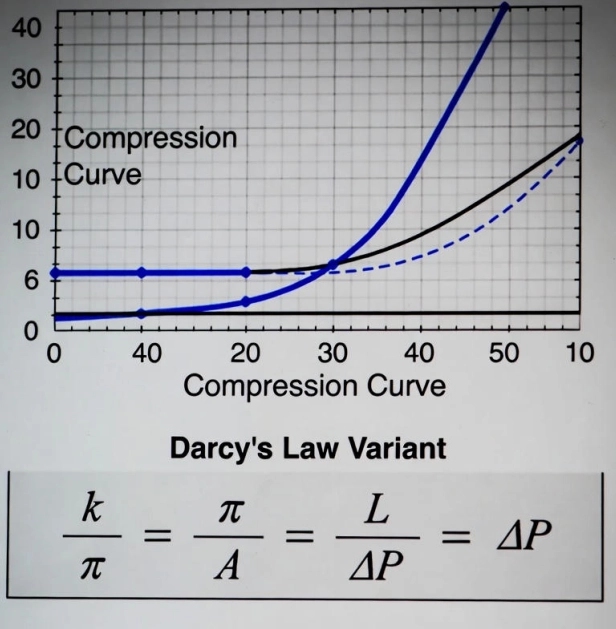
Filter cake compression follows well-documented patterns as pressure increases. Initial cake layers form with high porosity, often exceeding 60%, permitting relatively rapid filtrate flow. As membrane pressure rises, interparticle voids collapse progressively, leading to a sharp increase in specific cake resistance. This behavior aligns closely with consolidation models adapted from soil mechanics, particularly Terzaghi’s theory of one-dimensional consolidation (Terzaghi, 1943, “Theoretical Soil Mechanics”). Extensions of this framework to filtration processes demonstrate that cake porosity decreases exponentially with applied stress, particularly in compressible mineral suspensions (Wakeman and Tarleton, 1999, “Filtration: Equipment Selection, Modelling and Process Simulation”). Vertical press filters benefit from their geometry and membrane action, promoting homogeneous compression throughout the cake height and minimizing saturated zones that persist in less controlled systems.
Residual Moisture Migration Paths
Residual moisture in filter cakes exists in distinct forms: free water occupying macropores, capillary-bound water retained in finer voids, and adsorbed films on particle surfaces. The high-pressure squeezing phase primarily addresses capillary and interstitial water by establishing steep hydraulic gradients that drive liquid toward the filter medium. As pores collapse, these gradients intensify, facilitating migration along interconnected pathways. Subsequent air purging exploits the resulting permeable structure, displacing additional moisture through gas flow and partial evaporation at pore openings. This sequential mechanism effectively removes water fractions that lower-pressure methods cannot access, contributing significantly to the observed dryness advantage.
Comparison with Conventional Filtration Technologies
Vertical press filters consistently demonstrate superior dewatering performance in direct comparisons with established alternatives, particularly for compressible and fine-particle slurries common in industrial applications.
Against Standard Chamber Filter Presses
Standard chamber filter presses form and express cakes using feed pressure alone, typically limited to 10–15 bar. While effective for many materials, this approach leaves compressible cakes with higher residual moisture, often in the 18–25% range for mineral tailings. The absence of secondary membrane squeezing allows capillary water to remain trapped within the consolidated structure. Vertical press filters overcome this limitation through dedicated expression phases, achieving moisture reductions of 5–10 percentage points under comparable operating conditions.
Against Vacuum Filtration Systems
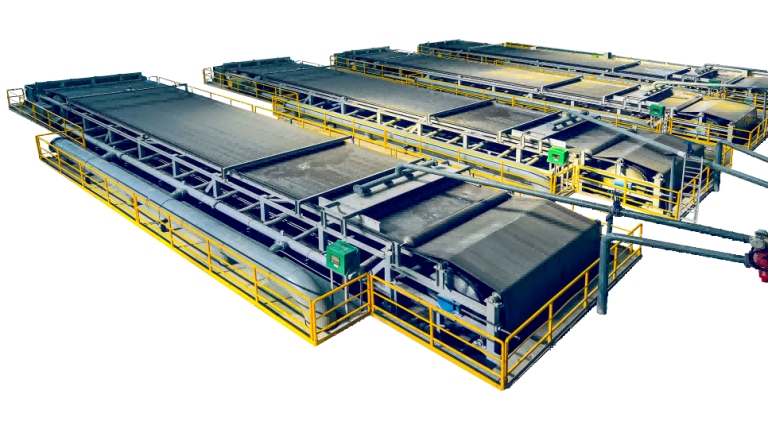
Vacuum filtration systems operate under negative pressure differentials, rarely exceeding 0.8 bar. This constraint severely limits moisture removal from fine or compressible suspensions, resulting in cakes with 20–30% moisture in many cases. The reliance on atmospheric pressure for driving force restricts penetration into smaller pores. Vertical press filters, employing positive pressures orders of magnitude higher combined with gravity assistance in the tower configuration, extract water far more thoroughly in a single operation, often eliminating the need for supplementary drying equipment.
Cost Implications in Real-World Projects
The economic impact of lower cake moisture becomes evident in large-scale operations. A copper tailings dewatering facility that adopted vertical press filtration reduced average moisture from 22% to 13%, decreasing haul truck payloads and cutting annual transportation costs by approximately one-third. In chemical intermediate processing, drier cakes have simplified reactor charging sequences and minimized solvent losses during transfer. Municipal sludge treatment projects report similar benefits, with reduced disposal volumes improving compliance with landfill regulations and lowering overall handling expenses. These examples illustrate how incremental moisture reductions translate into substantial operational savings across diverse industrial sectors.
Introducing Yantai Hexin Environmental Protection Equipment Co., Ltd.
Yantai Hexin Environmental Protection Equipment Co., Ltd. has established a strong reputation in solid-liquid separation technology through focused development over more than two decades. Based in Shandong Province, the company specializes in designing and manufacturing filtration systems engineered for demanding industrial environments. Hexin’s vertical press filters incorporate robust hydraulic systems, durable membrane technology, and sophisticated control features that support reliable, high-performance dewatering in mining concentrates, chemical slurries, and environmental applications.
Conclusion
Vertical press filters achieve exceptionally dry cakes through precise application of high-pressure membrane squeezing and systematic moisture expulsion mechanisms. Uniform pressure distribution, progressive cake consolidation, and effective residual water migration pathways enable performance that surpasses standard chamber presses and vacuum filtration systems. The resulting moisture reductions deliver measurable benefits in mining tailings management, chemical intermediate dewatering, and solid waste reduction, including lower transportation weights, decreased drying requirements, and improved overall process economics. These characteristics position vertical press filters as an essential technology for applications where cake dryness directly influences operational efficiency and cost control.
FAQs
What enables vertical press filters to produce drier cakes than standard chamber presses?
Dedicated membrane squeezing applies additional uniform pressure after chamber filling, compressing the cake more thoroughly and removing capillary-bound water that remains in conventional systems.
How does pressure distribution in vertical press filters contribute to lower cake moisture?
The tower configuration and membrane inflation create consistent stress across the cake, facilitating progressive consolidation and efficient moisture migration paths.
In mining tailings dewatering, why do vertical press filters reduce downstream costs?
Cakes with moisture typically below 15% reduce transport mass and volume, often yielding 20–40% savings in hauling and storage compared to wetter conventional output.
What role does the squeezing phase play in chemical intermediate moisture control?
High-pressure membrane expression collapses pores and drives residual water toward the filter medium, producing drier cakes that streamline downstream processing.
Compared to vacuum filtration, what advantages do vertical press filters offer in solid waste reduction?
Higher positive pressure and staged dewatering extract significantly more moisture, decreasing disposal volumes and frequently eliminating separate drying steps.