
 English
  Russian
  Spanish
 Vacuum Belt Filter Systems for Continuous Dewatering: Design, Performance, and Limits
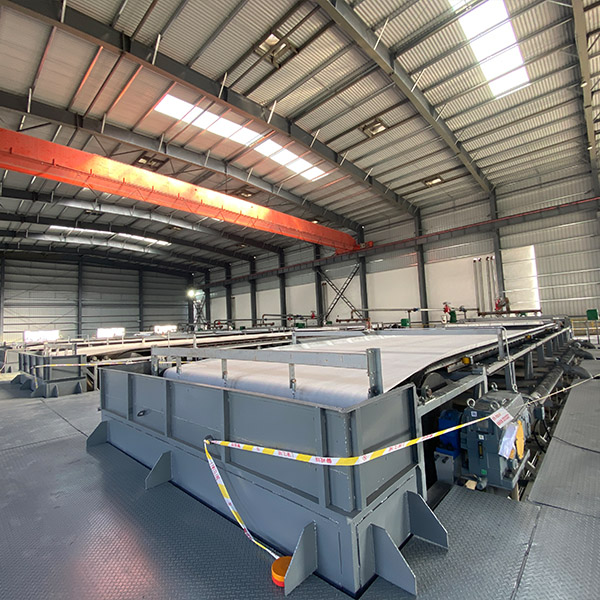
Industrial slurries rarely fail a project in dramatic ways. They fail by quietly stretching cycle times, pushing moisture out of spec, and turning cake washing into an inconsistent routine that makes downstream handling unpredictable. A vacuum belt filter system is often selected when a plant needs continuous dewatering with repeatable cake washing and dependable cloth […]
Vertical Filter Press vs Belt Filter: Which One Fits Your Process Better?
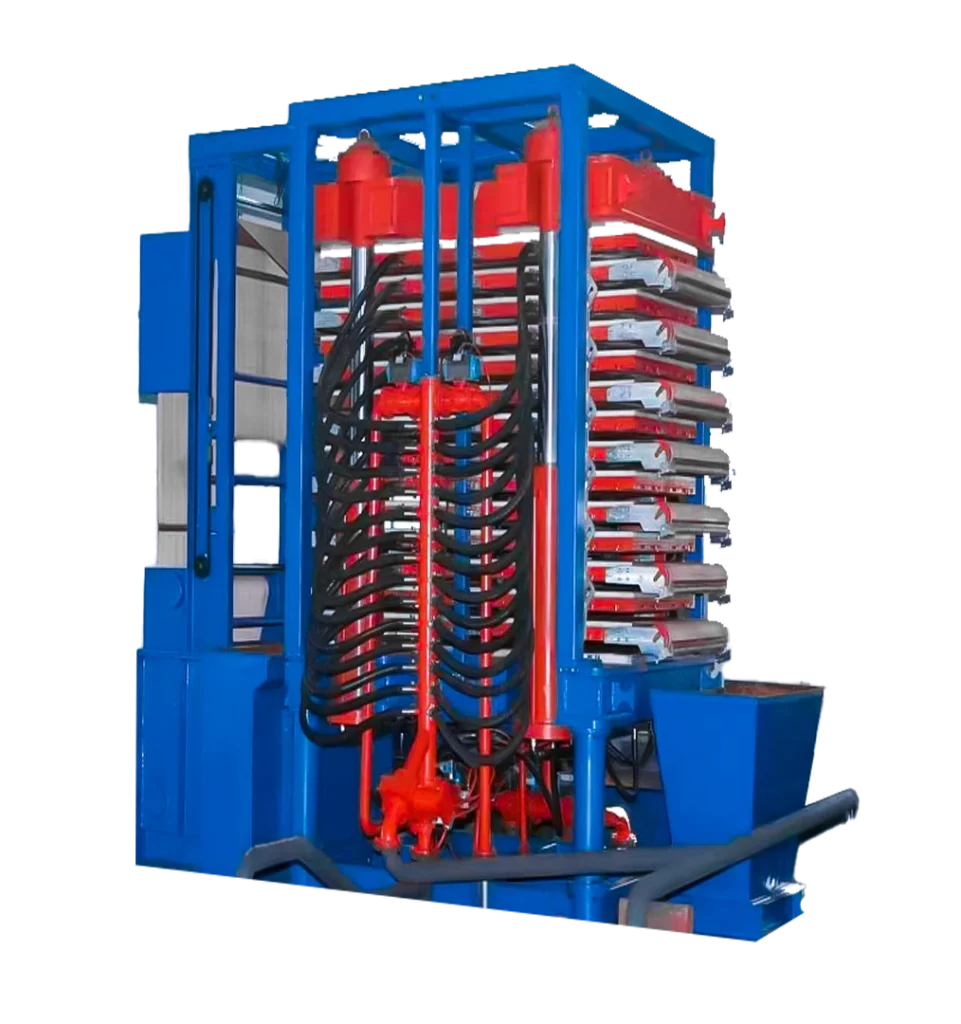
In industries where the handling of slurries is involved in daily operations, precise operation for achieving solid-liquid separation is of utmost importance. Tailings from mining operations need to be dehydrated before storage. Residues from chemical plants need to have their moisture content strictly controlled. Sludge from environmental protection projects needs to be treated to meet […]
Common Solid-Liquid Separation Problems in Mining, Chemical, and Environmental Projects
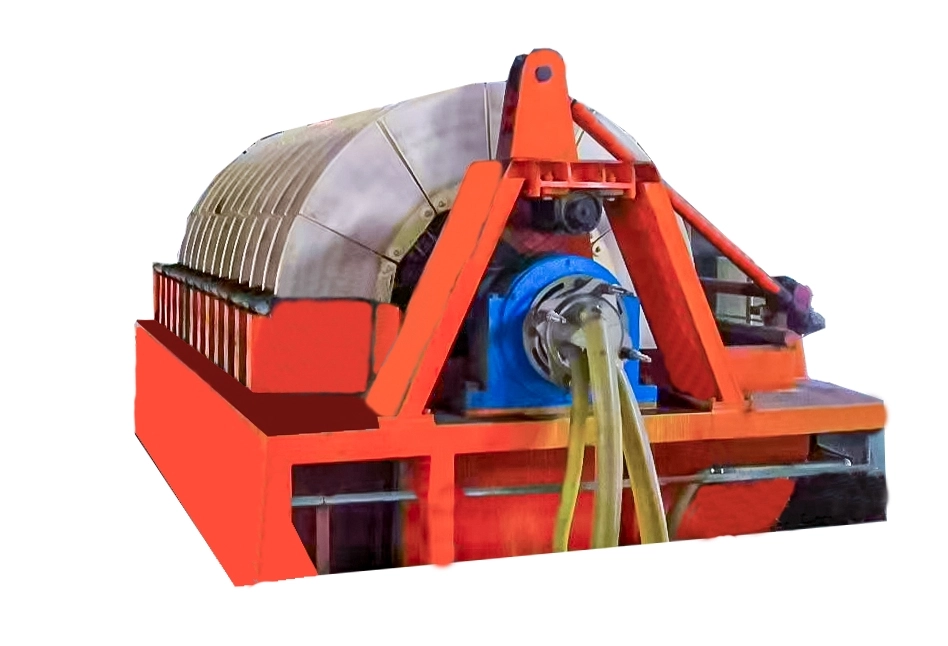
Solid-liquid separation shows up in more places than most engineers realize at first. A mining plant struggles with tailings that won’t settle. A chemical facility deals with slurry that clogs filters. A wastewater site fights to meet discharge limits on suspended solids. At first glance, the task looks simple—pull the liquid away from the solids. […]
How to Choose the Right Solid-Liquid Separation Equipment for Industrial Applications
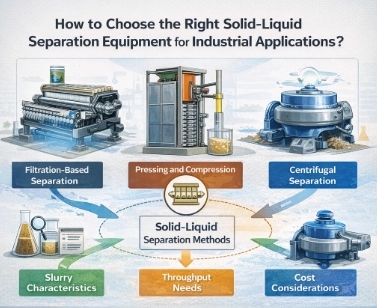
Most solid-liquid separation problems do not begin with equipment failure. They begin much earlier, often at the moment when a project team decides that one machine “should work” because it worked somewhere else. At first, everything looks fine. The slurry feeds smoothly. Filtrate flows. Cake forms. Then, over time, moisture levels stay higher than expected. […]
What Is Solid-Liquid Separation? Methods, Equipment, and Industrial Use Cases
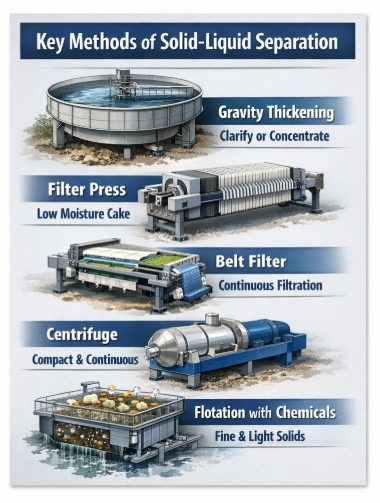
Solid-liquid separation sits at the crossroads of water recovery, compliance, disposal cost, drying energy, and product yield. Most plants can “separate” in a basic sense. The problem is that many systems still miss the mark because the project never defined what success looks like in operating terms: how dry the cake must be, how clear […]
Why Vertical Press Filters Deliver Drier Cakes: Inside the Squeezing and Dewatering Mechanism
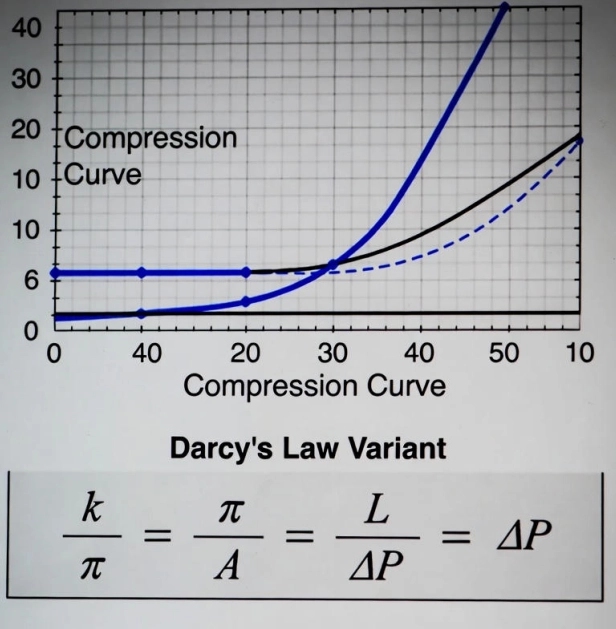
In mining tailings management, chemical intermediate processing, and solid waste reduction projects, the moisture content of the filter cake often determines overall project economics. High residual moisture increases transportation weight, elevates thermal drying costs, and raises environmental risks in storage facilities. Vertical press filters have proven particularly effective in addressing these issues, consistently achieving cake […]
The Filtration Science Behind Vertical Press Filters: Pressure, Flow, and Pore Structure Evolution
Vertical press filters represent one of the most effective technologies for high-efficiency solid-liquid separation in modern industry. Widely applied in mineral processing, metallurgical tailings, chemical production, municipal sludge dewatering, and wastewater treatment, these machines achieve cake moisture levels that belt filters and centrifuges can only approach at far higher energy cost. The superior performance arises […]
Vertical Press Filter vs. Traditional Plate and Frame: What Changes in the Filtration Principle?
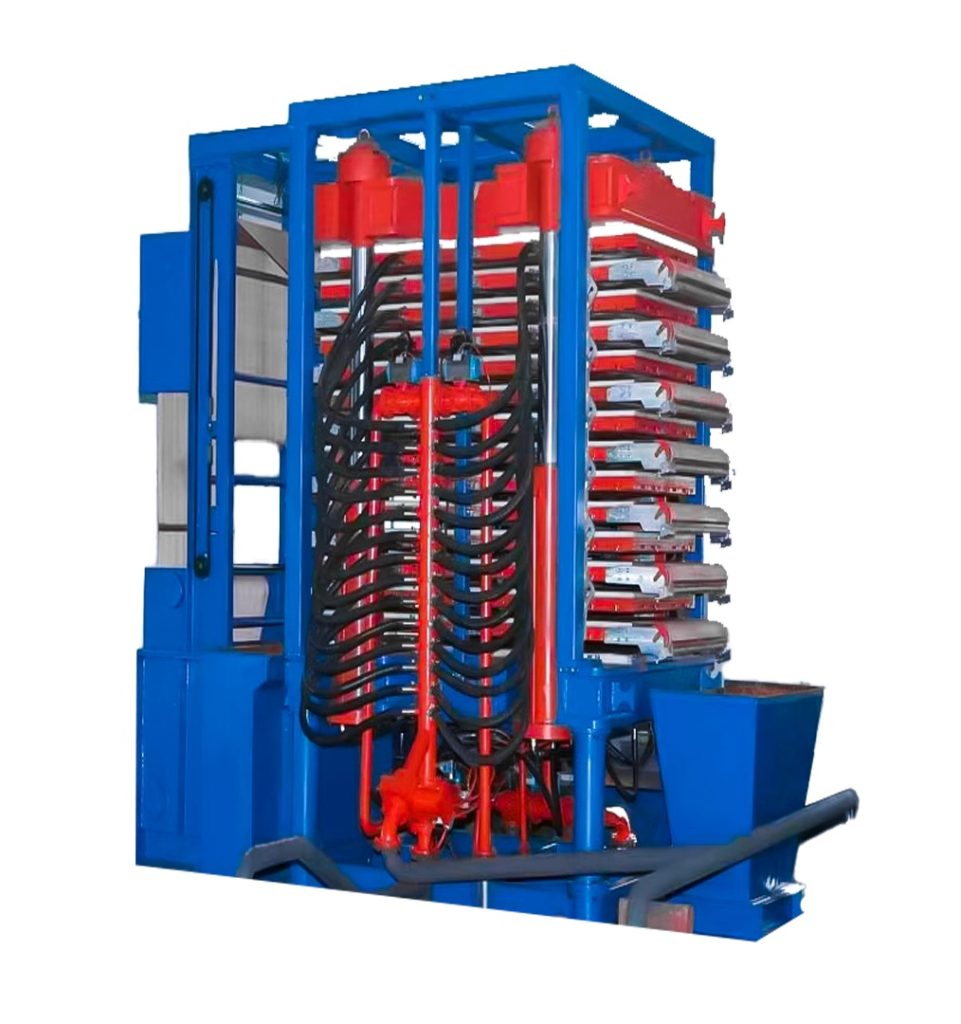
Walk into an older concentrator or chemical plant and you can usually tell where the filtration area is long before you see the equipment. The air is humid, the floor is wet, and somewhere in the middle a row of traditional plate and frame presses is cycling with a mix of manual valves, hose changes […]
How a Vertical Press Filter Really Works: From Slurry Feed to Dry Cake
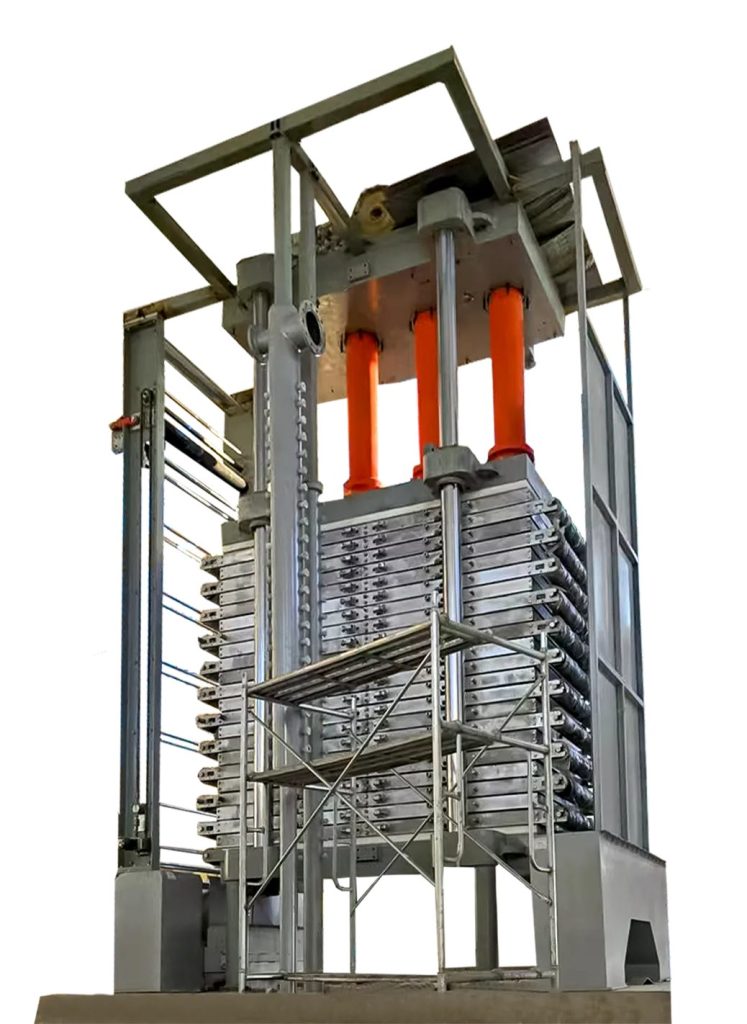
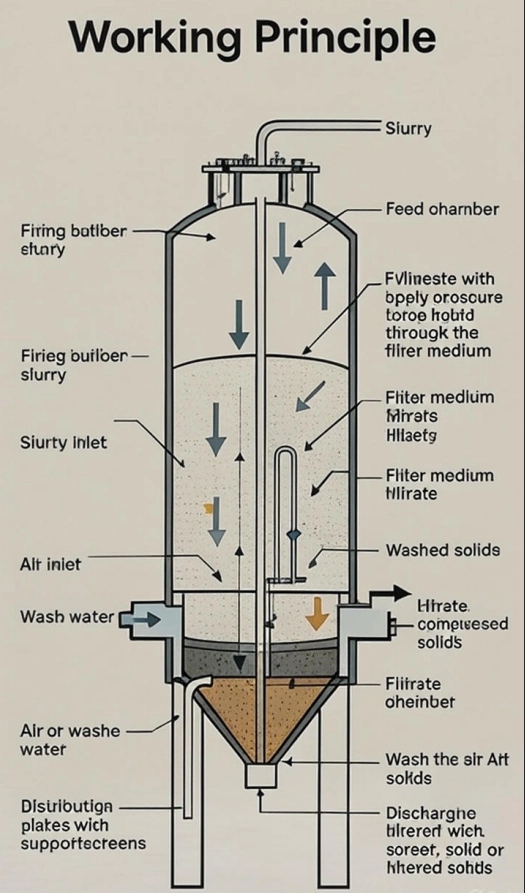
For a lot of plants, the vertical press filter is that tall, enclosed machine at the end of the line that “just makes dry cake.” Operators know the cycle time and a few setpoints, but when moisture creeps up or throughput drops, the root cause is often unclear. At that point, knowing how a vertical […]
How Ceramic Filters Improve Concentrate Dewatering in Ferrous and Non-Ferrous Metal Mining
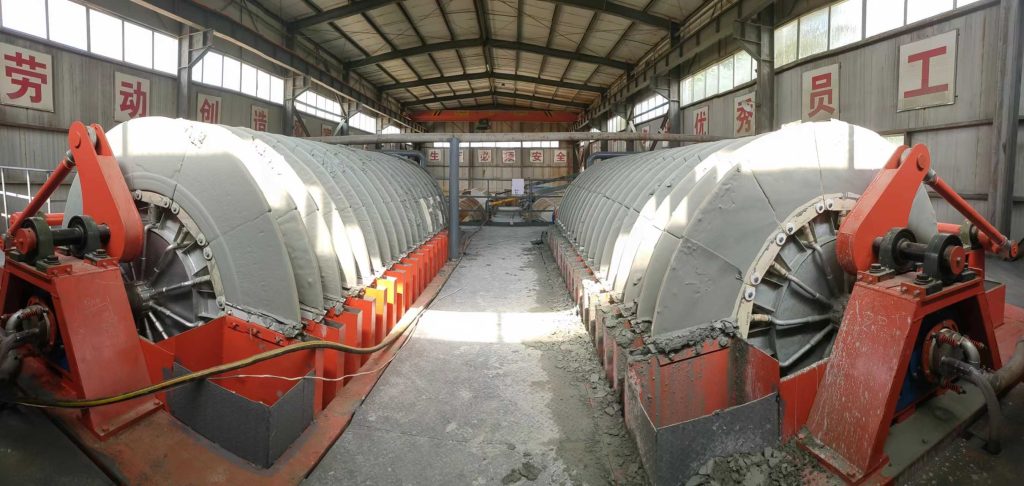
In most concentrators, the grinding and flotation circuits get all the attention. But ask any pellet plant operator, smelter manager, or logistics supervisor and they’ll tell you: concentrate dewatering can quietly make or break the operation. If concentrate leaves the plant too wet, you pay for it three times—higher transport cost, higher fuel use in […]