 Spanish
  English
  Russian
 In the face of growing environmental scrutiny and the push for more sustainable mining practices, dry stacking of tailings has emerged as a preferred alternative to traditional wet impoundments. Central to the success of any dry stacking system is the dewatering process, which transforms high-moisture slurry into a stable, stackable solid while simultaneously recovering valuable process water for reuse. Effective dewatering not only reduces the risks associated with tailings dam failures but also shrinks the surface footprint of waste storage and simplifies site rehabilitation after closure. However, achieving the required moisture levels and throughput efficiency demands a careful selection of dewatering equipment—ranging from high‑density thickeners and vacuum belt filters to filter presses and centrifuges—each with distinct capabilities and operational trade‑offs. This article provides a comprehensive overview of the dewatering process chain, examines the key equipment options available, and offers practical guidance for choosing the right technology based on material characteristics, production scale, and sustainability objectives. Understanding these elements is essential for mining engineers and project developers aiming to build robust, compliant, and cost‑effective dry stacking operations.
What Is the Role of Tailings Dewatering in Dry Stacking Systems?
Dewatering of tailings is a crucial component of establishment of safe, efficient and sustainable dry stacking systems in the mining industry. Dewatering of tailings decreases the amount of water contained in them thus facilitating their stability and preventing possible negative environmental impact. In addition, dewatering of tailings enables to recover process water which can be used in the processing plant in order to optimize the use of resources and to comply with all environmental regulations that are becoming stricter and stricter.
Key Objectives of Tailings Dewatering
The main purpose of dewatering of tailings is to decrease the moisture content so that solid material can be stored in stacked form without use of large dams for containment. The main goal of dewatering is to minimize risk of failure of tailings dams and to increase safety of operations. In addition, dewatering allows maximum recovery of water from tailings slurry and, as a result, there is no need to use external freshwater for processing in a closed water cycle.
Benefits of Adopting Dry Stacking Systems
Dry stacking of tailings has many advantages over the traditional tailing pond over the long term. They are more environmentally friendly in terms of less seepage and less surface water contamination, and they use less land. In terms of maintenance, there is less required for a dry stacking system as there are no large impoundments to maintain, and subsequent post-closure liabilities are reduced. The sites can also be rehabilitated in a more efficient manner once the operation has closed as the material that has been deposited in the dry stacking facility is stable.
How Does the Tailings Dewatering Process Work?
The dewatering of tailings goes through a number of steps which ultimately convert the slurry into a semi-solid or even solid form which can then be stockpiled or even transported. Each step in the process removes as much free water as well as bound water in order to continue the process in a logical fashion.
Primary Thickening Stage
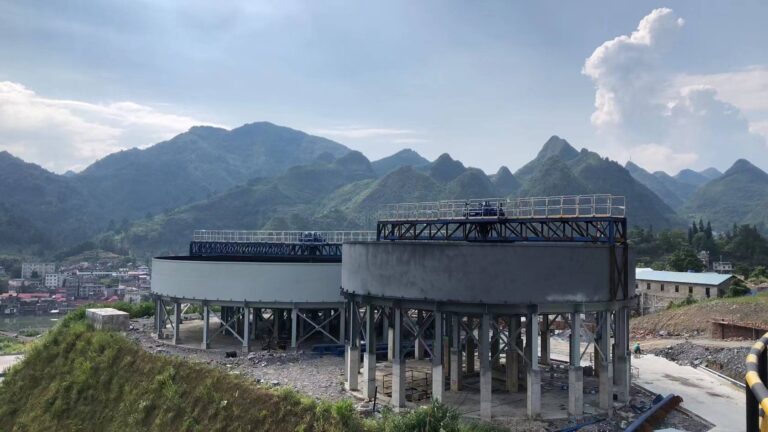
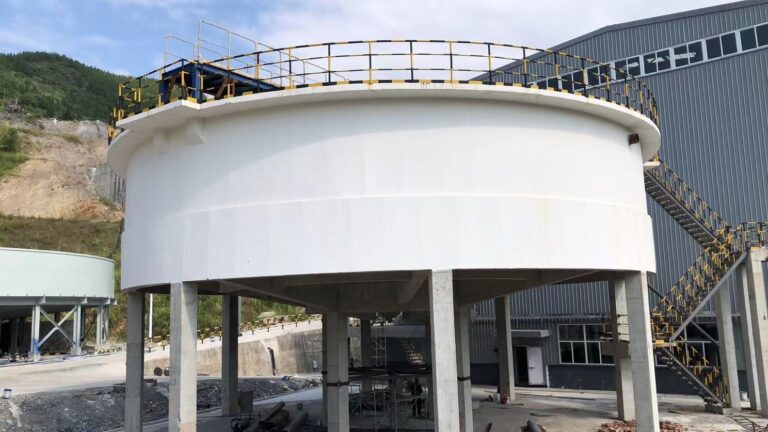
For initial concentration of slurries, at high rates or high densities, thickening is performed by allowing the solids to settle by gravity in high-rate or high-density thickeners. The thickening step reduces the volume of the liquid prior to mechanical filtration, and also enables a constant feed density to be maintained for the subsequent mechanical filtration equipment. High-density thickeners are also used as a buffer storage between the preceding processing stages and the appropriate size of filtration equipment in order to stabilize the feed rates to these units.
Mechanical Dewatering Stage
After thickening, dewatering by mechanical means can be carried out using vacuum filters, pressure filters or centrifuges. By applying vacuum, pressure or centrifugal force of separation, these units remove a large amount of water to produce a filter cake suitable for dry stacking. The choice of unit will depend on a number of key parameters including particle size distribution, mineral type, design throughput and required dry content.
Water Recovery and Reuse
The filtrate that is recovered from both the thickening stage and the filtration stage is clarified and is returned to the process plant circuit. The recovered water is used to reduce the amount of fresh water that is required as an intake to the process to enhance the operations sustainability by ensuring that the operations are operating in a more efficient manner.
What Equipment Options Are Available for Tailings Dewatering?
There are many dewatering equipment options available to manage a wide variety of materials and project requirements. Each piece of dewatering equipment has its own set of benefits including increased efficiency, reduced costs, and ease of integration into existing processes.
High-Density Thickeners
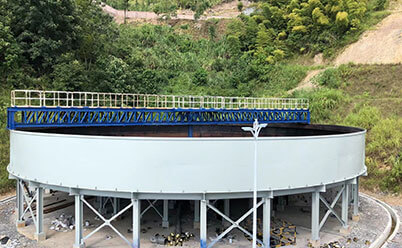
High-density thickeners are designed to produce high underflow densities by optimizing flocculation and by the raking system. The high-density thickener can be effectively used as a pre-dewatering thickener prior to a filtration system since it reduces the volume to be handled by subsequent processing units. With low energy, simple mechanical design and robust construction high-density thickening is suitable for coarse to medium fine tailings.
Filtros de cinturón de vacío
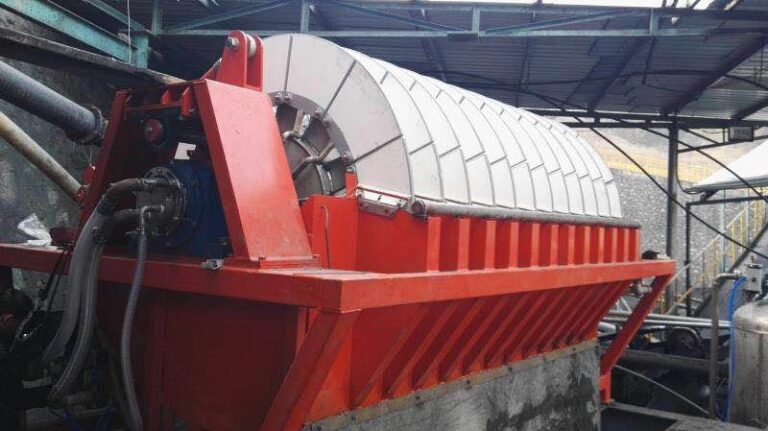
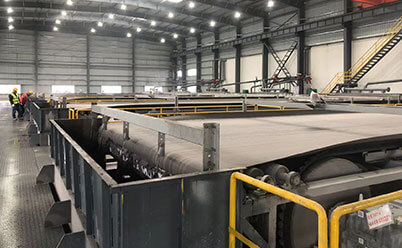
Vacuum belt filters are used for large scale mining operations that require a moderate level of dryness. The horizontal vacuum filter is a highly efficient solid-liquid separation device. It operates by utilizing the filter cloth as the medium. The filter uses a combination of gravity to pull the solids down into the cloth and vacuum to pull the slurry into the filter. It is used in many industries such as metallurgy, mining, petrochemicals, chemicals, pharmaceuticals, and environmental protection. Typical uses are for solid-liquid separation, for dewatering gypsum in flue gas desulfurization, and for treating tailings. Horizontal vacuum filters are continuous in operation allowing for consistent feed rates. They are also designed to be modular operation allowing for easy relocation to remote mine sites.
Filter Press Systems (Plate and Frame / Membrane Types)
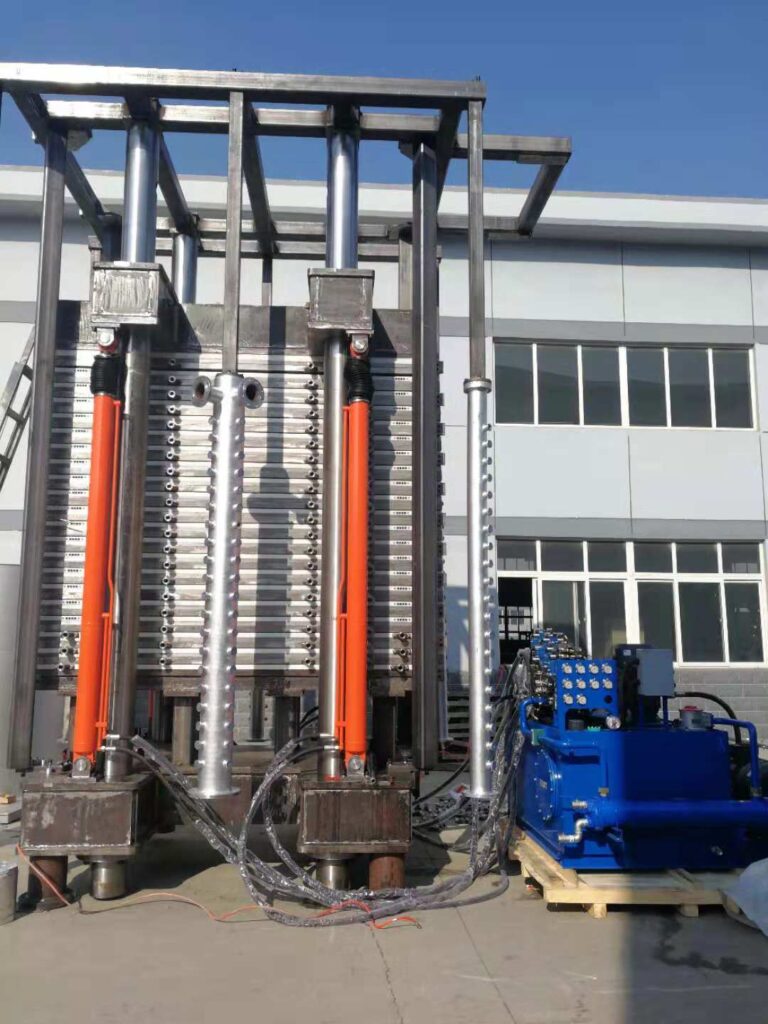
A filter press is able to provide high-pressure filtration and, after press separation, very dry cakes which can be dry stacked. The TFP vertical filter press is a highly efficient and cost effective, fully automated system for solid-liquid separation. The process of filtration, press dewatering, washing, dryness, discharge, and cloth opening and cloth closure for filter cloth regeneration is all continuous and fully automated. This type of press is best suited for applications dealing with fine particulate material where moisture is to be removed to the highest degree, to form a dry cake suitable for such things as waste disposal or long distance transport.
Centrifugal Separators (Decanter Centrifuges)
A Centrifugal separator uses the centrifugal force to efficiently remove solid from liquid for all sizes of solid in the liquid. A centrifugal separator is a compact unit, which can be skid mounted for use at remote locations with minimal surrounding infrastructure. While energy is used in a Centrifugal separator and generally more than used in some other mechanical methods of solid/liquid separation, the time to start up after shutdown is typically very fast allowing for efficient operation even with frequently changing feed conditions.
How to Select the Right Dewatering Equipment for a Project?
Choosing the right equipment for dewatering requires a detailed evaluation of the key parameters of the technical requirements and the economic feasibility studies of the various options. Dryness level and throughput rate are just two parameters that need to be taken into account. A holistic assessment of the entire system in relation to the broader objectives of the overall plant design is more important.
Factors Influencing Equipment Selection
Selection of a suitable dryer is influenced by a number of key factors. These include the particle size distribution and the mineral composition of the tailings to be used as the feed material, the ultimate moisture content required of the material in order to meet geotechnical stability criteria, the capacity of the processing plant, available space for the installation, capital expenditure and the degree to which the installation is to be serviceable to enable routine maintenance.
Integration with Process Flow Design
The integration with other upstream thickening units and downstream equipment such as conveyors or stacking systems enables continuous operation of all systems. Pilot-scale test work enables an assessment of the achievable dryness and under site-specific conditions, and automation enables consistent drying at large facilities by online control of parameters.
¿Por qué elegir Yantai Hexin Ambient Protection Equipment Co., Ltd.?
Yantai Hexin Ambient Protection Equipment Co., Ltd. is a leading worldwide supplier of dewatering solutions for the mining industry. Yantai Hexin Environmental Protection Equipment Co.,Ltd . is a 20 years experienced designer and manufacturer of filter equipment. Hexin’s advanced solutions for dewatering include high rate thickeners (NGZ series), belt filters (BF series), ceramic filters (DF series) and high pressure filter presses (TFP series) that are all designed with energy efficiency in mind to enable dry stacking.
We strictly follow the standards of country, industry and our company when producing our equipment. Our company has long passed the ISO9001 quality control system. High quality equipment are able to work normally in harsh situation of big mining projects. Our Phosphor mine tailing filtering EPC project or Heibei Nanshan Group Iron Tailing EPC project—tailing recycle and dry discharge are good examples. We provide Lifetime after sales service for our customers, technical support for the whole life of our operating equipment.
What Are the Future Trends in Tailings Dewatering Technology?
The future of tailings dewatering will develop towards more efficiency of automation as well as higher performance of the material in process conditions.
Advancements in Filtration Media
The next generation of filtration media will allow for better control of permeability to enable increased processing speed while maintaining optimal cake quality. Importantly, the media will also have superior chemical resistance to enable effective processing of difficult to treat ores that produce large quantities of residues that are reactive in nature.
Digital Monitoring and Automation
Digital monitoring tools are integrated to track key parameters such as feed density variations or pressure changes in real time by means of sensor feedback loops running on predictive maintenance algorithms in order to minimize downtime events on key production lines.
Modular System Development
New modular designs enable deployment on scale as exploration goes to development and production increases. They can be delivered in compact form and put into service rapidly where as a traditional fixed facility would require large fixed investment and be inflexible to change.
Conclusión
Dewatering of tailings remains a key component for the implementation of environmental safe dry stacking systems which are the basis of current sustainability strategies of mines around the world. Thickening technologies as well as filtration systems of the highest performance – from vacuum belt press through to tower filter press – are used for this purpose. Reliability of these systems is guaranteed by experienced suppliers as Yantai Hexin Environmental Protection Equipment Co., Ltd., who also guarantee a high quality of their products over a long period of time.
Preguntas frecuentes
What factors determine the choice between vacuum filters and filter presses?
Selection depends primarily on target dryness levels required for safe stacking stability along with throughput expectations relative to capital investment constraints; fine-grained materials typically favor pressure-based presses while coarser materials perform well using continuous vacuum filtration systems.
How does automation improve dewatering system performance?
Automation allows for control of feed density as well as precise control of pressure in filtration cycles to assure consistent cake quality. It also allows for automation of the filtration process and significantly reduces the need for manpower to monitor and manage the filtration process on a continuous basis.
Can existing wet tailing facilities be converted into dry stacking systems?
Yes—conversion feasibility is defined by physical site constraints and geotechnical behavior but generally involves the retrofit of existing processing plant to include a high density thickening stage followed by a mechanical filtration stage. This will need to be configured to comply with the relevant waste disposal regulations.