 English
  Russian
  Spanish
 Building on the fundamentals of solid liquid separation methods, equipment, and industrial use cases, the point often arrives in plant operations where the dewatering selection starts directly affecting water recovery efficiency, tailings management expenses, and ongoing regulatory adherence. Across mining tailings lines, concentrate thickening circuits, chemical sludge processing, and wastewater facilities, the belt filter press, ceramic disc filter, and tower filter press emerge repeatedly as the core options during specification reviews. Each addresses slurry properties, feed rates, and cake requirements through distinct mechanisms, and an ill-matched choice commonly results in elevated energy use, suboptimal cake handling, or unplanned maintenance.
This examination relies on data from operating installations and performance records to detail how these solid-liquid separation equipment variants perform on site—their operational mechanics, documented results, application alignments, and the field factors that usually settle the equipment choice.
Operational Mechanics Observed in Practice
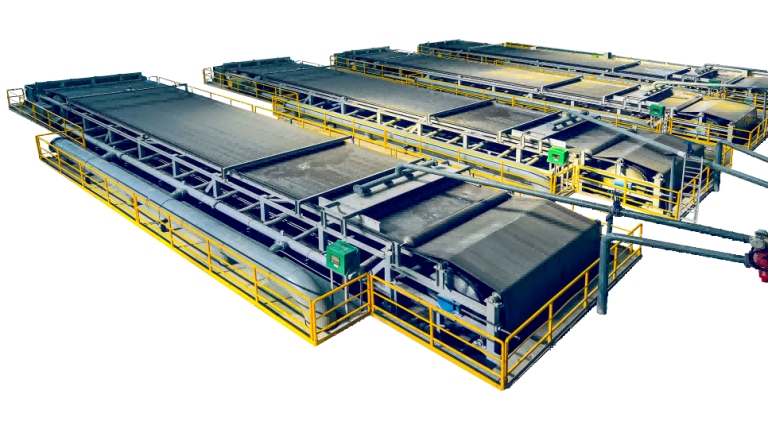
Belt filter presses maintain uninterrupted flow. Slurry distributes over a moving belt, initial free liquid drains via gravity, then successive roller zones—generally following polymer conditioning—apply increasing squeeze to release retained moisture. Cake automatically separates at the discharge. Facilities with consistent high-volume inputs, like tailings transport systems or sludge treatment trains, favor this arrangement since fine-tuning belt tension, polymer rates, and roller settings permits reliable extended operation with reduced oversight.
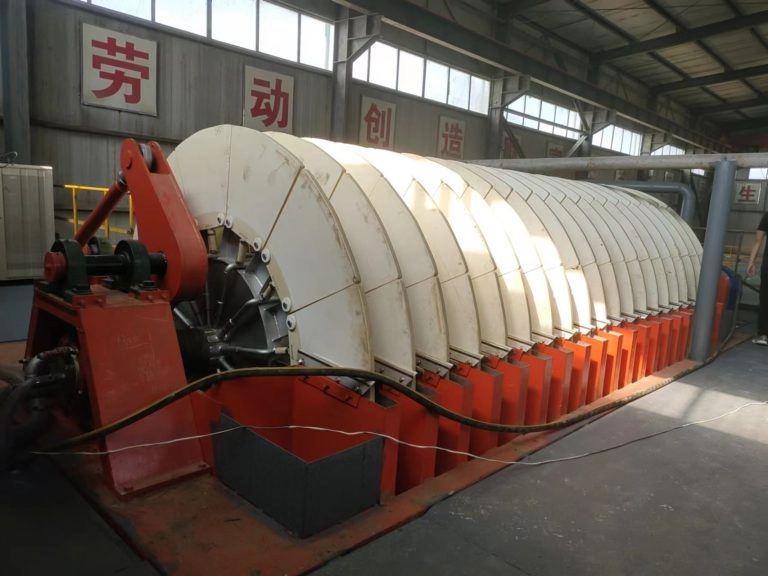
Ceramic disc filters integrate vacuum with capillary principles. Rotating discs fitted with microporous ceramic sectors pass through the slurry reservoir; vacuum extracts filtrate via the pores, depositing a uniform cake. Upon rising above the slurry, air drying proceeds before scraper blades remove the cake. The ceramic pore design minimizes air passage, sustaining strong vacuum efficiency on fine solids and demanding substantially lower power than standard rotary vacuum configurations.
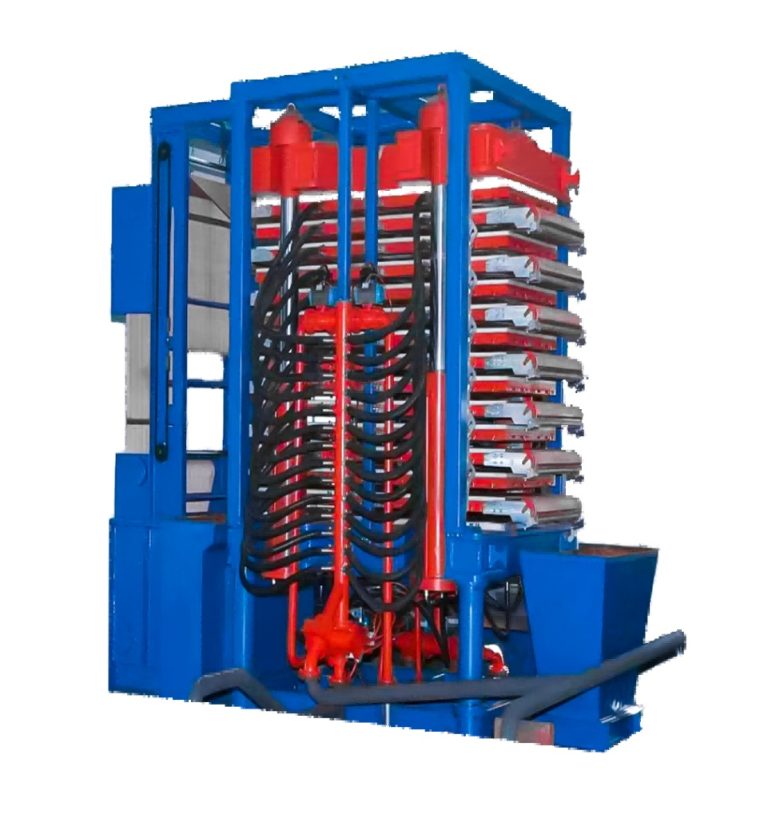
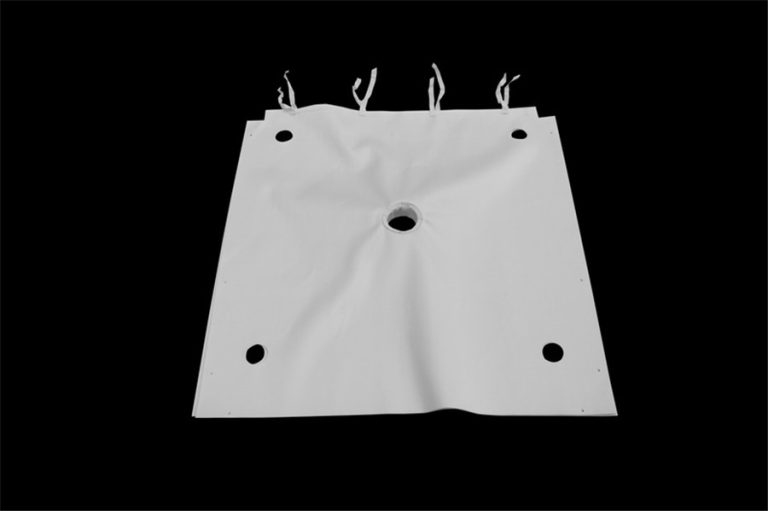
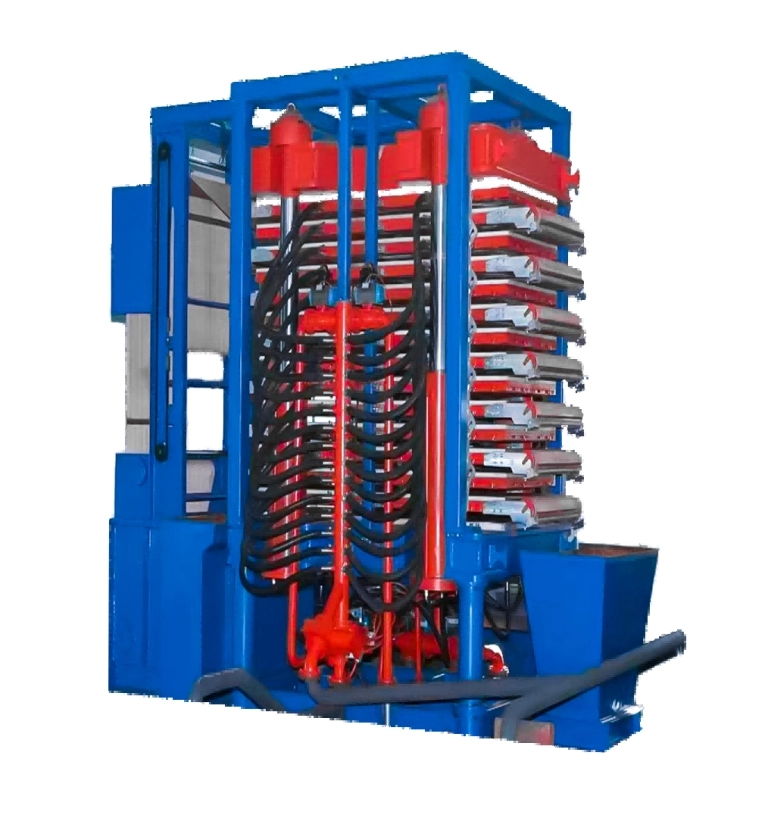
Tower filter presses proceed in defined cycles. Stacked vertical chambers organize plates and cloths; slurry fills under pump pressure, filtrate discharges through cloths, followed by hydraulic or diaphragm compression at elevated levels. The vertical stacking minimizes ground area, and pressures often in the 15–25 bar range compress difficult materials to low moisture. Batch cycling suits scenarios where cake dryness generates significant downstream advantages despite the periodic sequence.
Documented Performance Distinctions
Cake moisture stands out as the clearest differentiator from field measurements. Belt filter presses produce cakes typically ranging 15–25%, settling around 18–22% on conditioned mining tailings or industrial sludges with effective flocculation. Ceramic disc filters attain 8–12% moisture reliably on fine coal, flotation concentrates, or ultrafine tailings portions—the capillary process excels below 200 mesh. Tower filter presses achieve below 10%, frequently 6–9% in metallurgical sludges and chemical precipitates, where prolonged pressure overcomes compressibility and adhesion.
Throughput profiles vary distinctly. Belt systems extend to high continuous capacities, often several hundred tons per day in extensive tailings dewatering arrangements. Ceramic disc filters support moderate to high rates when cake buildup stays controlled and discharge remains clean. Tower units manage medium-to-high volumes through cycles, aligning best when maximum dryness provides justification for the interruptions.
Energy profiles reveal sharp contrasts. Belt filter presses require moderate input, primarily from pumps, belt drives, and roller assemblies. Ceramic disc filters demonstrate notably reduced consumption—commonly 80–90% lower than conventional vacuum systems—as capillary forces perform the bulk of separation with limited air displacement. Tower filter presses draw greater hydraulic energy, though drier cake frequently yields net savings via decreased haulage mass, lower disposal volumes, or avoidance of thermal drying.
Filtrate quality corresponds to these patterns. Ceramic disc systems generate minimal solids passage, often below 50 mg/L, enabling straightforward recycle in closed loops. Belt and tower configurations deliver suitable clarity for reuse but sometimes necessitate further clarification to satisfy discharge thresholds.
| Parameter | Belt Filter Press | Ceramic Disc Filter | Tower Filter Press |
|---|---|---|---|
| Operating Mode | Continuous | Continuous | Batch |
| Cake Moisture (typical) | 15–25% | 8–12% | <10% (6–9% frequent) |
| Particle Size Preference | Medium to coarse | Fine to ultrafine | Fine, sticky, compressible |
| Energy Demand | Moderate | Very low | Higher (downstream offsets common) |
| Throughput Suitability | High continuous feeds | Moderate-high free-filtering | Medium-high dryness priority |
| Filtrate Solids | Good clarity | Excellent (<50 mg/L typical) | Good to very good |
| Primary Maintenance Items | Belt alignment, cloth blinding | Pore cleaning, vacuum seals | Hydraulic systems, cloth durability |
Figures derive from tailings dry stacking, concentrate dewatering, and chemical processing operations.
Observed Application Alignments
Mining tailings dewatering for dry stacking commonly employs belt filter presses on coarser or flocculated feeds. Continuous cake output maintains steady stacking feed, and moisture levels of 18–22% support adequate compaction for slope integrity under applicable environmental requirements.
Fine coal and mineral concentrate dewatering applications gravitate toward ceramic disc filters. Lower moisture on finer fractions reduces or removes thermal drying needs, while superior filtrate clarity facilitates water recycle in water-constrained locations.
Metallurgy and chemical processes requiring minimal cake moisture regularly specify tower filter presses. Elevated pressure compression manages sticky or compressible sludges resistant to other approaches, yielding reductions in transport costs, disposal charges, or subsequent processing.
Selection Criteria from Project Records
Slurry attributes establish the foundation. Particle size distribution, solids concentration, and filterability indicators (from bench leaf tests or capillary suction timing) determine fit. Ultrafine non-compressible solids favor ceramic capillary separation; compressible or variable feeds lean toward tower force; broader ranges accommodate belt systems with adjusted conditioning.
Production continuity directs further. Lines sensitive to stops prefer continuous belt or ceramic setups. Dryness-focused processes accept tower cycles.
Lifecycle cost assessment extends beyond initial purchase. Belt filter presses offer lower entry capital for scaled deployments. Ceramic disc filters offset expense via persistent low energy use and durable sectors. Tower filter presses incur higher upfront outlay but recover through reduced cake volume, disposal savings, and eliminated secondary steps.
Maintenance requirements and site conditions conclude the evaluation. Belt tracking or blinding can interrupt if unattended. Ceramic pores demand scheduled chemical restoration. Tower hydraulics require periodic verification. Layout restrictions, seismic factors, and tailings moisture regulations further refine selections.
Hexin Equipment Capabilities
Yantai Hexin Environmental Protection Equipment Co.,Ltd., located in Yantai, Shandong Province, China, has concentrated on filtration technologies since development commenced in 1995, with restructuring formalized in 2017. The portfolio includes belt filters, ceramic filters, vertical tower filter presses, high-efficiency thickeners, and full EPC project delivery for mining, metallurgy, chemicals, fertilizers, pharmaceuticals, food processing, papermaking, sewage treatment, and tailings management. Designs integrate field-gathered performance insights, prioritizing fabrication accuracy, quality verification, and field service for sustained reliability.
Hexin BF Series belt filter presses include adjustable pressure zones to sustain consistent cake across varying inputs. DF Series ceramic disc filters feature microporous ceramic sectors for low-moisture cakes on fine suspensions, low-energy vacuum, and high filtrate clarity. TFP Series tower filter presses implement vertical high-pressure compression for sub-10% moisture in rigorous metallurgy and chemical settings.
Conclusion
Determining between belt filter press, ceramic disc filter, or tower filter press rests on correlating slurry characteristics, throughput continuity, cake moisture objectives, energy limitations, and complete lifecycle economics. Belt systems supply reliable continuous high-volume dewatering. Ceramic units process fine materials with low power and outstanding filtrate. Tower presses attain the lowest moisture when pressure produces tangible savings. Performing representative slurry evaluations and site-specific cost calculations generally reveals the optimal approach.
Recommendations require details on particle size distribution, solids concentration, and target moisture.
Company Introduction: Yantai Hexin Environmental Protection Equipment Co.,Ltd
Yantai Hexin Environmental Protection Equipment Co.,Ltd., based in the Yantai Economic Development Area, Shandong Province, China, accumulates over twenty years of filtration experience. Activities began in 1995, with restructuring in 2017. Offerings encompass belt filters, ceramic filters, vertical tower filter presses, high-efficiency thickeners, and integrated EPC projects for mining, metallurgy, chemicals, fertilizers, pharmaceuticals, food processing, papermaking, sewage treatment, and tailings management. Priority attaches to validated designs, precise manufacturing, quality controls, and responsive field support for enduring performance.
FAQs
What solid liquid separation equipment suits mining tailings dewatering best?
Belt filter presses apply widely to mining tailings dewatering, especially for continuous processing and cakes near 18–22% moisture appropriate for dry stacking. Tower filter presses supply drier cakes when improved stability and water recovery take precedence.
How does cake moisture from ceramic disc filter compare with belt filter press in mineral concentrate dewatering?
Ceramic disc filters reach 8–12% cake moisture on fine mineral concentrates, surpassing belt filter presses (15–25%) via capillary drying on ultrafine portions.
When does tower filter press become preferable to belt filter press in solid liquid separation applications?
Tower filter presses gain preference when cake moisture requires staying below 10%, notably with compressible or sticky slurries in metallurgy and chemical processes where disposal volume reduction compensates for batch processing.
What factors guide selection between ceramic disc filter and tower filter press for fine particle dewatering?
Particle fineness, filtrate clarity demands, energy use, and dryness targets direct the choice. Ceramic disc filters fit continuous low-energy processing with high clarity on free-filtering fines, while tower filter presses generate drier cakes through high pressure on challenging materials.
Does belt filter press handle fine coal dewatering effectively?
Belt filter presses manage fine coal dewatering with suitable conditioning, yielding uniform cakes, though ceramic disc filters frequently achieve lower moisture and improved energy efficiency on very fine coal fractions.