 English
  Russian
  Spanish
 At a mine site, a horizontal vacuum belt filter is never chosen from a model name alone. Two slurries can look similar in a bucket and behave nothing alike on a filter cloth. One drains cleanly. Another blinds the cloth after ten minutes. A third forms a cake, then cracks before the drying zone can do its work.
That is why the useful buying question is plain: will this filter handle this slurry, at this moisture target, for this many hours a day? The answer comes from material data, test work, layout checks, and a careful look at what happens after the cake leaves the belt.
Start with the slurry, not the catalogue
Catalogue capacity gives a rough direction. It does not tell the whole story. Mining slurry may come from flotation concentrate, tailings, iron ore, gold ore, gypsum, or other mineral streams. Solids content, particle size, fine clay, pH, feed temperature, and reagent residue can all change filtration behavior.
A coarse slurry usually gives water a path through the cake. A fine or sticky slurry may hold water and slow the line down. If the plant has test data, use it first. If not, even a small lab filtration test is better than sizing the machine from flow rate only.
What the filter does in the line
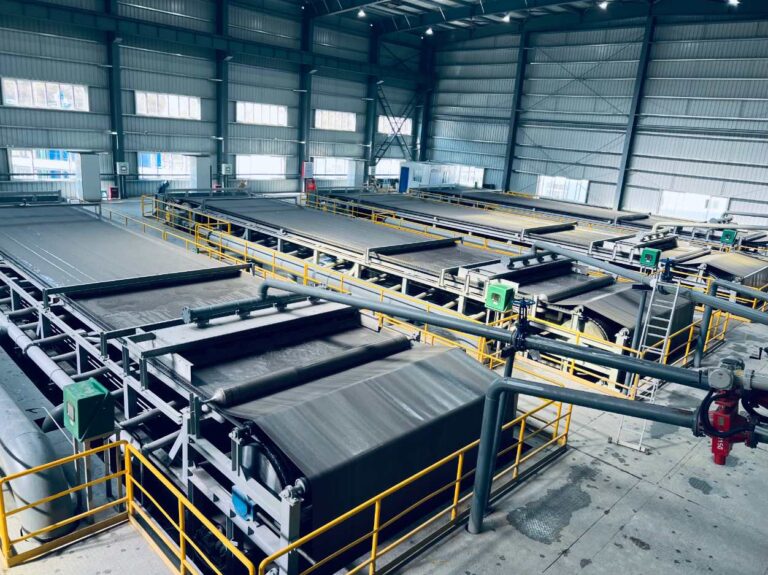
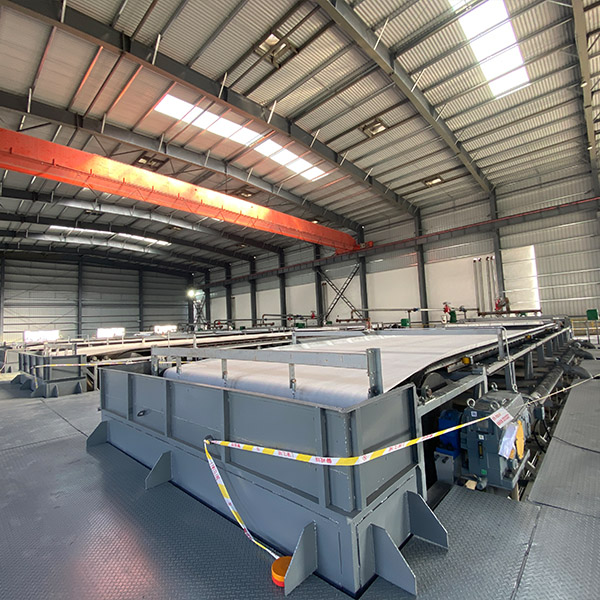
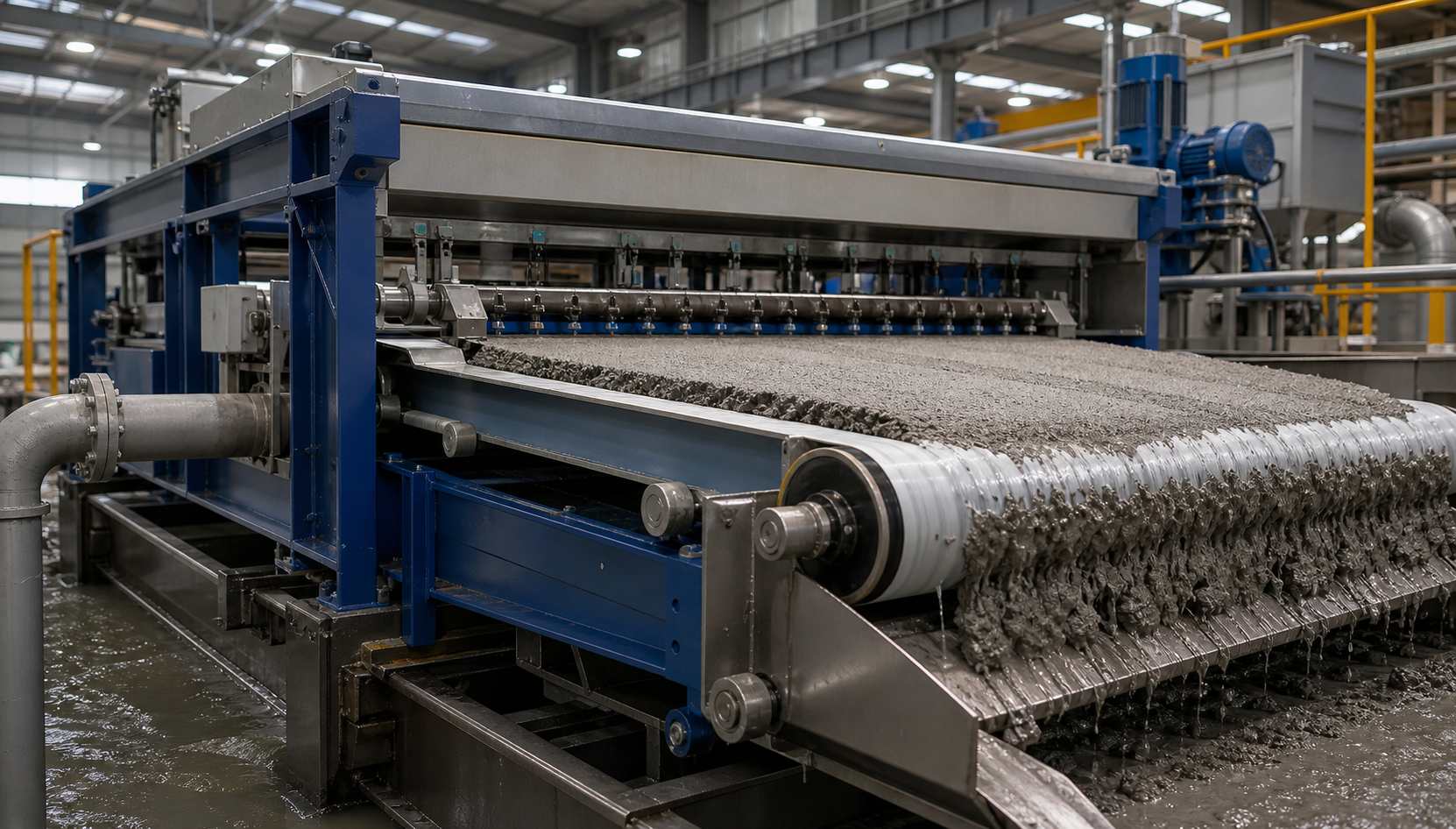
A horizontal vacuum belt filter feeds slurry onto a moving cloth. Vacuum pulls liquid through the cloth while solids stay on top and form a cake. The cake moves through filtration, optional washing, drying, and discharge zones. The filtrate is collected below the belt.
For equipment details, see Hexin’s BF Belt Filter product page.
In mining work, the machine is often considered when the plant wants continuous dewatering and a visible process. Operators can watch cake formation, wash zones, belt tracking, and discharge instead of waiting for a closed batch cycle to finish.
When is this filter a good fit?
It is usually worth reviewing when the slurry can form a stable cake and the plant needs steady operation. It may also fit when cake washing is part of the process, because belt filters can separate filtration, washing, and drying into clear zones.
- The slurry has enough permeability for vacuum filtration.
- The plant needs continuous feed and discharge.
- Operators need room to adjust belt speed and cake thickness.
- Cake washing or staged drying matters to the final result.
- Maintenance crews need open access to cloth, belt, vacuum box, and spray nozzles.
Do not size the filter from flow rate only
A feed number such as 80 cubic meters per hour sounds useful, but it can hide the real load. A light slurry and a dense abrasive slurry may have the same flow rate and very different solids load. Filter area, vacuum demand, cake thickness, and belt speed can all change.
Ask for the solids load per hour, not only the liquid flow. Then connect that number with the target cake moisture. A very dry cake may need more residence time or more filter area. A plant that pushes too much material across too little belt area will usually pay for it later in wet cake, extra washing, or unstable discharge.
Cake moisture is a handling question
Low cake moisture is attractive, but the target should come from the next step in the plant. Will the cake be conveyed, loaded, stacked, dried, or sent to another process? A target that looks good on paper may not be worth the cost if the next step can safely handle a slightly wetter cake.
The practical way is to define an acceptable moisture range. Then ask whether the filter can reach that range at the required throughput, not during a perfect short test with a gentle feed stream.
Check the belt, cloth, and washing system
Mining slurry is hard on wearing parts. Cloth blinding, poor belt tracking, weak wash sprays, and difficult scraper access can turn a suitable machine into a daily maintenance problem. The wearing system deserves the same attention as the frame size.
| Item | Question to ask | Why it matters |
| Filter cloth | What cloth has worked with similar slurry? | Controls drainage and cleaning frequency |
| Belt tracking | How is tracking adjusted during long shifts? | Reduces belt wear and edge damage |
| Vacuum box | Can crews inspect seals and filtrate paths easily? | Affects stable suction |
| Washing system | Are spray nozzles accessible and strong enough? | Helps prevent cloth blinding |
| Discharge | Does the cake release cleanly? | Prevents carryback and cleanup work |
Layout can decide whether the choice works
A belt filter needs more than floor space for the main frame. The plant must also place the feed system, filtrate receiver, vacuum pump, wash water line, discharge conveyor, access platforms, and spare-part handling route. A cramped layout makes simple maintenance slow.
Before placing an order, sketch the slurry path and the cake path. Mark where operators will stand, where wash water drains, and how a worn cloth or belt will be changed. These basic checks prevent many expensive field changes.
Where Hexin fits into the discussion
Yantai Hexin Environmental Protection Equipment Co., Ltd. supplies filtration and dewatering equipment for mining and industrial projects. Buyers can start from the Hexin website and review the belt filter category before sending slurry data for a more specific discussion.
If the project is close to a tailings or plant case, the case section can also help the publishing team add a secondary path for readers.
Final checklist before inquiry
- Slurry source and mineral type.
- Solids content and particle size distribution.
- Hourly solids load and operating hours.
- Target cake moisture range.
- Need for washing or filtrate separation.
- Available floor space and discharge route.
- Maintenance access and spare-part expectations.
FAQs
Is a horizontal vacuum belt filter suitable for every slurry?
No. It works best when the material can form a permeable cake. Very fine or clay-heavy slurry should be tested before selection.
What data should be sent to the supplier?
Send solids content, particle size, flow rate, solids load, pH if relevant, target cake moisture, and site layout limits.
Why test the slurry before buying?
Testing shows drainage speed, cloth blinding risk, cake release, and the moisture range that is realistic for that material.