 English
  Russian
  Spanish
 Tailings dewatering sits at the rough end of a mineral plant. The slurry has already passed through the valuable part of the process, but it still carries water, fine solids, and a long list of handling problems. If the stream is left too wet, the plant may face heavier transport, more storage pressure, slower stacking, and a weaker water recovery plan.
A belt filter can help when the tailings stream is suitable for vacuum filtration and the plant wants continuous discharge. It is not a universal answer. The material still has to be checked. The moisture target still has to be realistic. The cake still needs somewhere sensible to go.
What a belt filter does in tailings work
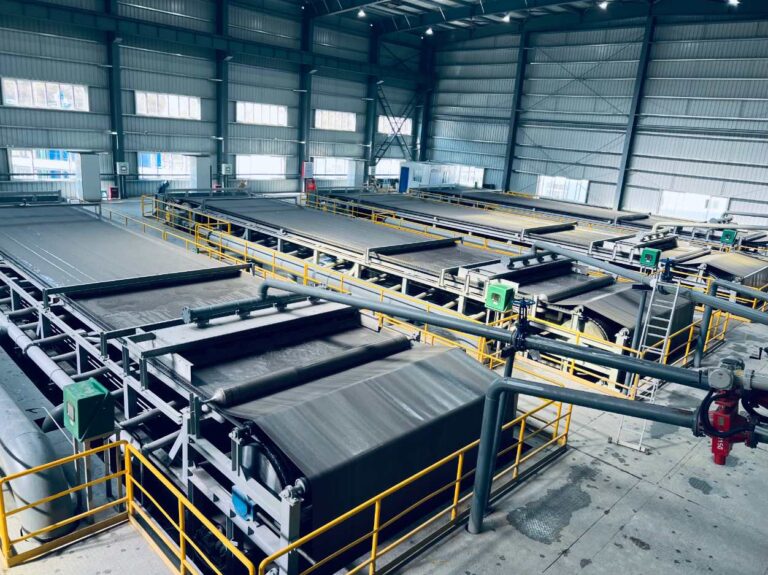
The equipment spreads tailings slurry across a moving filter cloth. Vacuum pulls water through the cloth. Solids remain on the surface and form a cake. As the belt moves, the cake passes through drainage and drying sections before it is discharged.
For the product path, readers can review Hexin’s BF Belt Filter page.
For a tailings project, the goal is usually practical rather than perfect. The plant wants a cake that can be conveyed, stacked, loaded, or sent to the next handling step with fewer problems. If the filtrate can be reused, the filter also becomes part of the water balance.
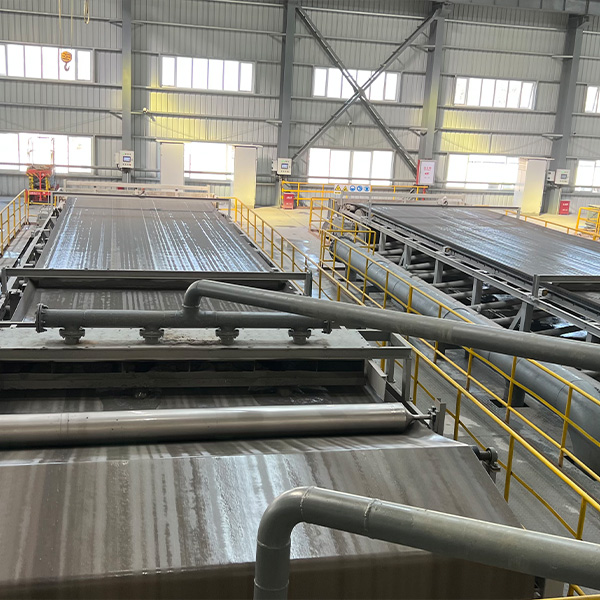
Where belt filters are usually considered
A belt filter is often reviewed after thickening, classification, flotation, or other mineral processing steps where the remaining slurry needs further water removal. It is especially relevant when the plant wants steady operation instead of a batch cycle.
Tailings streams with stable feed
Stable feed makes the filter easier to run. If solids content changes sharply from one shift to the next, operators may have to adjust belt speed, feed thickness, vacuum, and washing more often.
Projects that need water return
Water recovery can matter in dry regions or sites with strict water planning. The filtrate quality still has to be checked before reuse, but a belt filter can help move water back toward the process loop.
Dry discharge or easier stacking
Some sites want tailings that can be moved and stacked with fewer liquid-handling problems. A belt filter may support that goal when the cake moisture range fits the downstream route.
Advantages that matter in the field
The advantages of a belt filter are clearest when they are tied to daily operation. Operators can see the cake. Maintenance teams can reach the belt and cloth. Process engineers can separate filtration, washing, and drying zones instead of treating dewatering as one black box.
- Continuous feed and discharge suit steady plant operation.
- Open structure helps operators notice cake or cloth problems early.
- Recovered filtrate may support water reuse planning.
- A drier cake can reduce transport weight and improve handling.
- Separate zones make process adjustment easier than a single-step setup.
Selection points buyers should not skip
Tailings dewatering can go wrong when the equipment is chosen from a broad capacity number. The details below deserve early attention.
| Selection point | What to check | Common problem if ignored |
| Fine content | Clay and very fine particles | Slow drainage and wet cake |
| Solids load | Dry solids per hour | Undersized filter area |
| Moisture target | Acceptable range after discharge | Overpromising the result |
| Cloth cleaning | Spray strength and access | Blinding and downtime |
| Cake route | Conveyor, stacking, storage, weather exposure | A good cake becomes hard to move |
Do not treat cake moisture as one fixed number
Tailings moisture changes with feed condition, belt speed, cake thickness, vacuum stability, cloth condition, and drying time. A supplier may give a target range, but the plant should ask what test conditions produced that range.
It is safer to decide what the next step can accept. If a conveyor and stacker can handle a certain range, the filter should be sized around that real handling requirement. Chasing the lowest possible number can add cost without improving the plant.
The filter is only one part of the tailings route
A belt filter cannot fix a poor tailings route by itself. The thickener, feed pump, slurry tank, filtrate receiver, vacuum pump, wash water system, discharge conveyor, and storage area all affect the result. If one part is weak, the filter may look like the problem even when the main equipment is doing what it can.
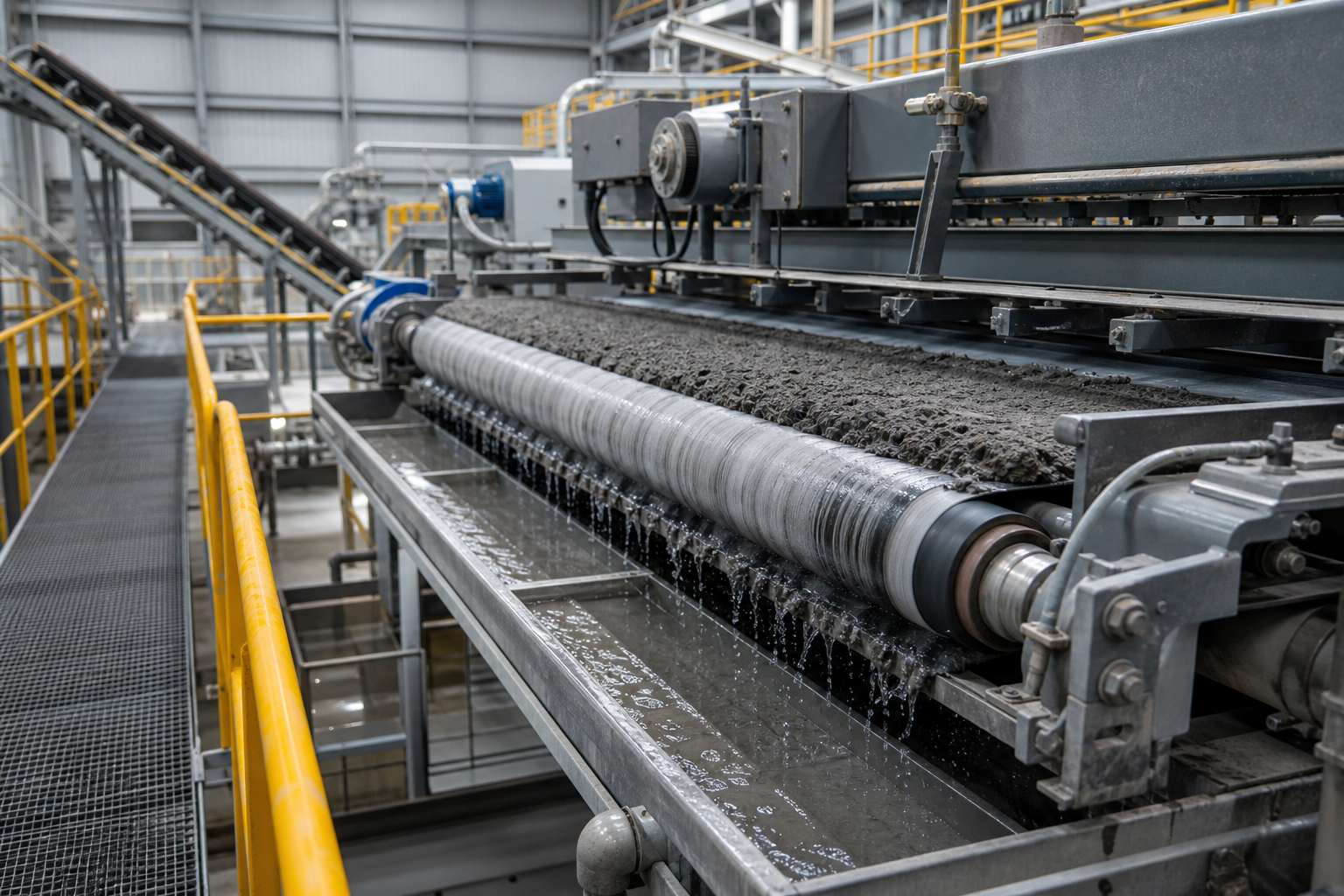
Maintenance checks before purchase
Tailings are abrasive and often fine. The machine should be easy to inspect, clean, and adjust. Buyers should ask how long it takes to change cloth, how belt tracking is handled, where spray nozzles are accessed, and which spare parts are normally kept on site.
The best filter on paper may not be the best filter for a small maintenance team working in a tight plant room. Access matters. Cleaning water matters. Spare-part lead time matters.
How Hexin can support the inquiry
Yantai Hexin Environmental Protection Equipment Co., Ltd. works with filtration and dewatering equipment for mining and industrial projects. A buyer comparing tailings options can begin with the BF Belt Filter product page and then send material data for a more useful sizing discussion.
If the publisher wants a wider project path, a secondary link to the Hexin case section can help readers move from article reading to application examples.
Information to prepare before asking for a quotation
- Tailings source and mineral type.
- Solids content, particle size, and fine content.
- Expected hourly solids load.
- Required moisture range after discharge.
- Operating hours and shift pattern.
- Filtrate reuse plan, if any.
- Discharge conveyor and stacking arrangement.
FAQs
Can a belt filter handle all tailings streams?
No. Tailings with heavy fines or clay may need testing, pre-thickening, or a different dewatering route.
What is the main benefit of a belt filter for tailings dewatering?
The main benefit is continuous water removal with visible cake formation and discharge, which can make daily operation easier to manage.
How low can the cake moisture be?
There is no single answer. Moisture depends on the material, filter area, vacuum system, cloth, belt speed, and drying time.