 English
  Russian
  Spanish
 Wastewater treatment operations and industrial facilities constantly grapple with managing sludge outputs while controlling budgets. Disposal expenses for processed sludge frequently account for a substantial chunk of operational costs, potentially hitting several hundred dollars per dry ton based on regional rules, hauling distances, and fees for landfills or incineration. Conventional approaches such as belt filter presses or centrifuges provide adequate separation, yet they often result in cakes carrying excess moisture, which inflates load weights, demands more transport, and drives up total outlays.
Ceramic disc filters for sludge dewatering present a viable option in numerous settings. These units employ vacuum alongside capillary forces via microporous ceramic elements to extract fluids from mixtures, yielding drier residues and purer liquids. Within municipal sewage handling or industrial effluent lines, installations have noted marked drops in disposal quantities—translating to potential 30–50% savings once reductions in mass, fewer shipments, and even liquid reuse come into play. This method proves especially effective where power conservation and enduring dependability count, given its lower energy draw relative to standard vacuum configurations.
Understanding Sludge Dewatering Challenges in Wastewater and Environmental Protection
Sludge emerging from city wastewater systems usually starts with 95–98% liquid after preliminary concentration, whereas outputs from sectors like chemicals, food processing, or metalwork show broad variations in solid levels and grain properties. The central aim stays the same: extract maximum water to shrink the end volume headed for discard or additional processing.
Excessive dampness in final cakes pushes costs higher without fail. A residue at 30% dry matter tips the scales at about double that of one at 60% for identical solid weight, effectively multiplying transport and disposal charges. Oversight mandates complicate matters further; various areas impose tight restrictions on accepting soggy wastes at dumps or mandate burning for specific types, both escalating sharply with surplus moisture. Power consumption in separation stages builds up too—vintage belt or screw units run non-stop at elevated outputs, adding to utility tabs that pinch finances.
Filtrate purity influences subsequent steps as well. Murky outflows exceeding 100–200 mg/L in suspended particles hinder water looping and risk permit breaches. Downtime from blocked mediums or regular fabric swaps interrupts workflows and tacks on workforce expenses. In setups dealing with inconsistent inputs—like seasonal spikes in urban flows or episodic industrial releases—these hurdles multiply, rendering steady results tougher to secure.
Environmental compliance weighs heavily on plant managers today. Stricter discharge norms push for cleaner effluents, while sustainability goals encourage resource recovery. Sludge dewatering equipment must adapt to these pressures, balancing efficiency with regulatory adherence. Facilities often face audits where high moisture outputs lead to fines or forced upgrades, underscoring the need for reliable technologies in wastewater sludge dewatering.
How Ceramic Disc Vacuum Filters Work for Sludge Dewatering
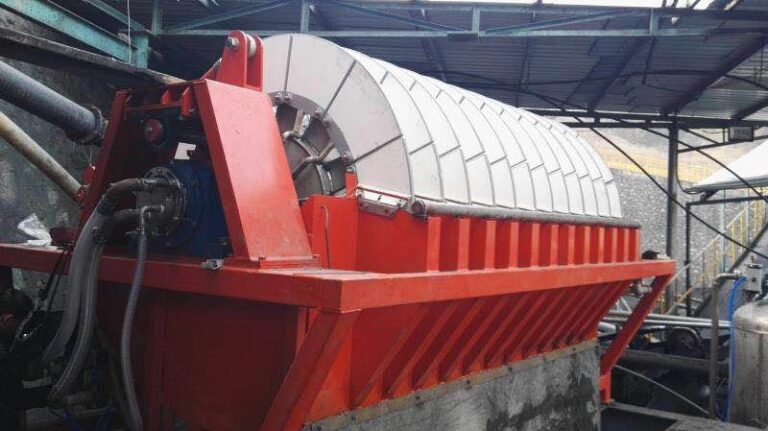
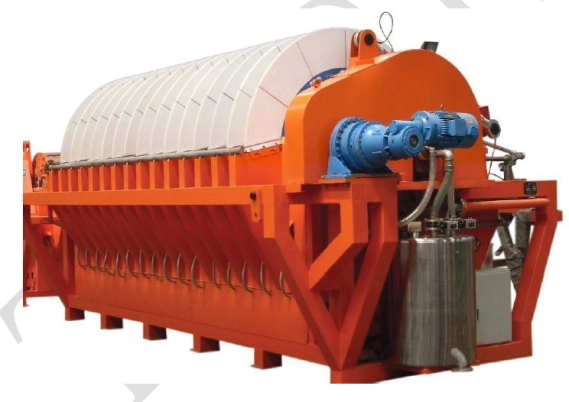
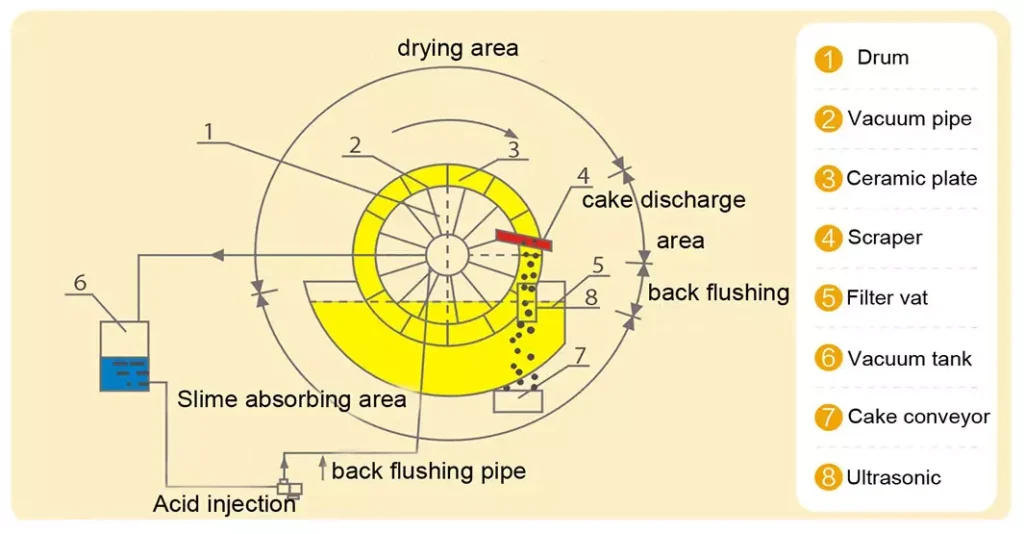
At the heart lies microporous ceramic segments, generally featuring openings from 1 to 5 microns, affixed to spinning discs dipped partway into a slurry basin. A suction device generates low pressure within the discs, pulling liquids through the gaps as solids build up externally to create a layer.
With the discs turning at a measured pace, the built-up layer rises above the mixture and moves into a dehydration phase where ongoing suction and capillary pull extract more fluid. Those capillary effects trap liquids in narrow channels without much air intrusion, keeping vacuum drops minimal and power needs down. At the release spot, a blade scrapes off the parched layer, letting it fall to a belt for next handling. Discs proceed through a rinse stage—frequently involving sonic waves or chemical cleans—to dislodge stuck bits and revive flow.
Such ongoing cycles set this apart from intermittent press systems. Fine grains pose less trouble since the ceramic barrier clogs slower than cloth alternatives. In sludge contexts, pressure dips to 0.09–0.098 MPa suffice for residues in the 15–25% dampness bracket across various effluent types, tied to input density and prep treatments.
Engineers value the modular setup. Units scale by adding discs, fitting diverse plant sizes. Vacuum ceramic disc filter working principles ensure even distribution of forces, avoiding uneven cake buildup common in older designs. Maintenance teams appreciate the built-in diagnostics for pressure monitoring, which flag issues early.
Key Benefits: Why Ceramic Disc Filters Excel in Reducing Sludge Disposal Costs
Achieving drier residues opens the clearest route to savings. In effluent management, traditional outputs hover at 25–35% wetness or above, but ceramic disc filters consistently hit 15–25% or lower on comparable inputs. Dropping moisture by 10% can trim residue bulk and mass by 20–40%, varying with baselines. For a site tackling 50 dry tons daily, such shifts could cut truck hauls by scores each year, trimming transport and tipping outlays notably—potentially nearing 50% when paired with further gains.
Power usage emerges as a standout edge. Standard vacuum disc setups with textile covers permit air seepage, necessitating beefier pumps and greater draw—typically 100–200 kW on average scales. Ceramic variants curb air flow via capillary seals, slashing consumption sharply—reductions often pegged at 90% against legacy vacuum sludge dewatering. Round-the-clock operations might pocket yearly power bill cuts in five figures, recouping investments progressively.
Liquid clarity brings added utility. Suspended matter in outflows dips under 50 ppm routinely, dipping below 20 mg/L in optimal runs, facilitating immediate reuse or compliant release. This curbs fresh intake and sidesteps extra refinement.
Upkeep remains subdued long-term. Ceramic components last seasons with routine renewals, ditching constant fabric switches that dog classic filters. Outages lessen, and routine labor dips. Skipping cloths evades fouling from greasy or stringy wastes prevalent in industrial streams.
Consistency holds firm through runs. Steady spins and auto-regulations keep layer depths and wetness uniform, even amid input swings. Operations log reliable flows absent the peaks and halts of batch gear.
Benefits of ceramic disc filter sludge extend to environmental footprints. Lower energy translates to reduced emissions, aligning with green initiatives. Facilities pursuing certifications find these systems supportive, as drier wastes ease handling in composting or recovery paths.
Real-World Applications and Performance Examples
Urban sewage facilities deploy ceramic disc filters to process biosolids post-digestion or bio-treatments. The approach manages delicate organics effectively, yielding residues fit for soil amendment, spreading, or heat drying with lessened cartage.
Manufacturing sites—especially those yielding chemical or metallic wastes—leverage the robust ceramic build and tolerance for pH shifts or gritty elements. Consider a standard case: an effluent with 5–10% solids reaches 20% cake dampness, slashing disposal loads and permitting liquid feedback to prior stages.
Broader uses highlight suitability for non-stop duties where uptime beats max throughput. Sites with established thickening integrate seamlessly, swapping in ceramic units for worn belt systems to grab quick cost and power perks.
In mining crossovers, similar tech dewaters tailings, but wastewater adaptations focus on organic loads. Ceramic disc filter wastewater applications thrive in hybrid plants blending municipal and industrial feeds, where versatility shines.
Performance data from installations show throughput rates holding at 1–5 kg/m²/h dry solids, depending on sludge traits. Energy logs confirm drops to 0.2–0.5 kWh per ton processed, far below belt press norms.
How to Choose and Implement Ceramic Disc Filters for Sludge Dewatering Needs
Picking the apt setup starts with input review: gauge solid percentages, grain spreads, and existing additives. For city residues, size filtration surfaces to match daily dry loads—standard variants span from a few to over 100 square meters.
Weigh against present tech via full-cycle costing: factor power, servicing, disposal cuts, and projected durability. Ceramic options frequently payback in 2–4 years where discard fees run high.
Rollout calls for groundwork—suitable feed pumps, suction sizing, and residue routing. Expert fitting guarantees alignment and system meshing. Instructing staff on refresh routines and pressure watches averts snags and sustains top output.
Choose ceramic vacuum filter for sludge by prioritizing corrosion resistance in harsh effluents. Look for customizable disc counts to match capacity, ensuring scalability for growth.
Implementation tips include pilot tests on-site sludge to verify moisture targets. Integrate controls for auto-adjustments, enhancing efficiency in variable conditions.
Yantai Hexin Environmental Protection Equipment Co., Ltd.
Founded in 1995 in Yantai City, Shandong Province, China, Yantai Hexin Environmental Protection Equipment Co., Ltd. specializes in filtration and solid-liquid separation machinery. Over the years, the firm has produced ceramic filters, belt filters, vertical filter presses, and thickeners tailored for mining, metallurgy, chemicals, sewage management, and allied fields. Commitment to innovation, development, and stringent quality measures underpins dependable offerings, supported by expert service crews.
Conclusion
Ceramic disc filters bring concrete enhancements to sludge dewatering through drier outputs, trimmed power needs, and refined liquids—collectively curbing disposal expenses and streamlining runs. Operations aiming for durable, economical answers discover the tech meshes neatly with current eco and fiscal imperatives. Delving into these setups regularly uncovers paths to substantial economies and regulatory edges.
FAQs
What moisture content can ceramic disc filters achieve in wastewater sludge dewatering?
Ceramic disc filters generally yield filter cakes holding 15–25% moisture across municipal and industrial wastewater sludges, influenced by input features and preparations. Such drier results shrink bulk and mass relative to standard techniques.
How much can ceramic disc filters reduce sludge disposal costs?
Through decreased cake dampness and weight, these filters trim disposal outlays by 30–50% in various instances, via reduced hauls, lowered dump or burn charges, and occasionally skipped processing phases.
Are ceramic disc filters energy-efficient compared to belt filter presses for sludge dewatering?
Ceramic disc vacuum filters indeed use far less energy—frequently up to 90% below traditional vacuum arrangements—thanks to capillary mechanisms limiting air ingress and pump demands.
What makes ceramic disc filters suitable for continuous sludge dewatering in wastewater plants?
Ongoing spins, automated residue drops, and self-renewing ceramic elements enable consistent runs with little halts, managing shifting inputs while upholding uniform residue standards.
Can filtrate from ceramic disc filters be recycled in wastewater treatment processes?
Outflow solids typically remain under 50 ppm, often beneath 20 mg/L, rendering it apt for immediate reuse in facility steps or secure release sans extra straining.