 Russian
  English
  Spanish
 Solid-liquid separation sits at the crossroads of water recovery, compliance, disposal cost, drying energy, and product yield. Most plants can “separate” in a basic sense. The problem is that many systems still miss the mark because the project never defined what success looks like in operating terms: how dry the cake must be, how clear the filtrate must stay during real upsets, how stable the cycle rhythm needs to be, and what the water loop can tolerate without drifting into constant firefighting.
This article explains solid-liquid separation from an engineering, plant-facing angle. Instead of repeating textbook definitions, it focuses on the questions decision-makers actually ask after commissioning: What KPI does each method solve? What does it cost you in footprint, maintenance, chemicals, or operating flexibility? Where do plants usually get it wrong?
Solid-Liquid Separation: The “Why” That Usually Gets Ignored
If you ask a site why it needs dewatering or filtration, the first answer is often “to remove water.” The real drivers are more specific and usually more expensive.
Water recovery can be the dominant value. In mining and tailings dewatering, reclaiming process water reduces make-up water demand and often stabilizes upstream grinding and flotation chemistry. In wastewater and environmental projects, water reuse can reduce discharge volume or improve compliance margins. But a plant doesn’t just need “water back.” It needs water of usable quality, not a filtrate that quietly carries ultrafines into the recycle loop until pumps, nozzles, and tanks become the real bottleneck.
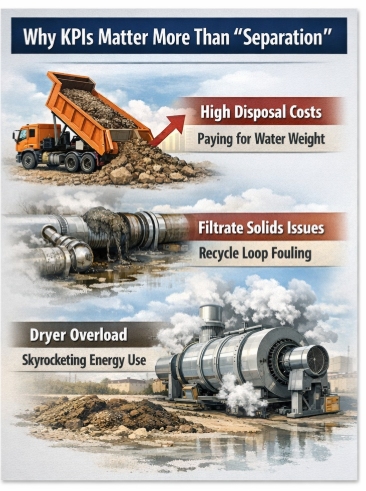
Compliance and reporting push projects toward reliability, not just peak performance. A system that hits target clarity on average but spikes during start/stop, cloth wash, or operator shift changes can create a reporting headache. Disposal cost is another hard driver: paying to haul and dispose of water trapped in cake can dwarf small gains made elsewhere. A few percentage points of cake moisture often translate into large annual cost deltas, especially where transport distance is long or tipping fees are high.
Drying energy is the hidden multiplier. If upstream dewatering under-delivers, downstream thermal drying is forced to make up the gap, and that is rarely cheap. Recovery rate is equally important when the “solids” are the product, contain valuable fines, or must be contained for environmental reasons. Losing solids to filtrate is not only a yield loss; it can also destabilize water loops and downstream units.
The common thread is this: systems fail less often because they cannot separate, and more often because the target metrics were vague. “Low moisture” and “clear filtrate” are not design targets. A usable target states measurable thresholds and the operating envelope they must hold under.
The Core Methods: What Actually Separates Solids from Liquids
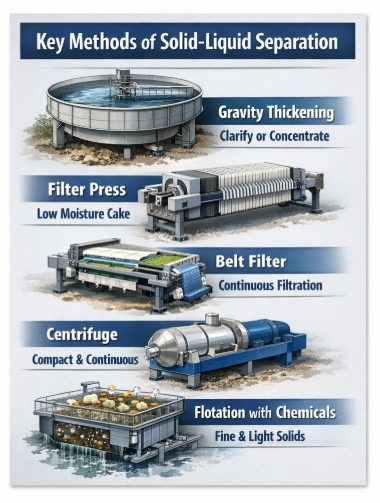
Every method is a different answer to the same engineering problem: how to move liquid away from solids fast enough and consistently enough to hit the KPI at acceptable cost. The differences are not philosophical. They are mechanical and operational.
Gravity Separation & Thickening (when time and footprint are acceptable)
Gravity separation is the starting point for many process lines because it’s comparatively simple and energy-light. In practice, gravity units usually target either clarification, thickening, or both. Clarification prioritizes a cleaner overflow for water recovery. Thickening prioritizes a higher underflow concentration to reduce the load on downstream filtration or reduce pumping volume.
This is why thickening is frequently a front-end step rather than the final solution. A thickener can shrink volumetric flow dramatically before the filter ever sees the slurry. That change alone can stabilize downstream performance because filtration is often limited by how much water must pass through media and cake over time. If underflow density swings because upstream solids change or flocculation drifts, the filter’s cycle time and cake formation behavior swing with it.
Gravity separation has limits. It does not typically deliver a stackable, low-moisture cake, and it is sensitive to particle size distribution and chemistry. But when used correctly, it creates breathing room for the rest of the system.
Mechanical Filtration (when filtrate clarity or solids recovery matters)
Mechanical filtration becomes the primary route when you care about filtrate clarity, solids recovery, or both. The mechanism is straightforward: a pressure differential drives liquid through a porous medium while solids form a cake. The engineering challenge is that filtration performance changes during the cycle as the cake builds, compresses, and becomes the main resistance to flow.
Filter media is not an accessory; it is part of the process. Cloth selection affects fines capture, blinding behavior, cake release, and how often cleaning is needed. A cloth that produces very clear filtrate may blind faster; a cloth that releases cake easily may allow more fines into the filtrate. Plate or deck design influences feed distribution and whether cake forms evenly or develops channels that short-circuit flow.
Washability matters whenever you need to remove soluble impurities or recover liquor. A cake can be acceptably “dry” yet poorly washed because it becomes too tight for wash water to penetrate. If product purity or liquor recovery is a KPI, the filtration route must be designed for displacement and permeability, not only moisture.
It is also useful to think in filtration “routes,” not equipment labels. A belt filter, a press filter, and a ceramic filter are all filtration approaches, but they deliver different trade-offs in continuity, achievable dryness, filtrate quality, and maintenance behavior.
Compression / Pressure-Based Dewatering (when low moisture cake is the KPI)
When low moisture cake is non-negotiable, pressure-based dewatering becomes attractive. Once a cake is formed, applying higher pressure can push more liquid out by reducing void space and driving liquid through the cake and medium. This is one of the most direct ways to reduce cake moisture, and it is often selected for dry stacking tailings, high disposal cost regions, or product cake requirements.
The trade-off is operational rhythm and complexity. Pressing is commonly cyclic or staged, so buffer capacity and process scheduling become part of the design. Higher pressure systems demand more attention to hydraulics, seals, and mechanical wear. They can also be sensitive to cake compressibility; highly compressible slurries may tighten under pressure and lose permeability, slowing drainage and creating longer cycles without proportional moisture gains. In those cases, upstream conditioning, feed concentration, and cycle design matter as much as the press itself.
Centrifugation (when continuous operation and compact footprint dominate)
Centrifugation replaces “waiting for settling” with high acceleration. It is often chosen where footprint is tight, continuous operation is preferred, or the process needs fast response to flow changes. Many plants like the operational feel of centrifuges because they behave like continuous process equipment rather than batch cycles.
The trade-off is that separation performance can be sensitive to particle size distribution and density differences. Fine particles can follow the liquid phase, and changes in feed characteristics can shift the effective cut point. If your water loop is strict on suspended solids, centrifugation may require polishing steps or additional conditioning.
Flotation and Chemical Aids (when particles are too fine or too light)
Sometimes the particles are too fine, too light, or too slow-settling to respond well to gravity alone, and too troublesome to filter without conditioning. Chemical aids and flotation are ways to change particle behavior so the chosen physical route becomes workable.
Flocculation and coagulation can increase effective particle size, improving settling and filtration rates. Flotation uses bubbles to lift particles that attach to air, which can be effective when solids won’t settle or when certain surface properties dominate. The engineering mistake is treating chemistry as a generic add-on. Overdosing can create fragile, shear-sensitive flocs that break in pumps, blind cloth, trap water, or destabilize performance from shift to shift. Successful plants treat dosage and mixing as controlled process variables, tied to the water loop and upstream fluctuations.
Why the Same Method Performs Differently Across Plants
Two plants can run “the same method” and see dramatically different results because the method is only the framework. The slurry and the operating environment decide whether it behaves politely or becomes a chronic issue.
Slurry characteristics that change everything
Particle size distribution is the headline variable, especially the fraction of ultrafines. A small increase in fines can transform filtration from fast to slow, or turn a manageable cloth wash schedule into frequent blinding. Solids concentration affects cake formation rate and cycle stability. Viscosity affects feed distribution, channeling risk, and wash effectiveness. Temperature changes viscosity and can change reaction or crystallization behavior.
Cake compressibility is one of the most important, least respected properties. In compressible slurries, higher pressure does not automatically mean better performance; it can collapse permeability and trap liquid, which extends cycle time. Chemical composition matters too: salts can crystallize, oils can foul media, surfactants can change wetting and bubble behavior, and pH can affect corrosion and cloth compatibility.
A practical reality in most plants is that “the slurry” is not a constant. Recycle water, bleed streams, and upstream operational swings change it hour by hour. Good selection work acknowledges that reality and designs for it.
The hidden constraints: maintenance access, operators, and water loops
Separation systems live or die on maintainability and operator reality. Maintenance access determines whether routine tasks are quick or painful. Operator workload determines whether the system is tuned and monitored or left to drift until it hits a hard limit. Water loops determine whether small filtrate solids changes are harmless or disastrous.
A common post-commissioning story is not dramatic failure, but gradual drift. Cloth blinding slowly increases, differential pressure rises, operators adjust throughput to cope, and the “temporary” workaround becomes the new operating point. Another common issue is wash water quality. A design may assume clean wash water, but the plant uses recycled process water with fines or dissolved salts. Cloth life and performance then degrade, and the separation unit gets blamed for a water-loop constraint that was never treated as a design input.
Equipment Categories, Mapped to Methods (Not to Marketing Names)
Equipment selection becomes clearer when you map machines to the separation route they implement. The question is not “Which machine is best?” It is “Which route hits my KPI with acceptable trade-offs?”
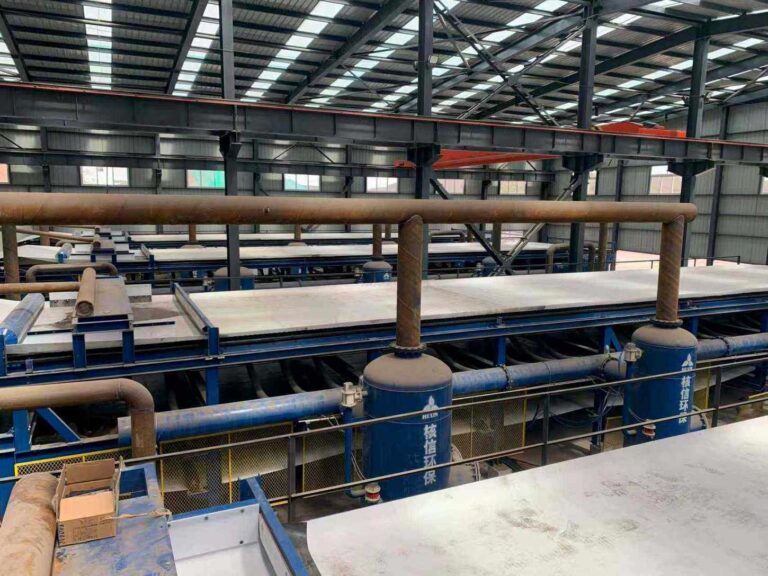
Belt filters: continuous filtration when stability and throughput matter
Belt filters are typically selected when continuous filtration, steady throughput, and integrated washing are important. Their strength is process continuity: cake forms and moves through stages in a predictable flow, which many plants find easier to integrate with upstream and downstream operations. They can be a strong fit where the slurry is reasonably stable and where the plant benefits from continuous handling rather than batch discharge behavior.
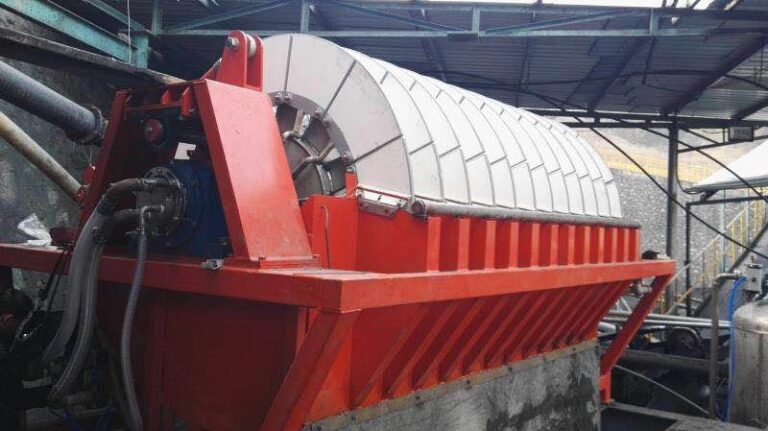
Ceramic filters: fine particle recovery and cleaner filtrate where it pays off
Ceramic filtration can be compelling when fine particle recovery and cleaner filtrate create economic value, whether through higher product yield, reduced downstream polishing, or improved water loop stability. It is not universally superior; it is route-specific. If the slurry chemistry encourages scaling or fouling, cleaning strategy and operating discipline become central to sustained performance. The value case is strongest when filtrate clarity and fines recovery are not “nice to have,” but tied to real cost or process stability.
Vertical press / tower-style filter press: low moisture cake when the project needs it
Vertical or tower-style filter presses are often chosen when low moisture cake is the KPI and automation is a priority. Pressure-based pressing can produce a drier, more handleable cake, which matters in tailings dry stacking, high disposal cost environments, and certain chemical products. The trade-off is higher mechanical and control complexity, which must match the site’s maintenance capabilities and spares strategy.
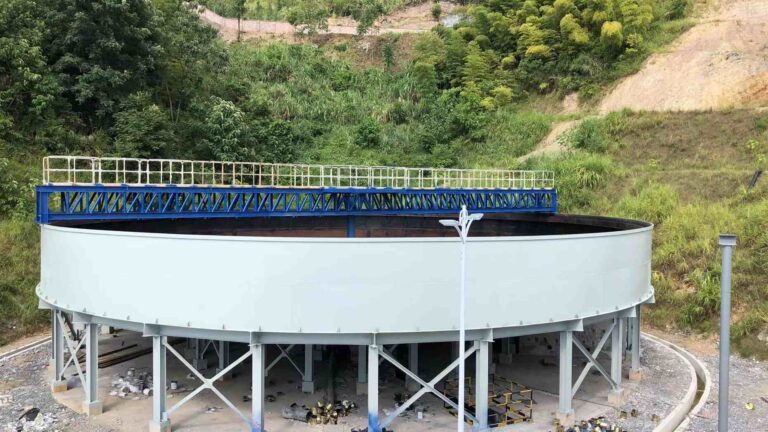
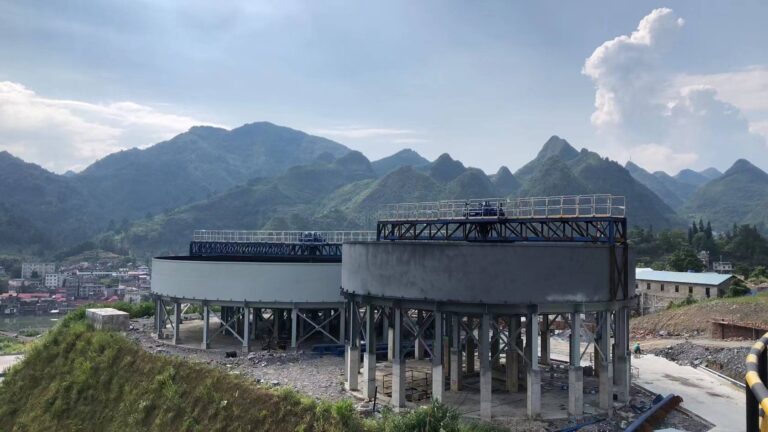
High-efficiency thickener: when your system needs concentration before filtration
High-efficiency thickeners are the practical answer when the system needs concentration before filtration, especially with dilute feeds. They reduce volumetric load and can stabilize downstream filtration by providing a more consistent underflow. In many projects, thickening is not an optional add-on; it is the step that makes the filtration route economically and operationally viable.
Industrial Use Cases: What “Good” Looks Like by Industry
Different industries are defined less by equipment preference and more by target priorities and failure modes.
Mining & tailings: water recovery and transport cost pressure
Mining often prioritizes water recovery and manageability of tailings. “Good” performance means reclaiming water without contaminating the recycle loop with fines that destabilize upstream processes, and producing a dewatered solids stream that can be transported, stacked, or stored safely. Many mines use a route approach: thickening to concentrate, followed by filtration or pressing to reach the required cake moisture for handling and storage strategy.
Chemical slurry: filtrate clarity, containment, and consistency
Chemical processing frequently emphasizes filtrate clarity, containment, and repeatability. Filtrate quality may protect catalysts, membranes, or downstream reactors. Some slurries require enclosed handling for safety, odor, or solvent containment. “Good” performance means stable clarity during normal operation and predictable behavior during start/stop, with manageable cleaning and changeover routines.
Wastewater & environmental: reliability, compliance reporting, and staffing reality
Wastewater and environmental facilities often win by being boring. Reliability, compliance reporting, and staffing constraints dominate. Feed variability is common, and seasonal changes affect performance. “Good” means predictable operation, stable dewatering, and maintenance routines that fit staffing reality. Automation and traceability can matter because compliance reporting punishes instability more than it rewards occasional peak performance.
A Practical Selection Workflow Engineers Can Actually Use
Define the outcome: cake moisture, filtrate clarity, recovery rate, cycle rhythm
Start with measurable targets and the conditions under which they must hold. Define cake moisture and how it will be measured. Define filtrate clarity in terms your water loop and permits care about. Define recovery rate if solids loss matters. Then define cycle rhythm: continuous vs batch, allowable variability, and what downstream can tolerate.
List what you know about the slurry (and what you don’t)
Capture solids concentration and expected range, particle size distribution, temperature range, viscosity behavior, compressibility, and relevant chemistry. If data is missing, call it out; unknowns should be treated as risk, not ignored.
Choose the route first, then size the equipment
Route selection comes before equipment sizing. If the feed is dilute, thickening may be the foundation. If continuous filtration and washing matter, a belt filtration route may fit. If low moisture cake is the KPI, pressure-based dewatering is often the core. If fines recovery and filtrate clarity justify the cost, ceramic filtration may be justified. After route selection, equipment sizing becomes a solvable engineering task instead of guesswork.
Pre-empt common mistakes (cloth blinding, unstable cycles, “works in pilot, fails in plant”)
Treat failure modes as design inputs. Cloth blinding and scaling are predictable outcomes of fines and chemistry. Unstable cycles often trace back to feed variability and poor buffering. Pilot-to-plant failures often happen because pilot tests use cleaner water, steadier feed, and shorter runtimes than real operations. A realistic evaluation plan considers recycle water chemistry, expected variability, and sustained operation, not only initial rate.
What to Prepare Before You Contact a Supplier
A well-prepared inquiry shortens the path to an accurate proposal. Suppliers typically need solids concentration and range, particle size distribution or fines behavior, target cake moisture, target filtrate clarity, throughput, and whether operation must be continuous or batch. They also need footprint constraints, water loop details, wash water source and quality, and whether automated record-keeping is required for compliance or internal reporting. When those inputs are clear, the supplier can discuss route selection and trade-offs in a way that actually matches plant reality.
Brief Introduction: Yantai Hexin Environmental Protection Equipment Co.,Ltd
Янтай Гексин Экологическая защита оборудования Co., Ltd focuses on solid-liquid separation equipment and project delivery for industrial and environmental applications. With more than 20 years of stated experience in the filtration field, the company offers equipment lines that align with the major separation routes discussed in this article, including belt filters, ceramic filters, vertical or tower-style filter presses, and high-efficiency thickeners, along with EPC-oriented project support. The company’s application coverage spans sectors such as mining and tailings, chemical processing, metallurgy, paper, food-related processes, and sewage treatment, where the practical goal is not just “separation,” but stable performance tied to water recovery, filtrate quality, cake handling, and lifecycle serviceability.
Вывод
Solid-liquid separation projects usually avoid late-stage rework when the team treats KPI definition as engineering, not paperwork. If you define cake moisture, filtrate clarity, recovery expectations, and cycle rhythm in measurable terms, and you choose the separation route before you argue about equipment names, you reduce risk dramatically. The best plants are not the ones that buy the most complex machines; they are the ones that match slurry reality, water-loop constraints, and maintenance capability to a route that can stay on spec month after month.
Вопросы и ответы
What is the difference between a solid-liquid separation method and equipment?
A method is the separation mechanism, such as thickening, filtration, pressure dewatering, centrifugation, or flotation. Equipment is the engineered implementation of that method, including how it handles media, cake formation, washing, discharge, and control. Two machines can share the same method yet perform differently because the engineering details and operating constraints are different.
Why does the same filtration method give different results in different plants?
Filtration depends heavily on slurry characteristics and plant reality. Particle size distribution, fines content, viscosity, cake compressibility, temperature, and chemistry can shift performance. Water loop quality and operating variability matter too. A filtration route that is stable with fresh water and steady feed can drift when recycle water chemistry changes and the upstream process swings.
How do I define the right KPI for dewatering and filtration?
Define targets that match downstream consequences. Cake moisture should be tied to handling, shipping, or disposal economics. Filtrate clarity should be tied to recycle loop stability and compliance limits. If fines recovery matters, define recovery in measurable terms. Also define the operating envelope: throughput range, start/stop behavior, and acceptable maintenance frequency.
When should I consider a belt filter versus a press filter for solid-liquid separation?
A belt filter route is often chosen when continuous filtration, steady throughput, and integrated washing are important, and when footprint is acceptable. A press filter route is often chosen when low moisture cake is a primary KPI and the plant can support cyclic operation and more complex maintenance. The better choice depends on KPI priority and site constraints, not on a generic ranking.
What information should I prepare before requesting a quote for solid-liquid separation equipment?
Prepare solids concentration and range, particle size distribution or fines behavior, target cake moisture, target filtrate clarity, throughput, continuous versus batch requirement, footprint constraints, and water loop details including wash water quality. If compliance reporting or traceability matters, include requirements for automation records. These inputs allow a supplier to recommend the right separation route and size equipment realistically.