 Russian
  English
  Spanish
 In most concentrators, the grinding and flotation circuits get all the attention. But ask any pellet plant operator, smelter manager, or logistics supervisor and they’ll tell you: concentrate dewatering can quietly make or break the operation.
If concentrate leaves the plant too wet, you pay for it three times—higher transport cost, higher fuel use in downstream drying, and unstable product quality. When moisture is under control, everything else runs smoother. That’s why more plants in ferrous and non-ferrous metal mining are switching from purely traditional filters to ceramic filters as a key part of their dewatering line.
Yantai Hexin Environmental Protection Equipment Co.,Ltd has built its product range around this reality, with ceramic filters designed specifically for tough mining environments and high-duty cycles.
Why concentrate dewatering matters more than many people think
Moisture, transport, and downstream energy use
Take a simple example. An iron concentrate shipped at 10–11% moisture instead of 14–15% doesn’t sound like a huge change on paper. But over a year of rail or truck movements, that’s thousands of tons of water you didn’t have to move.
Lower moisture also means:
- Less sticking and buildup in railcars, barges, or trucks
- More stable flow through chutes and transfer points
- Reduced risk of frozen loads in cold climates
Downstream, in pellet plants or dryers, every extra percent of water is extra fuel and longer residence time. Over time, that shows up as higher gas or oil consumption and more maintenance on burners and refractory.
Product quality and process stability
For many ferrous and non-ferrous metal mining operations, moisture isn’t just a cost issue, it’s a quality spec.
- Pelletizing plants often demand a narrow moisture band for green ball formation.
- Some non-ferrous smelters have limits on concentrate moisture to keep handling and combustion stable.
When the filtration plant delivers a concentrate with steady moisture and consistent cake structure, the downstream processes stop firefighting and start performing the way they were designed to.
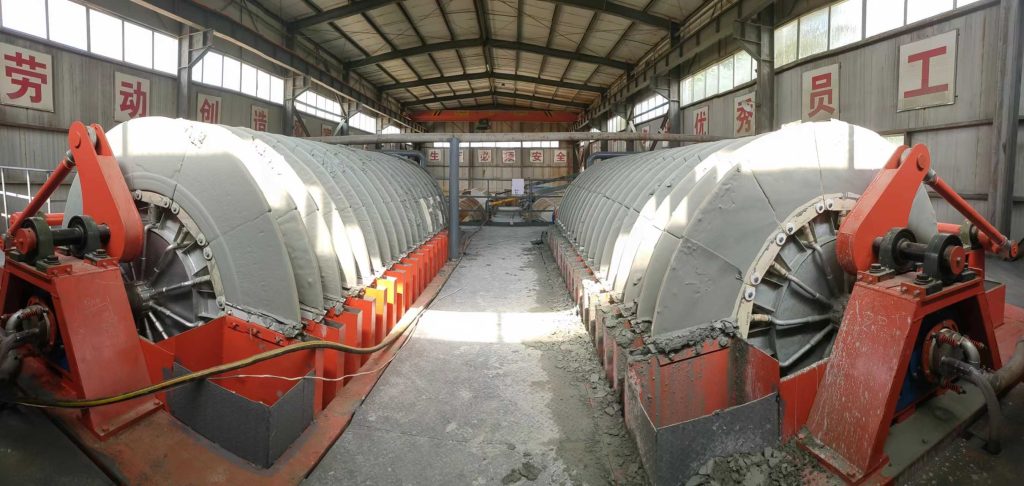
What makes ceramic filters different in concentrate dewatering
Working principle: vacuum and capillary action
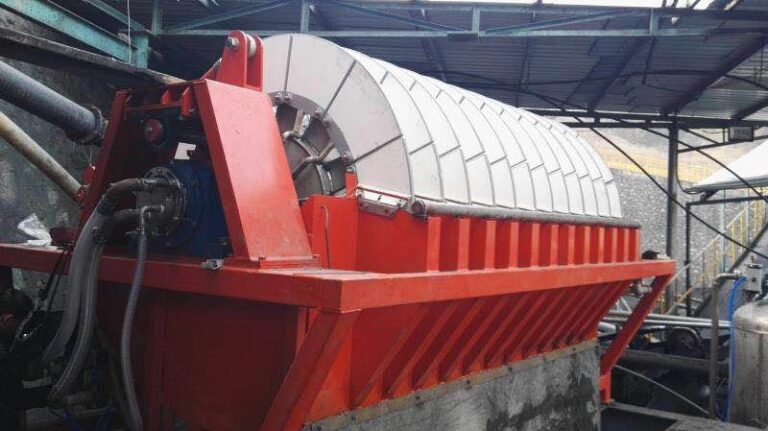
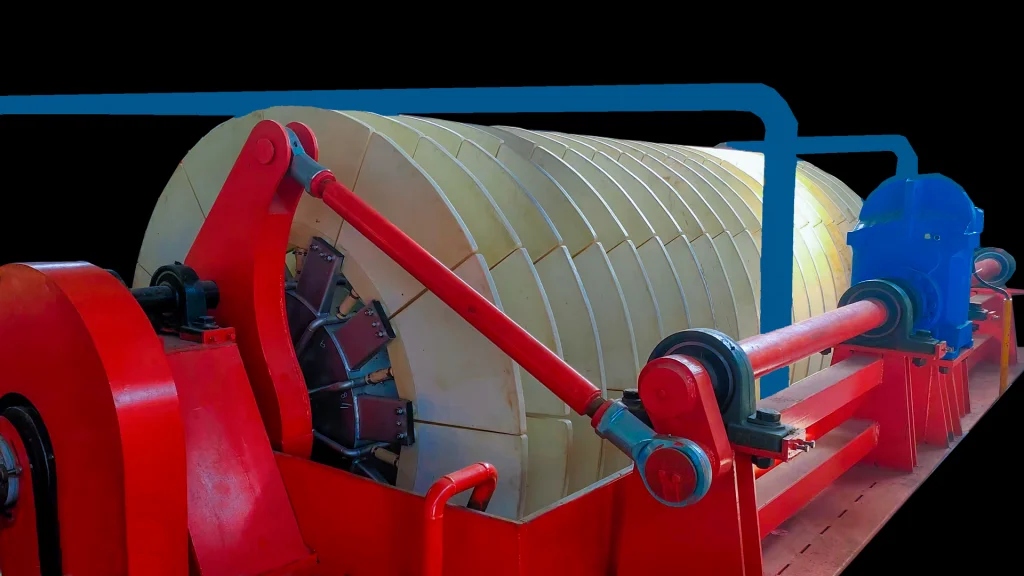
Hexin’s керамические фильтры are solid–liquid separation machines that rely on vacuum pressure and the capillary action of microporous ceramic filter plates. Under negative pressure inside the plate, liquid is drawn through the fine pores, while solids from the slurry stay on the plate surface and form a cake.
Key points in plain language:
- The ceramic plate is rigid and full of tiny, uniform pores.
- A vacuum on the inside of the plate “pulls” liquid through.
- The solids in the slurry build up as a thin, dense layer on the outside.
Because the ceramic medium doesn’t stretch or deform like cloth, filtration can stay very consistent once the system is tuned.
Why that matters for ferrous and non-ferrous concentrates
Concentrates in iron, copper, lead, zinc, nickel and other metals often have very fine particles, sometimes with clay or other tricky components mixed in. Traditional vacuum filters can struggle with:
- Lower vacuum levels
- Cloth blinding and frequent replacement
- Less stable moisture at high throughput
Ceramic filters address these problems by:
- Running at higher effective vacuum thanks to the capillary effect in the ceramic plate
- Using hard, wear-resistant plates instead of cloth, which improves service life
- Delivering drier cakes and clearer filtrate when correctly sized and operated
In day-to-day terms, that can mean a plant hits its target moisture and throughput with fewer filter units and more predictable performance.
How ceramic filters fit into real concentrator flowsheets
Typical iron ore concentrate line
In a standard iron ore plant, the flowsheet might look like:
- Grinding and classification
- Magnetic separation or flotation
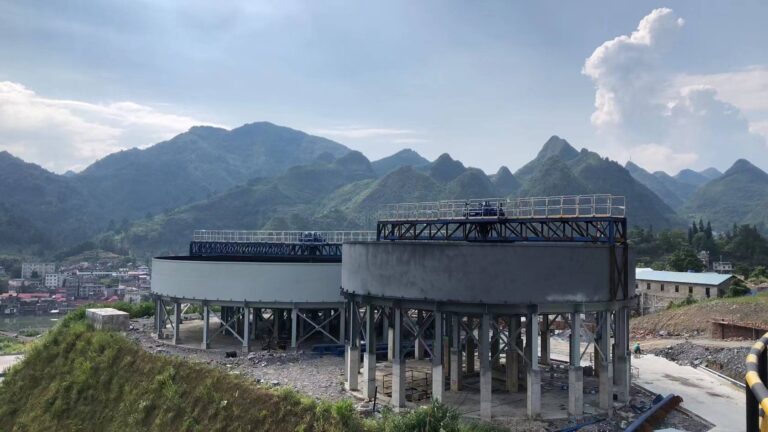
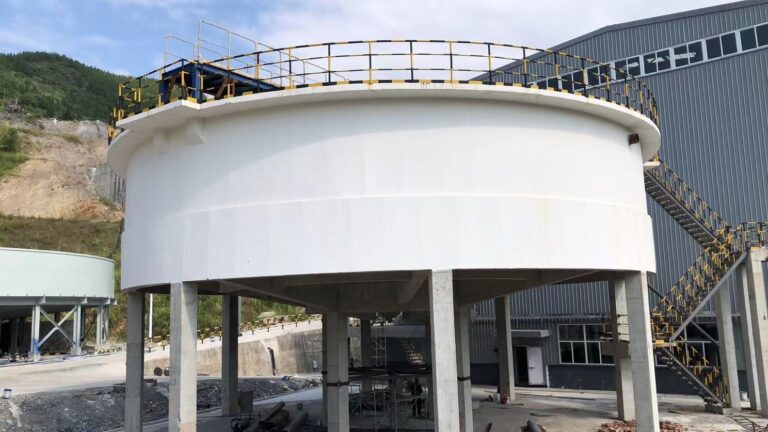
- Concentrate thickener
- Ceramic filter station
- Stockpile, pellet plant feed, or shipping
The thickener does the heavy lifting on bulk water removal, taking the slurry up to a workable density. The ceramic filter then handles the “fine-tuning,” removing the extra water needed to get the concentrate to a stackable, shippable moisture range.
Plants that switch from cloth-based vacuum filters to ceramic filters often report:
- Lower moisture at the same or higher throughput
- More stable filtrate clarity, which helps with water recycling
- Reduced downtime for media changeouts and cloth washes
Non-ferrous metal mining: different ores, similar challenges
In non-ferrous metal mining, concentrates can be even more complex. A copper–molybdenum plant, for example, may have:
- Very fine particle sizes
- Variable mineralogy between pits or ore bodies
- Reagents that can change filtration behavior
Here, ceramic filters help by providing a more consistent filter medium and high vacuum. Once the right cycle times, rotation speeds, and washing steps are dialed in, operators can usually hold moisture and throughput within narrower bands than before.
Common pitfalls and how to avoid them
Ceramic filters are powerful tools, but like any piece of process equipment, they have their own rules. In practice, the most common issues come from:
- Feed density too low or too high – If slurry is too thin, you don’t build a good cake; too thick and you overload the system.
- Unstable vacuum – Leaks or poor pump maintenance kill performance.
- Poor cleaning routines – If the ceramic pores aren’t cleaned on schedule, filtration resistance climbs and capacity drops.
Plants that treat ceramic filters as part of the process, not just stand-alone machines, usually avoid these problems: they integrate them with good thickener control, solid pump maintenance, and a clear cleaning schedule.
Why mines choose ceramic filters from Yantai Hexin
A company built around filtration
According to its company profile, Yantai Hexin Environmental Protection Equipment Co.,Ltd focuses specifically on manufacturing, researching, developing and selling filtration equipment, and has been in the filter industry for more than 20 years.
That long focus shows up in the product lineup:
- Ременные фильтры BF
- Керамические фильтры DF
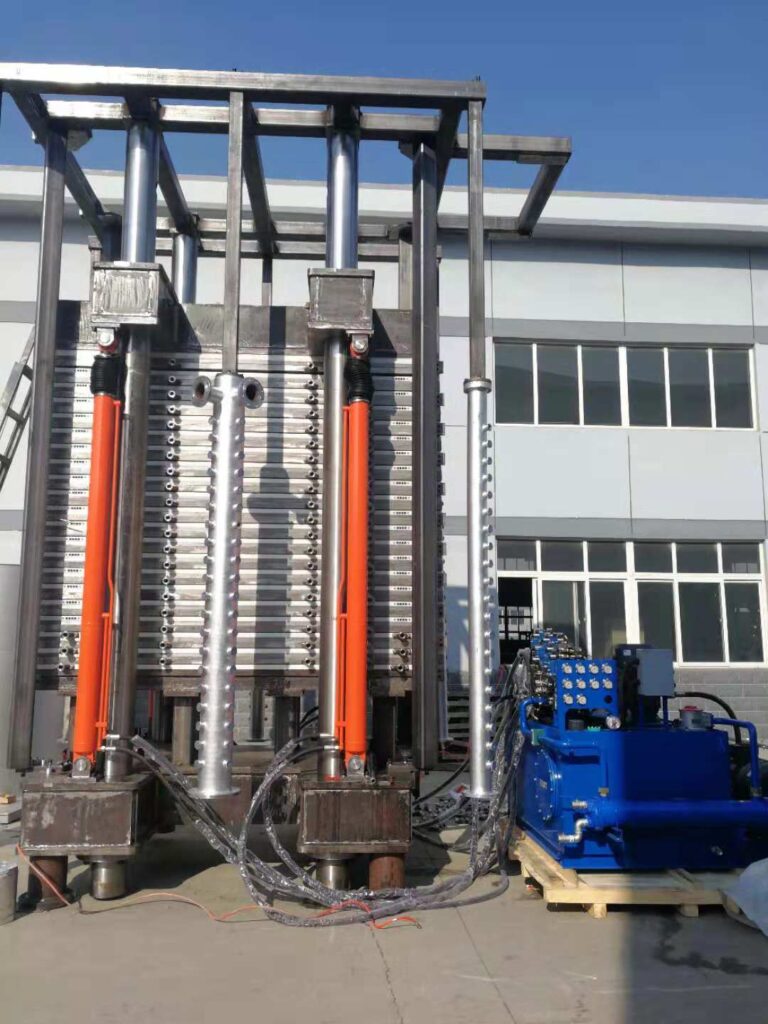
- TFP vertical (tower) filter presses
- Высокоэффективные затушители NGZ
For a mine, that means you’re talking to a supplier that lives and breathes solid–liquid separation, not a general equipment catalog.
Integrated solutions for concentrate dewatering
Ceramic filters rarely work alone. They sit between thickeners, pumps, tanks, and downstream handling systems. Hexin’s range makes it possible to design entire concentrate dewatering sections that include:
- High-efficiency thickener for bulk water removal
- Ceramic filters for final dewatering to target moisture
- Optional tower press filters or belt filters where needed
- Engineering and EPC support for system layout and installation
This system-level view is especially useful for plants looking to expand capacity or switch to different ore blends without losing control over moisture.
Quality control and after-sales support
Hexin highlights quality assurance and after-sale service as formal parts of its offering, supported by professional R&D and sales teams.
In practice, that can include:
- Help with equipment selection and sizing
- Commissioning support and operator training
- Ongoing technical assistance, spare parts, and troubleshooting
For plants that run 24/7, having that kind of backup behind their ceramic filters is often just as important as the equipment specs.
About Yantai Hexin Environmental Protection Equipment Co.,Ltd
Yantai Hexin Environmental Protection Equipment Co.,Ltd is based in YEDA, Yantai City, Shandong Province, and specializes in filtration equipment for industrial and environmental applications. The company has been engaged in the filter industry for more than two decades, with dedicated R&D, production and sales teams.
Its product portfolio covers belt filters, ceramic filters, vertical (tower) filter presses, high-efficiency thickeners and related EPC projects, serving mining, metallurgy, chemicals, paper, sewage treatment and tailings treatment, among others.
With complete equipment processing, quality assurance, and after-sale systems, Yantai Hexin positions itself as a practical partner for mining companies that want reliable ceramic filters and other tools for concentrate dewatering and broader solid–liquid separation tasks.
Вывод
Concentrate dewatering is no longer a background topic. In modern ferrous and non-ferrous metal mining, it directly affects transport cost, downstream energy use, and product quality. Керамические фильтры give plants a way to pull more water out of concentrate, stabilize moisture, and run with fewer surprises shift to shift.
When those ceramic filters are part of a broader package—from thickeners to EPC support—from a specialist like Yantai Hexin Environmental Protection Equipment Co.,Ltd, they stop being just machines on the filter floor and become part of a long-term strategy for cleaner, more efficient concentrate handling.
FAQs about Ceramic Filters, Concentrate Dewatering, and Mining
Why are ceramic filters so effective for concentrate dewatering in mining?
Ceramic filters use microporous plates and strong vacuum to pull liquid out of fine concentrates. This setup works especially well in ferrous and non-ferrous metal mining, where particle sizes are small and traditional cloth filters can struggle. The result is a drier cake, clearer filtrate, and more stable concentrate dewatering performance at high throughput.
Can one type of ceramic filter handle both iron and non-ferrous concentrates?
In many cases, yes. The same basic ceramic filter design can handle iron, copper, lead, zinc, and other concentrates, as long as feed density, particle size, and chemistry are considered in the design. Yantai Hexin typically adjusts filter area, plate configuration and operating parameters to match each ore and its concentrate dewatering targets.
How do ceramic filters compare to traditional vacuum filters in operating cost?
Traditional vacuum filters rely on cloth media that can blind and need frequent replacement. Ceramic filters run with rigid ceramic plates that have a long service life and can be cleaned systematically. Power use is often competitive or lower because the process uses vacuum and capillary action instead of very high mechanical pressure. Over time, many plants see lower cost per ton of filtered concentrate with ceramic filters, especially when water savings are factored in.
What maintenance do ceramic filters need in a ferrous or non-ferrous concentrator?
Routine tasks usually include checking vacuum pumps, seals, bearings and drives, along with running regular backwash and deeper cleaning cycles to keep the ceramic pores open. If the plant follows a clear maintenance schedule, the ceramic plates in the ceramic filters can deliver long, stable service in concentrate dewatering duty.
How does Yantai Hexin support ceramic filter users after installation?
Yantai Hexin backs its ceramic filters with technical support, quality assurance and after-sale service. That typically means guidance during project design, on-site help during commissioning, and ongoing assistance with spare parts and performance tuning. For ferrous and non-ferrous metal mining customers, that support helps keep concentrate dewatering lines running smoothly over the full life of the project.