 Russian
  English
  Spanish
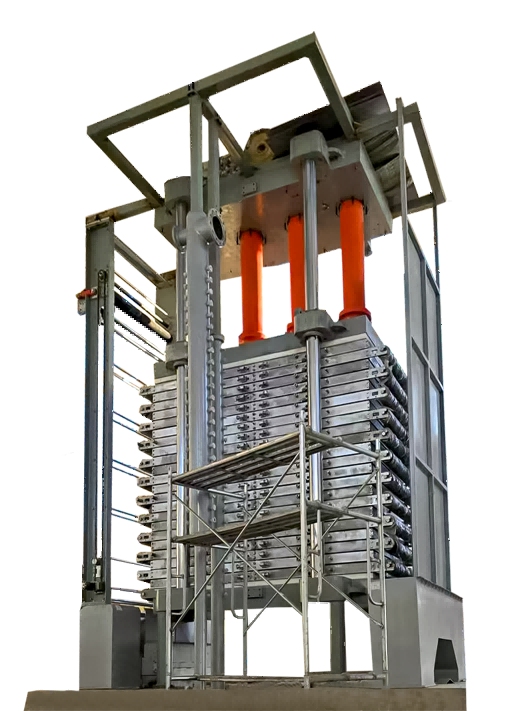
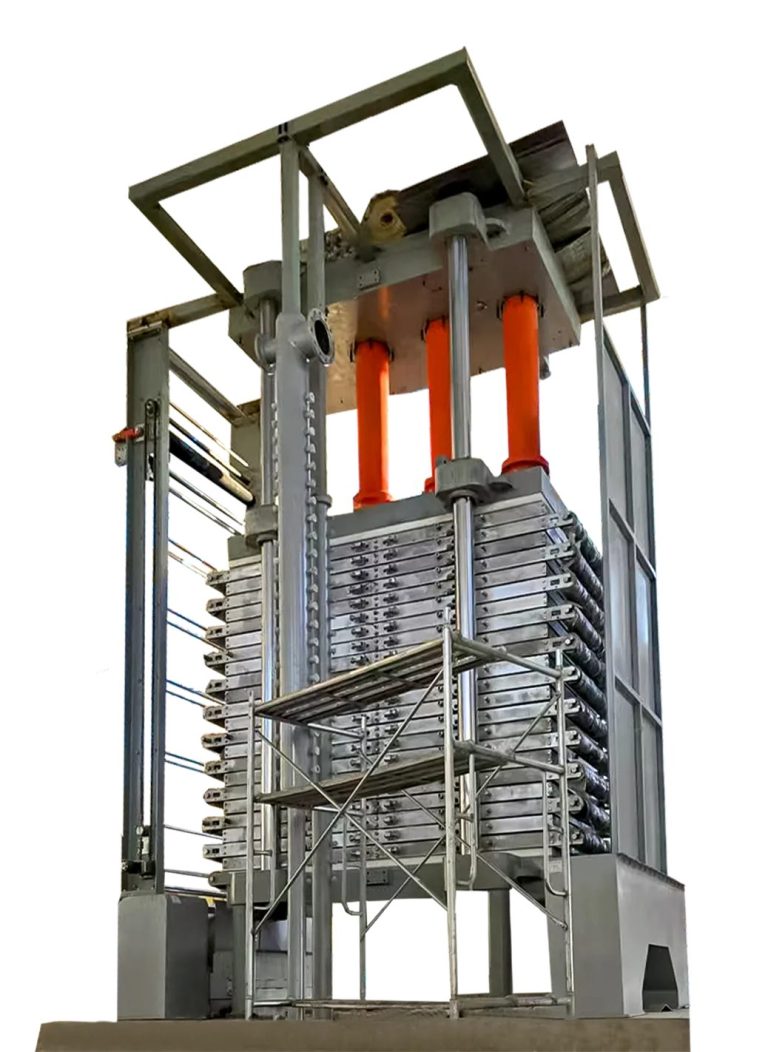
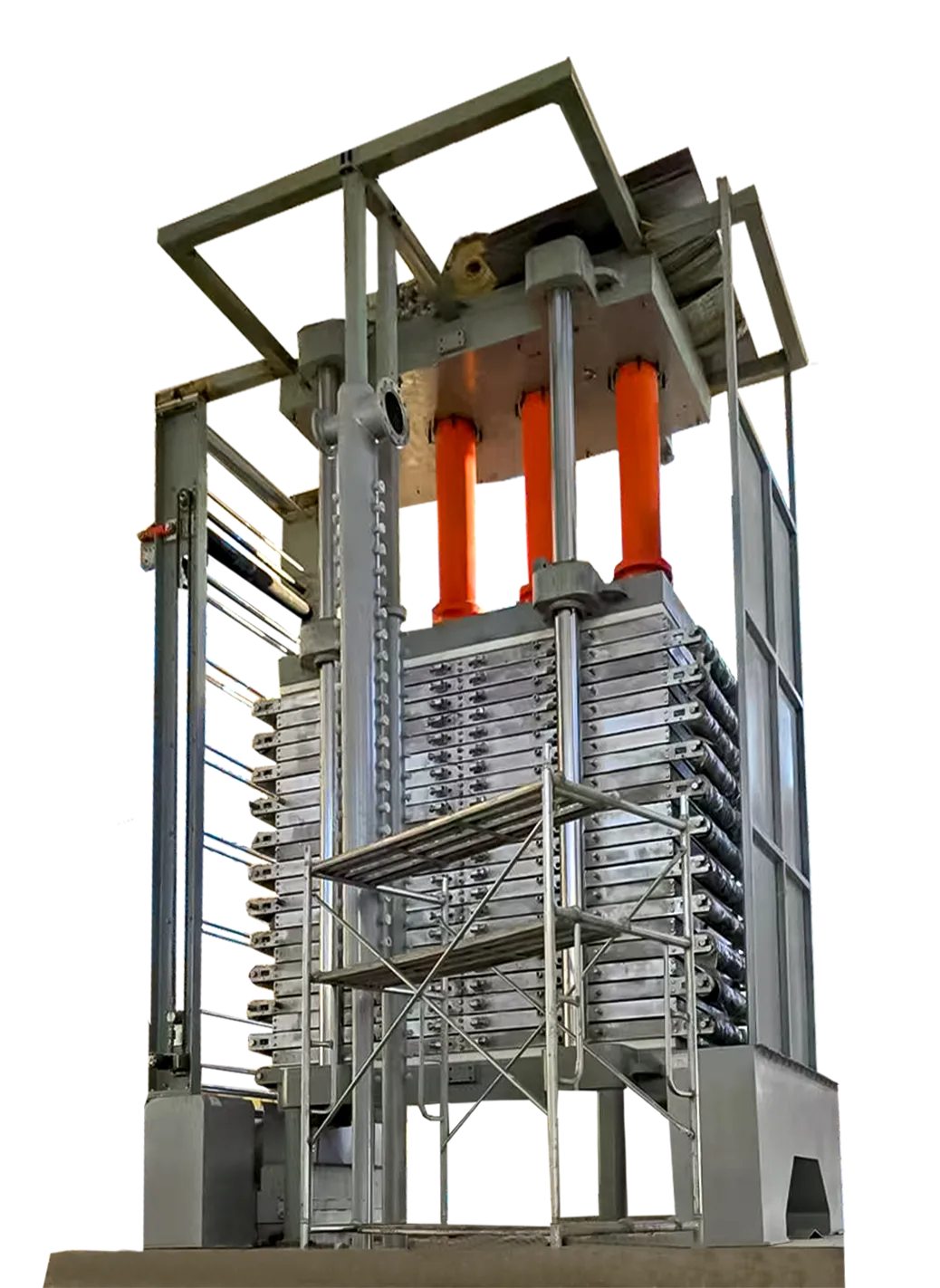
 Вертикальные пресс-фильтры continue to serve as core equipment for tailings dry stacking and concentrate dewatering in mining operations. Sites count on them to deliver low-moisture cakes that support engineered stacks, achieve high water recovery rates, and keep disposal volumes under control. Performance issues surface regularly—cycles that stretch beyond target, energy logs showing unexpected spikes, cakes that hover above 18 % moisture, cloths requiring frequent replacement—and many trace directly to persistent misunderstandings of the vertical press filter working principle. These misconceptions do not remain harmless assumptions. They drive up operating costs through wasted electricity, accelerated wear, extended downtime, and increased haulage or storage expenses.
The vertical press filter working principle follows a sequenced process: gravity-assisted chamber filling, primary filtration under moderate pump pressure, staged diaphragm squeezing to 1.6–2.0 MPa, optional washing, secondary compression, air blowing for final moisture removal, and automatic cake discharge. Each phase interacts with the previous one to maintain balance between dryness, filtrate quality, and cycle efficiency. When field teams override or disregard elements of this sequence based on habits formed with belt filters or conventional plate presses, outcomes deviate in consistent and measurable ways.
Why Misunderstandings Persist in Vertical Press Filter Operation
Tailings feeds differ sharply from one deposit to another. A copper tailings stream carrying 35–45 % minus 10 micron fines reacts differently than an iron ore slurry dominated by coarser particles. Operators frequently carry over operating practices from other dewatering methods without adjusting for how the multi-stage diaphragm mechanism responds to specific slurry properties.
Field symptoms include cakes that crack on discharge, cloths that blind after short run times, pressure curves showing abrupt spikes, or energy consumption that rises without corresponding gains in dryness. The underlying cause usually involves treating the vertical press filter as a brute-force high-pressure device instead of a balanced system where ramp rate, preconditioning, and timing matter as much as peak pressure. Financial consequences build steadily: an additional 6 minutes per cycle on a 150 dry ton per day unit equates to hundreds of extra operating hours annually, while 2–4 % higher cake moisture can add tens of thousands in annual transport and disposal fees depending on distance and local rates.
Myth 1: Higher Pressure Always Produces Drier Filter Cakes
Plant crews often set diaphragm squeeze to maximum allowable pressure—typically 2.0 MPa—right from the beginning of compression, convinced that greater force expels more water faster.
The principle demonstrates the opposite effect. Immediate peak pressure compacts the outer cake layer too quickly, sealing internal pores and trapping liquid deeper inside. In fines-rich or clay-bearing tailings this surface sealing limits further dewatering and frequently causes internal cracking during discharge. Cracked cakes fragment unevenly, adhere to the cloth, and demand manual intervention or prolonged air-blow periods to clear the chambers.
Consequences appear across multiple metrics. Cycle duration increases by 10–25 % as blocked pores slow liquid removal. Hydraulic energy consumption rises 15–30 % per ton without meaningful moisture improvement. Cloth abrasion accelerates from repeated high-stress loading and mechanical scraping during release. One tailings installation that maintained constant maximum pressure saw average cycle time climb from 19 to 25 minutes and cloth replacement intervals shorten by nearly half, driving up annual maintenance expenditures substantially.
Myth 2: The Denser the Filter Cloth, the Better the Filtration
A recurring suggestion in the field involves switching to finer weave or higher thread-count cloths under the assumption that tighter fabric retains more fines, yields clearer filtrate, and results in drier cakes.
Finer cloths retain smaller particles more effectively at the start, but they blind much faster when processing tailings with ultra-fines or colloidal fractions. The vertical press filter working principle requires sustained permeability through both cake and cloth during primary filtration and early squeeze stages. Early pore blockage reduces filtrate flow, forces higher pump pressure to complete filling, and compels the diaphragm system to expend more energy overcoming resistance.
Outcomes include shortened productive filtration periods, elevated energy draw from increased pumping and hydraulic demand, and cloth service life dropping from 12–18 months to 4–8 months in aggressive cases. Daily dry solids throughput declines as chambers require more frequent regeneration washing. Initial filtrate clarity may improve slightly, but overall system performance deteriorates as blinded cloths extend wash cycles and necessitate more intensive cleaning routines. Operations that adopted overly dense cloths without corresponding slurry preconditioning often experience 25–45 % reductions in processed tonnage per shift.
Myth 3: Faster Slurry Feeding Shortens Overall Cycle Time
Field teams sometimes increase feed pump speed to the maximum during chamber charging, believing that quicker filling allocates more time to squeezing and drying, thereby boosting throughput.
High feed rates disrupt uniform cake formation. Slurry rushes in unevenly, forming air pockets, channeling paths, and localized high-solids zones near inlets. The uneven cake resists consistent compression, resulting in reduced liquid expulsion during diaphragm phases and elevated residual moisture after air blowing. Severe channeling can cause leaks between plates or premature discharge failures.
Costs manifest in variable cake quality—some chambers produce noticeably wetter output requiring rework—and overall cycle times that extend despite the shorter fill phase. Pump energy consumption rises during rapid charging, and additional squeezing attempts to compensate for poor initial structure. In tailings circuits with fluctuating feed consistency, aggressive pumping commonly leads to 5–12 % higher average moisture and more frequent downtime for plate inspection or seal repair.
Myth 4: Longer Squeeze Time Always Yields Proportionally Drier Cakes
A standard adjustment seen on many sites involves extending secondary squeeze or air-blow duration to chase the lowest possible moisture percentage.
The principle indicates sharply diminishing returns beyond a certain threshold. After interstitial water has been largely removed, further time under pressure or airflow contributes minimal additional dryness while steadily increasing hydraulic and compressor energy draw. In tailings with moderate clay fractions, excessive squeeze duration can over-compact the cake, making discharge difficult and increasing the likelihood of material sticking to the cloth.
Operational data reveal that beyond 5–7 minutes of secondary squeeze in typical tailings feeds, moisture reduction slows to 0.3–0.8 % per extra minute while power use rises linearly. Prolonged air blowing past the point of meaningful filtrate return similarly wastes energy. Sites that routinely extend squeeze phases to target ultra-low moisture often record 15–30 % higher energy per ton with only marginal dryness improvement, diminishing the return on the equipment investment.
Myth 5: Conditioning Chemicals Are Optional for Most Tailings Feeds
Some operations reduce or eliminate flocculant addition, presuming the high-pressure diaphragm stages can overcome poor settling characteristics and still produce acceptable cakes.
Conditioning promotes particle aggregation, enhances settling rate, and improves cake permeability during primary filtration. Without adequate dosing, fines stay dispersed, slowing initial drainage, creating uneven cake buildup, and limiting the effectiveness of subsequent squeeze phases. Final moisture rises, cycles lengthen, and cloth blinding risk increases.
Impacts include cycle extensions of 20–40 %, elevated energy for pumping and compression, and more frequent cloth regeneration. Water recovery frequently falls below 80 %, increasing freshwater demand and potential discharge concerns. Facilities that reinstated proper conditioning after observing declining performance typically achieve cycle time reductions of 6–12 minutes and moisture improvements of 2–5 %.
How to Avoid These Mistakes and Achieve Reliable Performance
Addressing these misconceptions begins with systematic slurry evaluation. Laboratory filterability testing on fresh samples identifies suitable flocculant types and dosages, appropriate cloth permeability ranges, and realistic pressure profiles. Pilot-scale runs validate cycle parameters under controlled conditions before committing to full-scale changes.
Continuous monitoring of pressure traces, filtrate turbidity, cake thickness consistency, and discharge behavior detects deviations early. Adjusting feed rates to promote even distribution, implementing gradual pressure ramps, and determining air-blow duration based on filtrate return rather than fixed timers generally produce the most favorable combination of dryness and energy efficiency.
Working with manufacturers experienced in tailings applications provides critical guidance when customizing these parameters to site-specific slurry chemistry or operational constraints. Proper configuration mitigates the hidden costs described here, extends component service intervals, and supports consistent compliance with dry-stacking and water-recovery objectives.
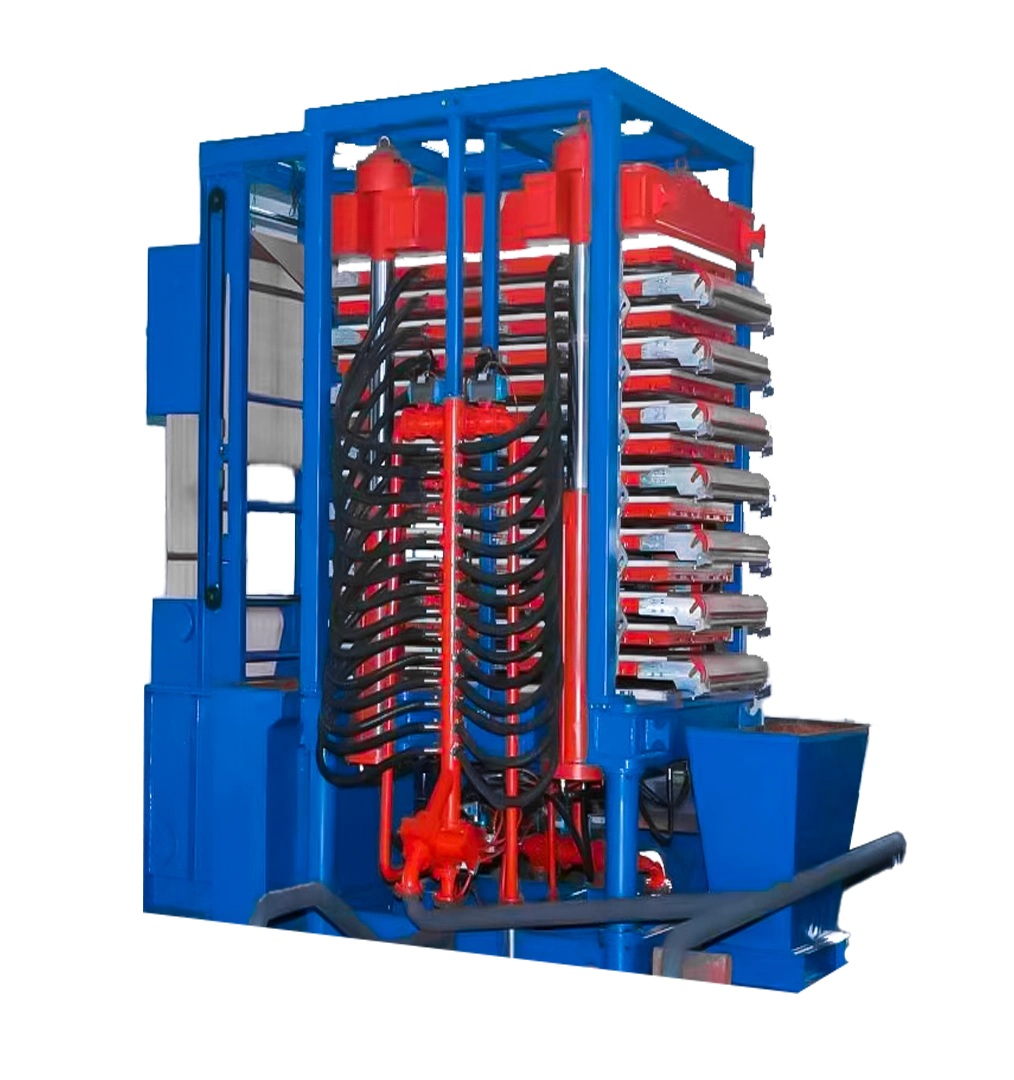
About Yantai Hexin Environmental Protection Equipment Co.,Ltd.
Янтай Хексин Обощивание Экологического оборудования Ко., ООО., located in YEDA, Yantai City, Shandong Province, China, builds on filtration manufacturing experience originating in 1995, with formal reorganization in 2017. The company produces belt filters, ceramic filters, vertical (tower) filter presses, high-efficiency thickeners, and associated systems for mining, metallurgy, chemical production, fertilizer manufacturing, pharmaceuticals, food processing, papermaking, sewage treatment, and tailings operations. Sustained focus on research, precision fabrication, quality assurance, and responsive technical support has created a track record of reliable, field-proven equipment.
Вывод
Misconceptions surrounding the vertical press filter working principle frequently arise from applying practices suited to other dewatering methods that do not align with the staged, interdependent nature of gravity filling, diaphragm compression, and air drying. Correcting these assumptions—through controlled pressure application, appropriate cloth selection, measured feed rates, timed squeeze phases, and effective conditioning—results in drier cakes, reduced energy draw, shorter cycles, and extended equipment life. Operations that systematically eliminate these pitfalls achieve measurable reductions in operating expenses and stronger alignment with tailings management standards. Consulting with specialized suppliers for tailored parameter setup and selection remains a practical step toward sustained, cost-effective performance.
Вопросы и ответы
Why is my vertical press filter cake moisture higher than expected?
Elevated cake moisture commonly stems from abrupt high pressure that seals surface pores, uneven slurry distribution during fast feeding, or inadequate conditioning, all of which hinder effective liquid removal in the squeeze and air-blow stages.
How can I reduce energy consumption on a vertical press filter?
Energy consumption decreases with gradual pressure ramping to avoid hydraulic peaks, air-blow timed to actual filtrate return, feed rates adjusted for uniform cake formation, and proper flocculant dosing to enhance initial permeability.
What causes frequent cloth blinding in vertical press filters?
Overly dense filter cloth, insufficient conditioning, or immediate peak pressure during squeezing typically cause blinding by trapping fines early, blocking pores, extending wash cycles, and shortening cloth service intervals.
Why do vertical press filter cycles take longer than expected?
Prolonged cycles often result from rapid slurry feeding that produces uneven cakes, excessive initial pressure that cracks the cake, or poor drainage due to missing flocculant, requiring extended squeeze or air-blow phases to compensate.
How do I know if my vertical press filter needs better conditioning?
Indicators include slow primary filtration, turbid filtrate, inconsistent cake thickness, higher-than-target moisture, or repeated blinding; lab filterability tests and pilot trials can determine the appropriate flocculant type and dosage for the tailings feed.