 Spanish
  English
  Russian
 Tailings management used to be a “back of the plant” issue. Build a pond, pump the slurry, hope the dam holds. Those days are gone. Stricter regulations, community pressure, and repeated tailings incidents worldwide have pushed tailings to the top of every mining company’s risk list.
At the same time, water is getting more expensive, and in many regions, simply not available in the volumes plants were built around. Running a concentrator with outdated wet tailings technology can quietly drain profit every single shift.
That’s exactly where ceramic filters for tailings dry discharge come in. By pulling more water out of tailings, they make it possible to move from wet storage to dry stacking, while cutting water use and long-term environmental risk. Yantai Hexin Environmental Protection Equipment Co.,Ltd focuses on this kind of solid–liquid separation equipment, with ceramic filters as one of its core product lines.
Why tailings dry discharge is getting so much attention
The cost of “just pumping to a pond”
If you walk through a conventional plant, the flowsheet often ends with: thickener → tailings pump → dam. On paper, it looks simple. In reality, you get:
- Huge fresh water consumption to keep the circuit running
- Evaporation and seepage losses at the pond
- Large dam and monitoring costs over decades
- Long-term liabilities sitting on the balance sheet
Many sites are also struggling with high tailings moisture. Thickener underflow at 45–55% solids still behaves like a slurry, not a stackable cake. That means you need big pumps, big pipes, and big power bills.
Pressure from safety, regulation, and ESG
Regulators and investors now ask hard questions:
- Can this dam survive extreme weather events?
- How much water is actually being recycled?
- What’s the plan for closure and rehabilitation?
Dry discharge is one of the few solutions that can answer several of these questions at once. If tailings leave the plant as a low-moisture cake, you can stack them on a much smaller footprint, recover more water, and reduce the hazard level of the facility. Ceramic filters are designed precisely for this stage of the process.
How ceramic filters work in tailings applications
Negative pressure and capillary action
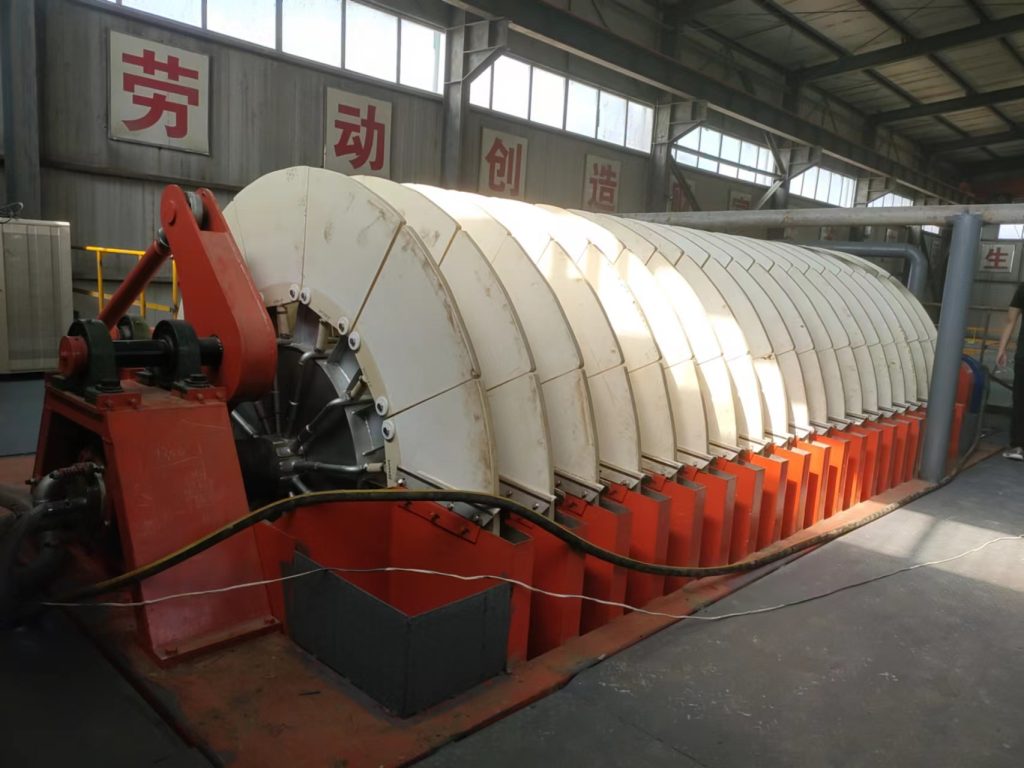
Hexin’s filtros cerámicos are solid–liquid separation devices that use vacuum pressure and the capillary properties of porous ceramic plates to pull liquid out of slurry. Inside each plate is a network of micro-pores. When negative pressure is applied on the filtrate side, water is drawn through these pores, while fine solids are held back on the plate surface as a filter cake.
Because the ceramic material is rigid and chemically stable, it can handle abrasive tailings and harsh process conditions far better than many cloth-based filters.
From tailings slurry to stackable cake – step by step
A typical tailings dry discharge loop with ceramic filters looks like this:
- Concentrator discharge – Tailings slurry leaves the plant at relatively low solids.
- Thickener – A high-efficiency thickener increases solids concentration and cuts the volume sent to filtration.
- Ceramic filter feed tank – Agitation keeps the slurry uniform as it feeds the ceramic filter.
- Filtration – The filter discs (or plates) rotate or cycle through the slurry. Vacuum draws filtrate through the ceramic plates, forming a cake on the surface.
- Drying section – As the cake moves out of the slurry, continued vacuum and sometimes compressed air further reduce moisture.
- Cake discharge – A scraper or other discharge mechanism removes the cake, which drops onto a conveyor and is sent to the dry stack area.
The key outcome is a much drier tailings cake compared with thickener discharge alone. That’s what makes dry discharge practical.
Cutting moisture, cost, and environmental risk
Lower moisture, higher water recovery
Every percent of moisture you remove from tailings has a cost effect. Less water in the cake means:
- More process water returned to the plant
- Smaller make-up water demand from fresh or groundwater sources
- Smaller pumps and pipework for tailings transport
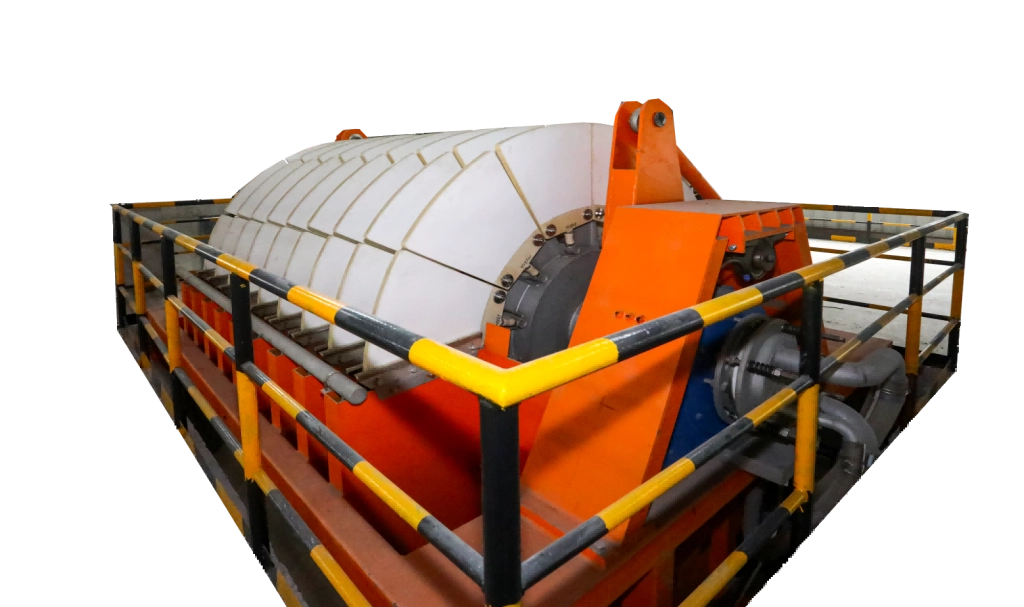
Ceramic filters are particularly good at handling fine tailings and producing a relatively dry cake because of the micro-porous ceramic plates. Hexin’s DF ceramic filter series, for example, is specifically described as working under negative pressure with ceramic plates to deliver high dewatering performance in harsh mining environments.
In many concentrators, this contributes to a significant reduction in total water consumption, especially when combined with efficient thickeners upstream.
Smaller footprint, lower risk
Switching from wet to dry tailings changes the physical risk profile of your site:
- Dry stacks generally need a smaller footprint than large ponds.
- There is no water cover to fail or overtop in extreme storms.
- The long-term closure plan is simpler—re-shaping and capping a dry stack is easier than dealing with a pond.
By pairing ceramic filters with a well-designed stacking system, mines can move toward a more compact, safer tailings facility that is easier to monitor, expand, and eventually close.
Operating cost and reliability
From a day-to-day standpoint, plant teams care about three things:
- Is the filter available when I need it?
- Is it stable enough to avoid constant interventions?
- Does it really cut cost over the life of the mine?
Ceramic filters answer these with:
- Rigid, wear-resistant plates that have a long service life compared with many cloth media
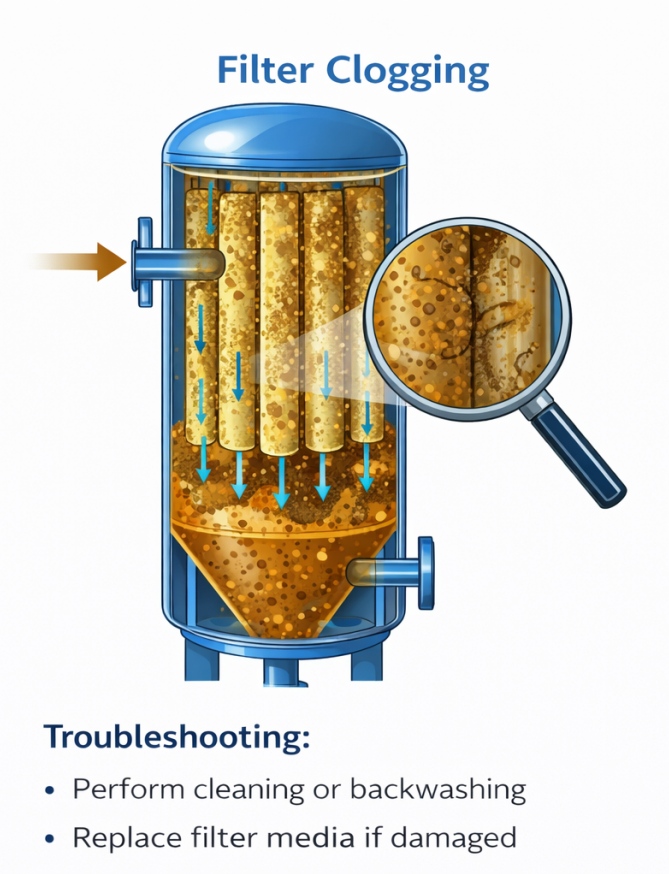
- Automated washing and cleaning functions (like backwash and periodic deep cleaning) that keep the pores open and filtration rates steady
- Lower energy demand than some pressure-based systems, because the driving force is vacuum and capillary action rather than very high mechanical pressure
Combined, these factors help keep the cost per ton of filtered tailings under control while offering the water and risk benefits that corporate teams are asking for.
Where ceramic filters sit in a tailings dry discharge flowsheet
Working together with thickeners and other equipment
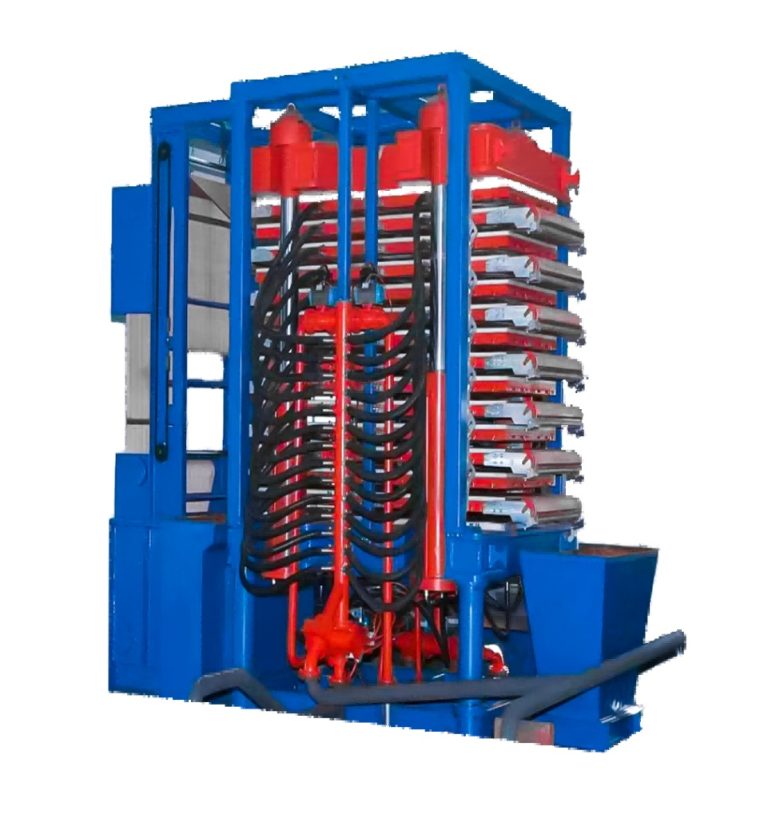
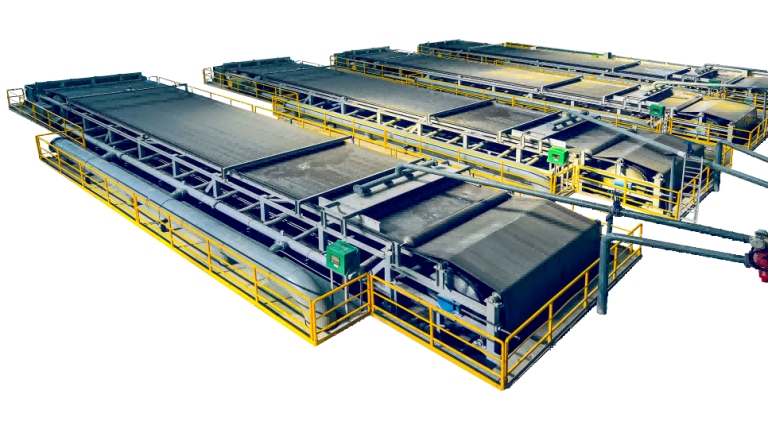
Yantai Hexin doesn’t look at ceramic filters as isolated machines. On their product side, you’ll see that ceramic filters are listed alongside belt filters, vertical (tower) filter presses, and high-efficiency thickeners as part of a solid–liquid separation package.
In a tailings dry discharge project, that can translate into:
- High-efficiency thickener for bulk water removal
- Ceramic filter for final moisture reduction and cake production
- Conveyors and stacking systems as part of an EPC package to move and stack dry tailings
This “whole flowsheet” view matters. If the thickener underperforms, the ceramic filter will be overloaded. If the stacking system is undersized, you’ll get bottlenecks. Having one supplier design the package helps avoid these mismatches.
Example: upgrading an existing concentrator
Imagine a mid-size iron ore plant that currently sends thickener underflow straight to a tailings pond. Pain points look familiar:
- Process water loss is high; makeup wells are under stress.
- The dam is approaching its design limit.
- Expansion is on hold because local authorities are pushing for better tailings management.
A typical upgrade path might be:
- Install a new high-efficiency thickener or upgrade the existing unit.
- Add a DF ceramic filter station sized for a portion of the tailings stream.
- Start dry stacking part of the tailings while monitoring cake moisture, stack stability, and water recovery.
- After successful operation, expand the ceramic filter capacity and phase out most wet tailings discharge.This staged approach lets the plant team gain confidence in ceramic filters and tailings dry discharge without betting the whole operation on day one.
Why mining companies work with Yantai Hexin on ceramic filter projects
Focus on solid–liquid separation and tailings
According to the company profile, Yantai Hexin Environmental Protection Equipment Co.,Ltd specializes in solid–liquid separation gear: belt filters, ceramic filters, vertical (tower) filter presses, and high-efficiency thickeners, plus EPC projects. These solutions show up across mining, metallurgy, chemicals, fertilizer, paper, sewage treatment and tailings treatment.
In other words, tailings and dewatering are not side projects—they’re at the heart of what the company builds.
EPC capability for tailings dry discharge
Several of Hexin’s publications highlight their EPC project services, including tailing dry discharge packages that combine engineering, equipment selection, construction, and commissioning.
For a plant manager, that matters because you’re not just buying a ceramic filter; you’re buying:
- System design and sizing support
- Integration with existing thickening and piping
- On-site guidance during start-up
- Long-term technical support
Experience, quality, and after-sales support
Other content from Hexin points to:
- Close to two decades of filtration experience in heavy industries
- ISO9001-based quality control in manufacturing and testing
- After-sale services including technical support, spare parts and warranty backed by a global customer base
For mines planning to run a tailings dry discharge system for the next 10–20 years, that kind of backing is just as important as the specs on the ceramic filter nameplate.
About Yantai Hexin Environmental Protection Equipment Co.,Ltd
Yantai Hexin Ambient Protection Equipment Co., Ltd is based in Yantai City, Shandong Province, China, and focuses on industrial solid–liquid separation and environmental protection equipment. The main product range covers belt filters, ceramic filters, vertical (tower) filter presses, high-efficiency thickeners and related EPC projects.
Over nearly twenty years in the field, the company has supplied filtration systems to sectors such as mining, chemical processing, metallurgy, fertilizer, food, paper and sewage treatment, including tailings treatment and tailings dry discharge projects.
With design, manufacturing, project execution and after-sales service under one roof, Hexin acts as a practical, engineering-driven partner for mines looking to use ceramic filters and other equipment to get tighter control over water, tailings and environmental risk.
Conclusión
Ceramic filters have moved from “interesting new tech” to a core tool in tailings dry discharge. By combining vacuum and capillary action in robust ceramic plates, they pull extra water out of tailings, giving you a drier cake, more recycled water, and a smaller, safer footprint for storage.
For plant teams feeling the squeeze from water limits, dam constraints, or new environmental requirements, ceramic filters offer a concrete path forward. When those filters are part of a broader package from a supplier that lives and breathes solid–liquid separation—like Yantai Hexin Environmental Protection Equipment Co.,Ltd—you’re not just buying a machine. You’re buying a long-term way to keep your concentrator running, your tailings under control, and your stakeholders off your back.
FAQs about Ceramic Filters, Tailings, and Dry Discharge
What makes ceramic filters a good choice for tailings dry discharge?
Ceramic filters use rigid, micro-porous plates and vacuum to pull water out of tailings, so they can produce a relatively dry, stackable cake. Compared with sending thickener underflow straight to a pond, using ceramic filters for tailings gives you higher water recovery, lower moisture, and a tailings stream that fits dry discharge projects much better.
Can ceramic filters handle different types of tailings?
Yes. Ceramic filters are widely used on tailings from iron ore, non-ferrous metals, and even some non-metallic ores. The key is to look at particle size distribution, solids content, and chemistry. Yantai Hexin’s engineering team usually reviews these details and recommends a ceramic filter layout and auxiliary equipment that match the specific tailings and the dry discharge goals.
How dry can tailings get with ceramic filters?
The exact moisture you reach with ceramic filters in tailings dry discharge depends on ore type, grind size, thickener performance and filter settings. Many operations see a clear step change compared with thickener underflow alone—enough to move from slurry pipelines to conveyor-based stacking. During project design, testwork is usually done to define realistic target moisture and filter sizing for your site.
What kind of maintenance do ceramic filters need in a mining plant?
Ceramic filters typically require:
- Routine checks on vacuum pumps, seals and moving parts
- Regular backwash cycles to keep the ceramic pores open
- Periodic deeper cleaning (for example, chemical or ultrasonic cleaning) when filtration resistance climbsWith a proper maintenance plan, the ceramic plates themselves often have a long service life, which is one of the reasons mines pick this technology for tailings dry discharge.
How does Yantai Hexin support ceramic filter projects after installation?
Yantai Hexin provides more than just ceramic filters. According to their service and contact information, they support customers with technical guidance, after-sale service, spare parts, and EPC-style project help, including tailings dry discharge systems. That means plant teams have a partner to call when they need start-up assistance, troubleshooting, or upgrades as production and tailings demands change over time.