 Spanish
  English
  Russian
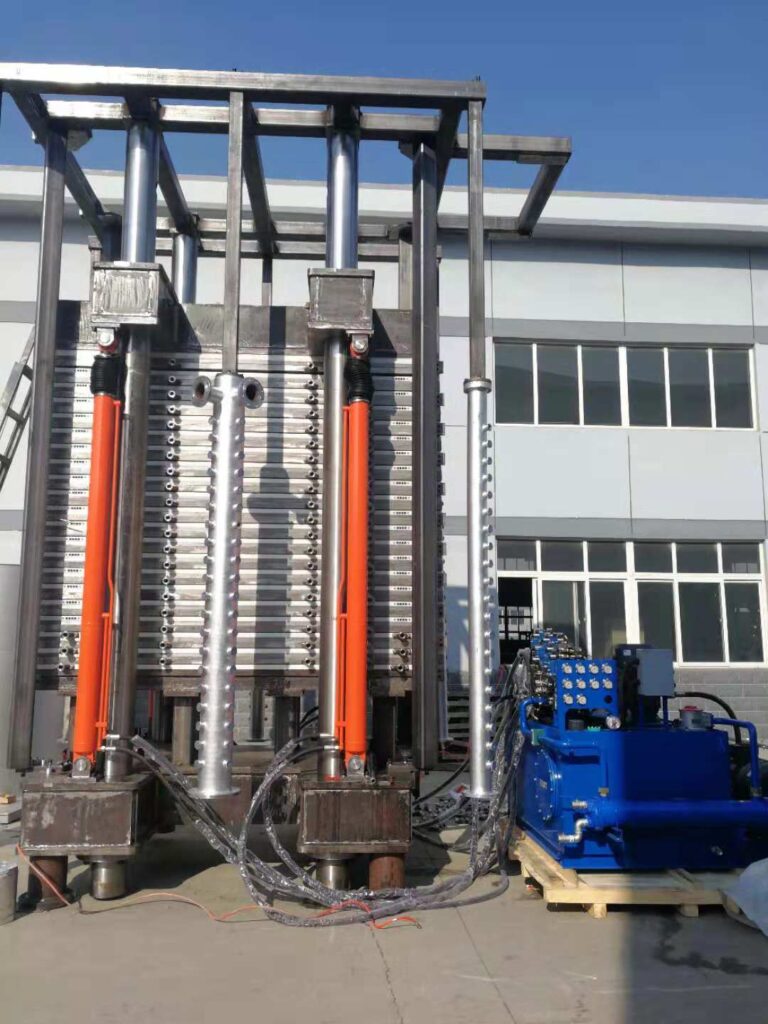
 Solid-liquid separation still ranks among the more persistent operational challenges in mining and metallurgy plants. Tailings require reliable dry stacking, concentrates demand clean separation with minimal losses, industrial sludge needs significant volume reduction—each case calls for dewatering systems that pull water out thoroughly while controlling power draw and preventing cakes from staying too wet for reasonable transport or placement. Vertical press filters address these demands through a structured tower cycle that starts with gravity-supported slurry charging and moves forward with carefully staged high-pressure phases to produce consistently low-moisture cakes.
The vertical press filter working principle runs on batch sequences repeated inside a vertical plate stack: slurry fills the chambers with gravity help and moderate initial pump pressure, primary filtration lays down the base cake, diaphragm membranes then deliver staged squeezing reaching 2.0 MPa, washing steps remove soluble carryover when specified, secondary compression densifies the cake further, air blowing clears residual liquid, and gravity-driven automatic discharge empties the chambers. In a broad range of tailings feeds this sequence routinely achieves cake moisture of 10–15 %, and energy consumption per dry ton stays competitive mainly because the drier output reduces the burden on downstream conveyors, haul trucks, and final disposal logistics.
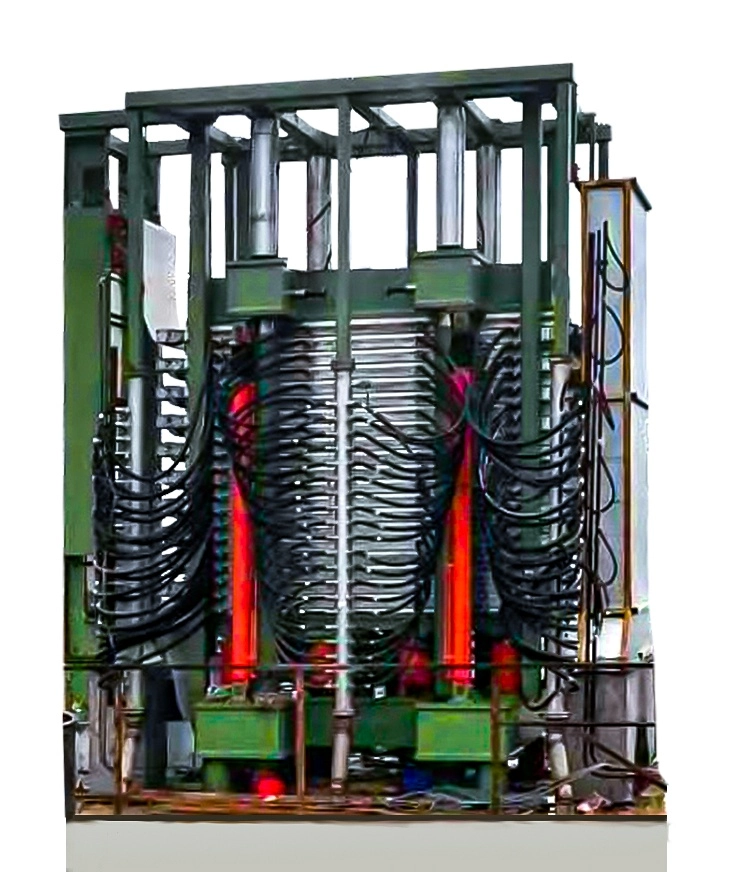
Key Challenges in Solid-Liquid Separation: Energy and Efficiency Trade-Offs
Slurries loaded with fines resist dewatering aggressively. Tailings from copper, gold, or iron circuits often carry specific gravities between 2.8 and 3.5 along with clay content that drops permeability and stretches filtration durations. Continuous-running units like belt filters or centrifuges maintain steady power draw but typically leave cakes in the 20–30 % moisture band, which raises haulage weights, disposal fees, and risks non-compliance with dry-stacking stability criteria.
Energy consumption per dry ton becomes the metric most closely watched in daily reports. Slurry feed pumps, hydraulic drives for diaphragm actuation, and air compressors for drying all accumulate when throughput climbs into hundreds of tons per hour. Filtration efficiency suffers when cakes crack under abrupt pressure application or when filtrate returns with high suspended solids, requiring extra clarification or limiting recycle volumes. Tighter regulations demanding stacked tailings moisture below 15–20 % and water recovery above 80 % compress the allowable performance window. Missing either benchmark leads to added re-handling, supplementary drying, or compliance expenses that cut directly into margins.
Vertical Press Filter Working Principle: Step-by-Step Breakdown
Slurry enters the tower at the upper level and flows downward into filtration chambers formed by recessed plates lined with filter cloth. Gravity contributes meaningfully during the fill stage, spreading the feed evenly and cutting early pump energy requirements.
Pump pressure—usually sustained between 0.5 and 1.0 MPa—then drives primary filtration. Liquid passes through the cloth while solids build the preliminary cake layer; filtrate collects and discharges via bottom ports.
Diaphragm squeezing acts as the main efficiency driver. Hydraulic fluid inflates membranes behind each cloth, raising pressure in controlled steps to a peak of 1.6–2.0 MPa. Gradual ramping prevents cracking in low-permeability feeds and forces out interstitial water that lower pressures leave trapped. Tailings with notable clay fractions respond particularly well to this progressive compression, which maintains drainage channels longer and removes substantially more moisture.
Wash water, applied selectively, percolates through the cake to displace dissolved impurities, thereby improving metallurgical concentrate grade before downstream processing. Secondary squeezing then reinforces compaction ahead of the drying phase.
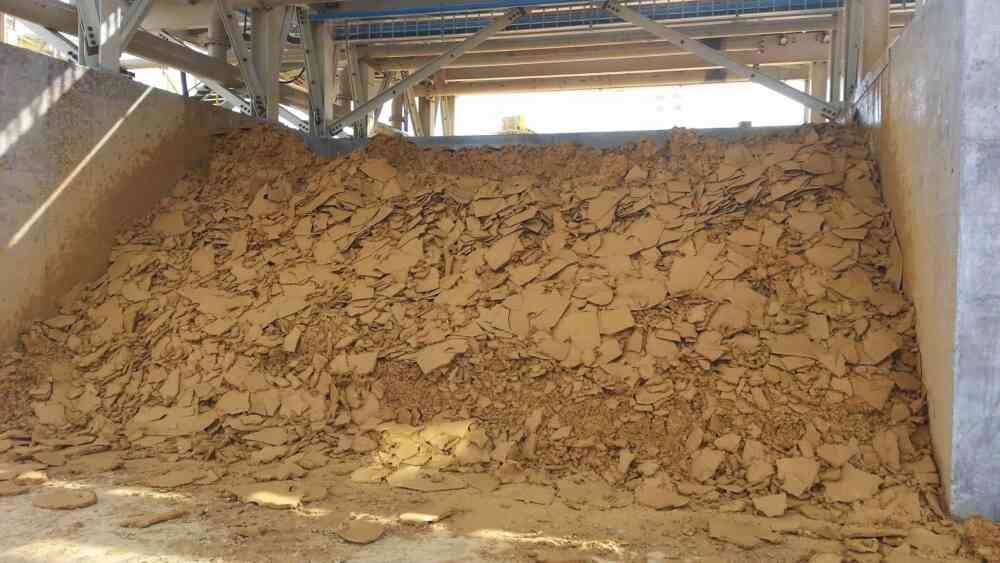
Compressed air flows through the cake afterward, expelling remaining liquid and reducing moisture to the 10–15 % levels commonly seen in iron-ore, copper, or zinc tailings. At cycle end the plates separate; gravity, with light vibration assistance when necessary, drops the cake cleanly. High-pressure washing regenerates the cloth for the next round.
Cycles generally last 15–30 minutes, depending on slurry behavior and target dryness. The vertical tower layout stacks multiple chambers in a compact space, shortens piping runs, and simplifies cake discharge handling.
Energy Consumption Analysis: Where Power Goes and How to Minimize It
Feed pumping takes the largest share during chamber filling. Hydraulic power peaks during diaphragm inflation, although variable-frequency drives moderate the demand by matching output to real-time cake resistance. Air drying typically accounts for 20–40 % of total draw, but strong upstream pressing shortens compressor runtime.
Drier cakes reduce downstream energy needs—less mass on conveyors, fewer truck trips, and often no need for secondary thermal drying. Tailings operations data commonly show 20–40 % lower electricity per dry ton versus belt filter setups in comparable conditions, particularly when higher water recovery offsets raw-water pumping costs.
Slurry conditioning with flocculants decreases viscosity and speeds drainage, lightening feed-pump loads. Precise cycle adjustments—squeeze timing, pressure step rates, air-blow duration—eliminate unnecessary over-processing. In continuous operations these changes add up to meaningful annual reductions in utility spending.
Filtration Efficiency Gains: What the Principle Delivers
Sequential high-pressure compaction creates dense cakes with few large cracks. Moisture targets of 10–15 % hold across difficult fines-heavy feeds. Filtrate quality stays high, with suspended solids usually below 50–100 mg/L, enabling direct recirculation and lowering fresh-water makeup volumes.
Solids capture exceeds 99 % in conditioned slurries, keeping product losses minimal. Throughput rises in proportion to filtration area; larger units process hundreds of dry tons per hour while maintaining cake uniformity. The vertical configuration saves floor space, proving especially useful in retrofits or constrained plant layouts.
Compared with belt filters the drier discharge substantially cuts long-term handling and disposal costs. Centrifuges may reach comparable dryness in some feeds but at much higher specific energy use. Vertical press filters fill a practical middle ground—strong dewatering results with restrained power consumption.
Real Applications and Performance Insights
Dry stacking drives the bulk of installations. Iron-ore and copper tailings sites depend on these filters to generate material stable enough for engineered stacks without liquefaction concerns. Water recovery rates frequently top 85 %, supporting environmental goals in water-scarce areas.
Metallurgical concentrates gain from the washing capability that removes impurities ahead of smelting. Industrial wastewater plants apply similar mechanics to sludges, where lower moisture content reduces incineration fuel demand or landfill tonnage.
Typical field results on tailings near specific gravity 3.0 show final moisture of 12–14 % after air drying, with cycles completing in under 20 minutes under tuned pressure settings. Energy consumption clusters around 0.5–1.0 kWh per dry ton for many streams, staying attractive after transport and water management savings factor in.
How to Evaluate and Implement Vertical Press Filters for Your Operation
Slurry lab testing starts the process: particle size distribution, density, settling rate, filterability index. Pilot trials establish realistic moisture targets and cycle lengths.
Full lifecycle costing follows: capital outlay, energy per dry ton, cloth replacement cycles, hydraulic service needs, plus offsets from drier cakes, improved water recovery, and reduced disposal expenses. Payback periods usually fall between 2 and 4 years where haulage or tipping costs run high.
Filtration area selection ties to daily dry solids target and allowable cycle time. Automation features reduce operator touchpoints and improve repeatability.
Site work includes a sturdy foundation for the tower, slurry feed lines, hydraulic and air utilities, and discharge collection. Commissioning involves pressure mapping, cycle optimization, and filtrate quality checks. Operator training focuses on monitoring pressure curves, filtrate clarity, and cloth condition to spot issues early and keep output steady.
About Yantai Hexin Environmental Protection Equipment Co.,Ltd.
Yantai Hexin Environmental Protection Equipment Co., Ltd., based in YEDA, Yantai City, Shandong Province, China, traces its filtration work back to 1995, with formal restructuring in 2017. The company engineers and builds belt filters, ceramic filters, vertical (tower) filter presses, high-efficiency thickeners, and related systems for mining, metallurgy, chemicals, fertilizers, pharmaceuticals, food, papermaking, sewage treatment, and tailings handling. Consistent focus on R&D, precision manufacturing, quality systems, and field support has created a track record of reliable, application-specific equipment.
Conclusión
Filtros de prensa vertical bring clear progress to dewatering by merging gravity-assisted filling with stepwise high-pressure diaphragm action and air drying. The working principle strikes a workable balance between energy consumption and filtration efficiency, delivering drier cakes, better water recovery, and lower overall costs. Plants assessing dewatering improvements often see distinct gains in tailings dry stacking, concentrate processing, and industrial sludge reduction.
Preguntas frecuentes
What cake moisture levels do vertical press filters typically reach in tailings dewatering?
Vertical press filters regularly hit 10–15 % moisture in tailings cakes, thanks to staged diaphragm pressures up to 2.0 MPa and effective air drying that compacts fine material tightly.
How does the vertical press filter working principle influence energy consumption?
Controlled pressure steps and efficient cycle design keep energy per dry ton reasonable, frequently 20–40 % lower than belt filters because drier cakes cut power needed for downstream handling and transport.
What filtration efficiency do vertical press filters achieve in mining tailings?
Filtration efficiency usually exceeds 99 % solids capture, filtrate suspended solids stay below 100 mg/L, and water recovery tops 80 %, meeting dry stacking and environmental standards.
What is the usual energy use per ton for a vertical press filter on tailings?
Energy consumption falls in the 0.5–1.0 kWh per dry ton range for tailings when slurry conditioning, pressure profiles, and cycle timing get proper tuning.
Can vertical press filters handle high-clay tailings effectively?
Progressive pressure buildup to 2.0 MPa combined with suitable flocculation manages high-clay tailings without serious cracking, producing low-moisture cakes reliably in low-permeability feeds.