 Spanish
  English
  Russian
 Most solid-liquid separation problems do not begin with equipment failure.
They begin much earlier, often at the moment when a project team decides that one machine “should work” because it worked somewhere else.
At first, everything looks fine. The slurry feeds smoothly. Filtrate flows. Cake forms.
Then, over time, moisture levels stay higher than expected. Throughput fluctuates. Maintenance intervals shorten. Operators start adjusting parameters daily, hoping for stability.
At that point, the issue is rarely mechanical.
It is almost always a selection issue.
Choosing the right solid-liquid separation equipment for industrial applications requires more than matching capacity numbers or reading a specification sheet. It requires understanding how material behavior, process goals, and operating conditions interact once the system is running continuously, not just during commissioning.
This article looks at selection from that practical angle: how decisions are actually made, where they go wrong, and how to align equipment choice with real industrial conditions.

Why Solid-Liquid Separation Is a Process Decision, Not a Single Purchase
In industrial systems, solid-liquid separation is rarely a standalone operation.
It sits between upstream preparation and downstream handling, affecting both.
If separation is unstable, upstream systems compensate by slowing feed rates or altering chemistry. Downstream, higher moisture content increases transport costs, drying energy, or disposal fees. Over time, what looked like a small performance gap turns into an operational bottleneck.
That is why equipment selection must begin with one simple question:
What role does separation play in the overall process?
For some operations, the priority is low cake moisture.
For others, it is continuous throughput, filtrate clarity, or operational simplicity. The “best” machine changes depending on which of those outcomes matters most.
Understanding the Main Technical Routes of Solid-Liquid Separation
Before discussing specific machines, it helps to step back and look at the technical routes behind them. Most industrial separation systems fall into three broad categories, each built around a different physical principle.
Filtration-Based Separation
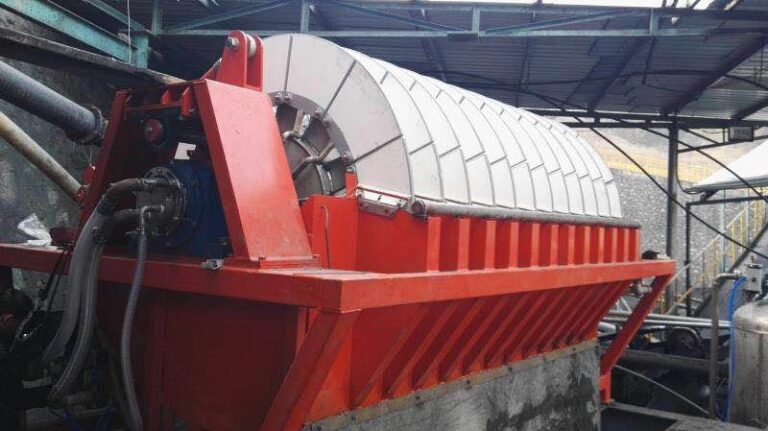
Filtration systems rely on a porous medium, typically filter cloth or ceramic elements, to retain solids while allowing liquid to pass. Pressure, vacuum, or both provide the driving force.
Filtration performs well when solids form a permeable cake and when low residual moisture is a priority. However, performance depends heavily on particle size distribution, compressibility of the cake, and how the solids behave under pressure.
Pressing and Compression
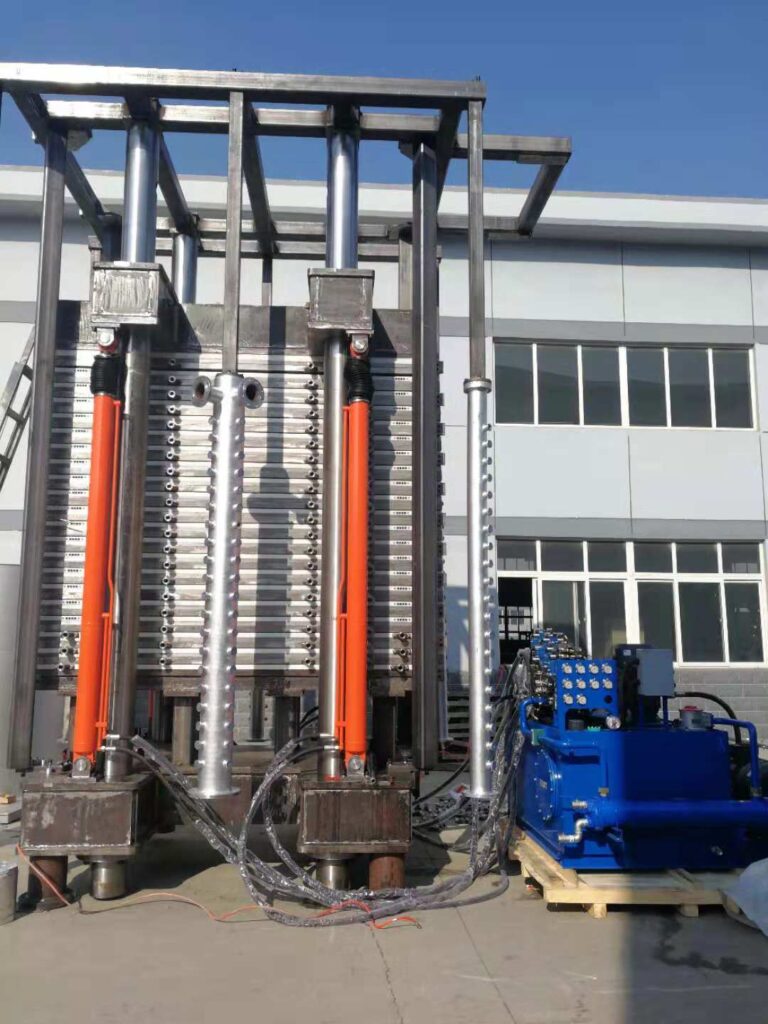
Pressing systems add mechanical or hydraulic force to filtration, actively squeezing liquid out of the cake after initial formation. This approach is effective for fine or sticky materials that resist drainage under gravity or vacuum alone.
The trade-off is higher structural complexity and typically batch or semi-continuous operation. In return, pressing delivers consistently lower moisture levels when matched to the right materials.
Centrifugal and Density-Driven Methods
Centrifugal separation uses rotational force to accelerate settling. These systems handle high flow rates and operate continuously, but they often sacrifice cake dryness in favor of speed.
They are best suited to applications where separation speed and footprint matter more than maximum dewatering.
Understanding these routes helps narrow choices early. Selection errors often occur when a process requires one principle, but equipment based on another is chosen for convenience or familiarity.
Why Equipment Gets “Selected Correctly” and Still Performs Poorly
Many industrial separation systems fail while operating within their nominal design limits. That seems contradictory until you examine the assumptions behind those limits.
Material Behavior Changes Under Continuous Operation
Laboratory tests or pilot runs often use fresh slurry under controlled conditions. In real plants, feed properties drift. Particle size distributions shift. Flocculation efficiency varies. Temperature changes viscosity.
Equipment that performs well during testing may struggle once these variables interact continuously.
Single-Parameter Selection Masks Trade-Offs
It is common to select equipment based on one dominant metric: capacity, moisture, or footprint. In reality, improving one often degrades another.
Higher throughput can reduce cake formation time. Lower moisture may require longer cycles or higher energy input. Stable operation may mean accepting slightly wetter cake.
Ignoring these trade-offs leads to systems that meet one target while quietly failing others.
Site Constraints Are Treated as Secondary
Space limitations, maintenance access, and operator skill level are often addressed late in the process. By then, equipment choices are already locked in.
Over time, these “secondary” factors drive operating cost and reliability more than the original design parameters.
Matching Equipment to Slurry Characteristics
If there is one variable that determines separation success more than any other, it is the slurry itself.
Particle Size and Distribution
Coarse, narrow-range particles form permeable cakes that drain easily. Fine or wide-distribution solids create dense cakes that resist flow.
Press-based systems handle fine materials better, while vacuum-based filtration favors coarser solids. Ignoring this relationship is one of the fastest ways to end up with unstable filtration.
Solid Concentration
High solid content improves cake formation but increases resistance. Low solids reduce resistance but may struggle to form a stable cake at all.
Equipment selection must account for both initial concentration and how it may vary during operation.
Chemical and Physical Properties
Sticky solids, compressible cakes, and chemically aggressive slurries introduce additional constraints. Filter media selection, sealing design, and washing strategies become just as important as the main machine itself.
These factors rarely appear clearly on specification sheets. They are learned through experience and careful questioning early in the selection process.
Throughput, Continuity, and Operating Rhythm
Another frequent source of mismatch is the difference between batch and continuous thinking.
Continuous Production Lines
Operations that run non-stop favor systems capable of steady-state operation with minimal intervention. Continuous vacuum or belt-based systems align well here, provided moisture targets are realistic.
Batch or Campaign-Based Processing
When processes run in defined campaigns, higher compression systems can be used without disrupting upstream flow. In these cases, longer cycle times are acceptable in exchange for drier cake.
Trying to force batch equipment into continuous systems, or vice versa, creates inefficiencies that no amount of automation can fully fix.
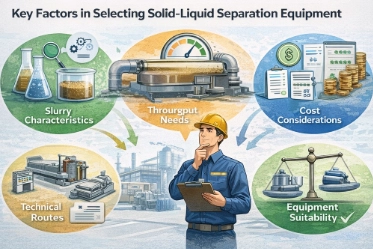
Cost Is More Than Capital Expense
Selection discussions often focus heavily on initial purchase price. Over the life of industrial separation equipment, this is rarely the dominant cost.
Energy and Consumables
Vacuum systems consume power continuously. Press systems consume energy in cycles but may reduce downstream drying costs. Filter cloth life varies widely depending on operating conditions.
Maintenance and Downtime
Unplanned downtime costs far more than scheduled maintenance. Systems that are sensitive to feed variation may require frequent adjustments, increasing labor and reducing uptime.
Process Stability
Stable systems allow predictable planning. Unstable ones require constant attention. Over years of operation, that difference often outweighs modest differences in equipment cost.
Industry-Specific Selection Considerations
While principles are universal, priorities differ by industry.
Mining operations often prioritize low moisture to reduce transport and disposal costs. Chemical processing may value filtrate clarity and containment. Environmental treatment plants often focus on reliability and ease of operation, as staffing levels are limited.
Recognizing these priorities early prevents over-engineering in the wrong direction.
Where Experience Makes the Difference
No guide can replace experience entirely. Patterns repeat across projects: edge leakage caused by cake compressibility, throughput loss due to cloth blinding, moisture fluctuations tied to feed variation.
Manufacturers and integrators who have observed equipment aging under real conditions bring that experience into selection discussions. This perspective helps bridge the gap between theoretical performance and long-term operation.
About Yantai Hexin Environmental Protection Equipment Co., Ltd.
Yantai Hexin Ambient Protection Equipment Co., Ltd. has focused on solid-liquid separation technologies for industrial applications for many years, working closely with mining, chemical, and environmental projects where operating conditions are rarely ideal.
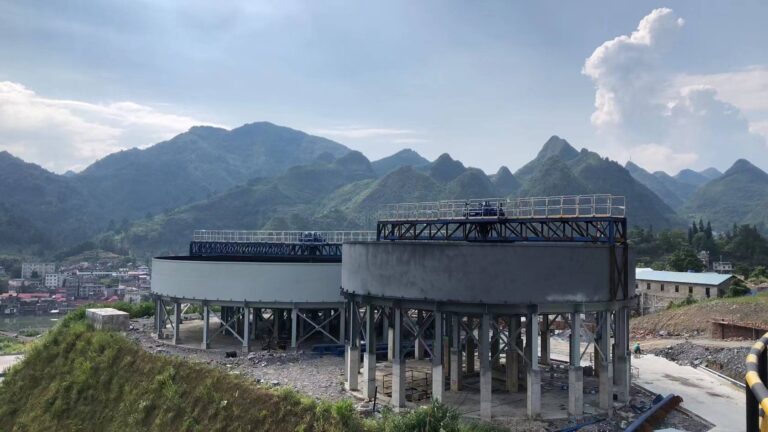
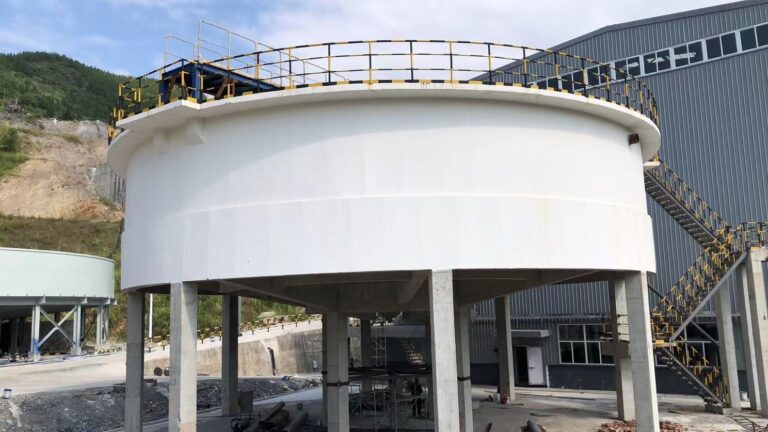
The company’s equipment portfolio covers multiple separation routes, including vacuum-based systems, high-pressure filtration, and thickening solutions. This range allows selection to be driven by process needs rather than forcing a single technology into every application.
Hexin’s engineering approach emphasizes stable long-term performance, practical automation, and adaptability to variable feed conditions. Rather than positioning equipment as standalone products, the company works from the perspective of process integration and operational consistency.
Conclusión
Choosing solid-liquid separation equipment is not about finding the most advanced machine or the highest rated specification. It is about understanding how materials behave, how processes run day after day, and where trade-offs are acceptable.
Most failures trace back to early assumptions that went unchallenged. When selection reflects real operating conditions instead of idealized scenarios, separation systems become quieter parts of the process. They do their job without constant adjustment, which is often the clearest sign of a good decision.
Preguntas frecuentes
How do I choose the right solid-liquid separation equipment for my process?
Start by understanding your slurry characteristics, moisture targets, and whether your process is continuous or batch-based. Equipment should be selected to match these realities, not just nominal capacity.
Why does solid-liquid separation equipment perform well during testing but poorly in operation?
Feed variability, continuous operation, and interactions between parameters often reveal behaviors that short tests cannot capture. Long-term stability matters more than initial results.
Is lower cake moisture always the best goal?
Not necessarily. Lower moisture may require longer cycles or higher energy input. The right balance depends on downstream handling and overall process cost.
What causes frequent instability in industrial filtration systems?
Common causes include feed property changes, mismatched operating rhythm, and selection based on a single performance parameter.
Can one solid-liquid separation system handle all applications?
No. Different processes prioritize different outcomes. Effective selection accepts that no single system is ideal for every condition.