 Spanish
  English
  Russian
 Walk into an older concentrator or chemical plant and you can usually tell where the filtration area is long before you see the equipment. The air is humid, the floor is wet, and somewhere in the middle a row of traditional plate and frame presses is cycling with a mix of manual valves, hose changes and operator judgment. In newer plants you see something very different: a tall enclosed filtro de prensa vertical running on a PLC, dropping dry cakes automatically on a belt.
Both machines are “filter presses”, but the filtration principle is not the same. Once you look closely at how chambers are arranged, how forces are applied and how filtrate and wash liquor actually move through the cake, the reasons for higher solids content, lower moisture and stable automation in a vertical system become much easier to understand. That technical gap is exactly what matters to B2B buyers planning a retrofit from a traditional plate and frame filter to a tower-type unit.
Why the filtration principle comparison matters
A typical retrofit scenario
Many plants arrive at the “vertical press filter vs traditional plate and frame” decision after years of incremental fixes. Cycle times on the old presses have crept up. Operators extend squeezing, add wash steps, tweak pump curves. Cakes are still wet in winter, and the labour needed to keep several presses cycling in parallel starts to dominate operating cost.
At that point it is not enough to say that a vertical press filter is “more advanced”. Engineering teams want to know what actually changes in the filtration principle and whether those changes justify the capital cost.
Same goals, different physics
Both types of equipment use pressure to drive liquid through a porous medium and form a cake. The key differences are where the chambers sit, how the frame carries load and how the cake is compacted and dried. Those details control achievable filtration pressure, uniformity of cake build, washing efficiency and the ability to run a truly automatic cycle.
Chamber layout and load paths
Vertical press filter: tower structure and closed chambers
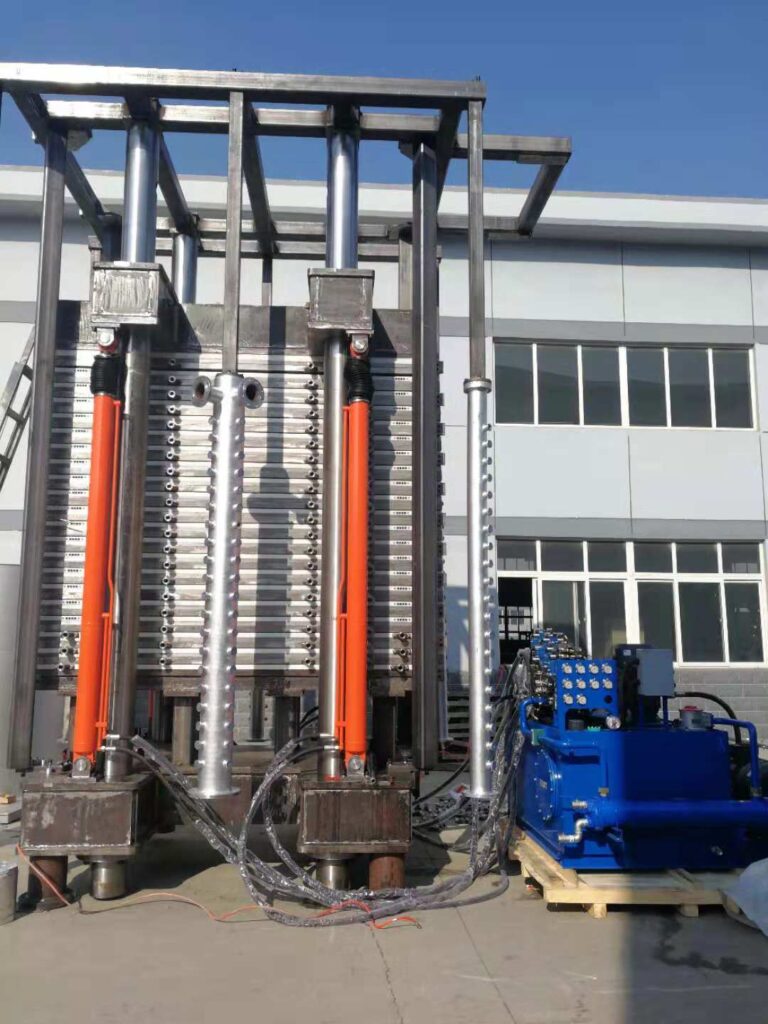
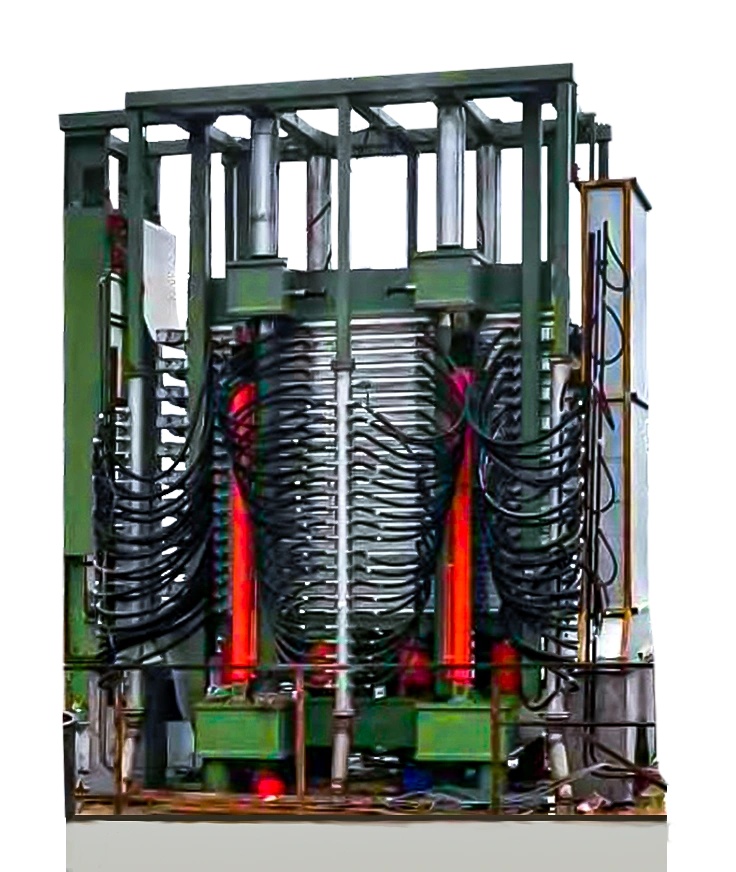
In a modern tower-type vertical press filter, such as the TFP design, filter plates are arranged in a vertical stack, creating a series of horizontal filtration chambers inside a compact tower frame. The equipment is described as an advanced, fully automated system for solid–liquid separation with tower-type filter plates, horizontal filtration and multi-cylinder synchronous hydraulic clamping. All stages—filtration, pressing, washing, drying, cake discharge and filter cloth regeneration—are performed continuously and automatically, with filtration pressure up to 20 MPa.

The load of cake pressure and diaphragm squeezing is carried straight down into the base through large columns and synchronised hydraulic cylinders. Because the frame is designed for high internal pressure, the vertical press filter filtration principle can exploit much higher squeeze pressures than a conventional press without overstressing tie bars or side beams.
Traditional plate and frame: horizontal pack and bending loads
A traditional plate and frame filter press uses a horizontal pack of plates between fixed and moving heads. Hydraulics close the pack, but the load path is mainly along one or two beams. Filtration pressure is typically limited to a few megapascals; above that level, frame deflection, seal leakage and plate misalignment become real concerns.
This lower allowable pressure does not mean traditional presses cannot dewater, but it does limit how far you can push the cake during the squeeze phase, especially with fine or compressible solids. In practice, that difference in structural concept is one of the reasons a vertical press filter can run at higher effective filtration pressure and achieve a drier cake.
Filtrate flow and hydraulic conditions
Vertical press filter filtrate path
In a vertical press filter, slurry enters each closed chamber, passes through the filter cloth into a filtrate space behind the cloth and then flows into a shared filtrate header through soft hoses. The driving force is a combination of feed pump pressure, static head and the pressure transmitted through the diaphragm during squeezing and air drying. The flow path is short and symmetric, which helps maintain even cake thickness across the plate.
Because the chambers are fully enclosed, the operator can work at higher differentials without spraying filtrate or exposing operators to mist, which is particularly valuable on toxic or acidic duties.
Traditional plate and frame filtrate path
In a traditional plate and frame press, filtrate exits through corner ports or internal channels machined into the plates. Flow distribution is heavily influenced by small differences in cloth resistance, gasket condition and plate alignment. Channeling is common: some chambers fill and dewater quickly while others lag.
From a filtration principle standpoint, this uneven hydraulic field leads directly to variability in cake thickness and moisture. It is not unusual to see one plate pair discharging relatively dry cakes while its neighbour still carries free liquid, even under the same nominal feed conditions.
Cake compaction, moisture and washing
Squeezing mechanism in the vertical press filter
The vertical press filter uses a diaphragm on the non-filtrate side of the cake. Once chambers are filled, high-pressure water is admitted to the diaphragm space. The diaphragm deforms and compresses the cake, pushing liquid back through the cloth into the filtrate chamber. Because this pressure is applied over the entire cake face and can reach high levels, the cake structure tightens uniformly and residual moisture drops significantly.
When required, washing liquor is introduced through the same feed channels as the slurry. With the chamber full, the diaphragm is used again to drive wash liquor through the cake, displacing mother liquor and achieving efficient washout with relatively low wash volumes. This staged sequence—filter, press, wash, press, then gas-dry—defines the vertical press filter filtration principle in high-purity or high-recovery applications.
Squeezing and washing in traditional plate and frame
A conventional plate and frame press generally relies on cake compression from the incoming feed and, at best, a modest additional squeeze obtained by raising feed pressure or using membrane plates at limited pressure. Washing is typically done by flowing wash liquor through the cake under gravity or moderate pressure via the corner ports.
Here the combination of lower mechanical pressure, potential channeling and more manual control often leads to higher residual moisture and variable washing quality. For products sensitive to soluble carryover, or for tailings where transport cost is driven by water, this difference is not trivial.
Automation, cycle stability and operating cost
Vertical press filter as an automated unit operation
The TFP vertical press filter is controlled hydraulically, runs stably and reliably, and is managed by PLC and touch panel with automatic valves. The machine is described as being very easy to operate with high automation, capable of handling sticky and fine materials and achieving low moisture cakes with high capacity. Working efficiency is reported as several times, even up to ten times, higher than a traditional hydraulic press.
Because all steps—feeding, filtration, pressing, washing, drying, cake discharge and cloth regeneration—are sequenced automatically, a vertical press filter vs traditional plate and frame comparison on labour and uptime usually favours the tower-type unit. The operator’s role shifts from manual valve operation and cake knocking to recipe setting, monitoring and occasional intervention.
Traditional plate and frame in daily operation
By contrast, plate and frame presses tend to be semi-automatic at best. Filter opening and closing may be automated, but hose changes, wash step initiation, cloth inspection and cake discharge often rely on manual work. Over time, that labour adds up. Inconsistent operator practices also mean the real-world filtration principle deviates from the design, which is why performance data from old presses often show wide scatter in cycle time and cake moisture.
For plants trying to stabilise tailings handling, reduce thermal drying or run with fewer operators, this automation gap is often as important as the purely hydraulic differences.
Yantai Hexin Ambient Protection Equipment Co., Ltd
Yantai Hexin Environmental Protection Equipment Co.,Ltd is located in YEDA, Yantai City, Shandong Province and specialises in manufacturing, researching, developing and selling filtration equipment. The company has been engaged in the filter industry for more than twenty years with professional R&D and sales service teams and complete processing, quality assurance and after-sales systems, consistently operating at the forefront of the filter industry.
Its main products include belt filters, ceramic filters, vertical (tower) filter presses, high-efficiency thickeners and EPC projects for tailings and solid-liquid separation, serving chemical, mining, metallurgy, fertiliser, medicine, food, paper, sewage treatment and tailings treatment sectors. The company adheres to the principle of “survive by quality and develop by credibility”, providing customers with high-quality filtration equipment and professional after-sales service and welcoming long-term cooperation with partners worldwide.
For buyers comparing a vertical press filter vs traditional plate and frame machines, this combination of equipment design, application experience and project capability means Yantai Hexin can support not just standalone filter supply but also upgrades of existing lines where filtration principle and plant reality need to be brought back into alignment.
Conclusión
When you strip away frame shapes and trade names, the real distinction between a filtro de prensa vertical and a traditional plate and frame filter lies in the filtration principle. The tower machine uses closed horizontal chambers, a robust load path, diaphragm squeezing and staged washing and gas drying to apply high and uniform pressure to the cake. That translates into lower moisture, cleaner filtrate and repeatable cycles that can be fully automated.
The older plate and frame concept still has a place in lighter duties, but its structural limits, more complex flow paths and reliance on manual intervention make it harder to meet today’s demands for high throughput, consistent dewatering and low operating labour. For plants planning an upgrade, understanding these principle-level differences is what allows a sound technical and economic comparison instead of a simple “old versus new” argument.
Preguntas frecuentes
What is the main filtration principle difference between a vertical press filter and a traditional plate and frame press?
Both rely on pressure-driven filtration, but a vertical press filter uses stacked horizontal chambers with diaphragm squeezing and gas drying inside a closed tower frame, while a traditional plate and frame press uses a horizontal plate pack with lower allowable pressure and less controlled cake compression.
Why does a vertical press filter usually achieve lower cake moisture than a traditional plate and frame press?
In a vertical press filter, high-pressure water and compressed gas act on a diaphragm to compact and dry the cake uniformly at pressures up to tens of megapascals, whereas a traditional plate and frame press typically works at lower pressures with less efficient squeezing and washing, which limits how much liquid can be removed.
How does filtrate flow differ in the two filtration principles?
In a tower-type unit, filtrate passes through cloth into dedicated collection channels and exits via soft hoses under a controlled pressure differential in closed chambers. In a traditional plate and frame press, filtrate moves through corner ports and internal passages that are more prone to channeling and uneven flow, which can create non-uniform cakes.
When should a plant consider replacing traditional plate and frame equipment with a vertical press filter?
A retrofit becomes attractive when tailings or product cakes are consistently too wet, when cycle times and labour requirements are high, or when stricter environmental and safety standards demand enclosed operation. In these cases, the higher pressure capability and automated cycle of a vertical press filter vs traditional plate and frame presses can deliver both technical and operational gains.
Can a vertical press filter integrate into existing solid–liquid separation lines?
Yes. Because the filtration principle still uses pressure-driven cake formation, a vertical press filter can usually replace or supplement traditional plate and frame units with adjustments to feed conditioning, pumping and downstream cake handling, while providing higher solids content and more stable automated operation in the same flowsheet.